The word amateur stems from the Latin word amāre, which means “to love.” In the truest sense of the word, an amateur is someone who pursues an activity for the joy and love of it, rather than as a job or for financial gain.
That same broad definition applies to amateur dramatics, often called “am-dram,” which simply refers to theatrical productions created by people who are not being paid and who are taking part for their own personal enjoyment outside of work.
But perhaps you have heard mixed things about am-dram theatre. As an emerging actor, you may be wondering how it could fit into your career plan and whether to even include am-dram credits on your acting CV when you are trying to land acting jobs. We will explore all of that, but first let’s look at what am-dram is and how it fits into the wider theatrical landscape.
JUMP TO
The National Operatic and Dramatic Association, an organisation that represents amateur theatre, has around 2,500 member groups across the UK, so there certainly is an appetite for am-dram! Members range from amateur groups run in village halls to those in larger theatres putting on musicals, plays, operas, concerts, and pantomimes.
Such groups stage more than 10,000 productions a year and play a vital role in offering people in all areas of the UK the opportunity to make and experience theatre. A study published in 2016 by academics from Royal Holloway, Warwick, and Exeter universities emphasised the importance of am-dram to local communities, stating that it is key to representing and celebrating life in those places. In contrast, although professional theatre can have a local focus, it is often instead used to promote tourism and economic regeneration, and contribute to the nation’s wider cultural life, according to the study.
It is important to note that, although there are many similarities, am-dram is different from community theatre. The key distinction is that community theatre is often run by a professional team and may be part of a professional theatre’s offering, whereas those running am-dram groups are unlikely to be paid. Both focus on making work with and for specific communities, however, and they’re generally open to a wide range of participants who do not have to have previous theatre experience or training.
There is a wealth of am-dram groups operating across the UK, but you may be wondering whether any famous actors began treading the boards this way. Many of today’s household names onstage and onscreen made their first foray into theatre via amateur dramatics.
They include renowned actor Ian McKellen, who has said he is “most grateful” to the amateur group at Bolton Little Theatre, where he began his illustrious career before moving on to professional theatre. Anthony Hopkins stumbled into an amateur dramatics class in a local YMCA in Wales, Ben Kingsley joined his local amateur society the Salford Players while working as a lab technician before becoming a professional actor, and Glenda Jackson got involved in amateur theatre in her hometown of Cheshire, “playing maids and things like that” while working her first job in a pharmacy, according to the Guardian.
One of the most respected amateur theatre groups in the UK is the Questors Theatre in Ealing, which has seen many of its alumni become professional actors, including BAFTA-winning actor Anne-Marie Duff; Art Malik, who has had an extensive stage and screen career; and Rahul Kohli, whose credits include the Netflix series The Haunting of Bly Manor.
The benefits of taking part in amateur theatre for an aspiring professional actor are widely disputed, and there is no right or wrong answer. Every career path into acting is unique. As you can see from the list above, many renowned actors made their start in amateur dramatics, but that was just one step in a longer journey.
“Getting involved in a local community theatre or an amateur dramatics society is a fantastic way to test the waters and see if acting is something you’re actually going to enjoy,” according to Brian Timoney Actors’ Studio. The school says am-dram is a brilliant way to “try out your performance skills, meet other people who share your interest, and gain experience being in front of an audience.”
It cautions, however, that “there’s a pretty wide gulf between taking part in these sorts of nonprofessional productions and getting into actual paid work in the industry,” arguing that “if you are serious about becoming an actor, it really is advisable to step up and look at getting professional training.”
For many performers, am-dram may be a practical first step into acting and an opportunity to start building experience. It may also give early career actors the opportunity to take on bigger roles than they would get in professional theatre, or a chance for professional actors who are taking a career break to remain connected to their art.
Should you include am-dram credits on your acting CV, or will it damage your chances of getting a professional role? There are mixed opinions on that, with actor Clare Louise Roberts writing in her blog that she has been advised by a professional director not to include amateur dramatics on her actor CV.
Some, like David Patrick Green, founder of Hack Hollywood, advise putting “as little as possible” on your acting CV so that time-strapped casting directors can take a quick glance and see the information they need. It makes sense then, that you would leave amateur dramatics off your CV if you have enough professional credits. If you’re just starting out and yet to book professional gigs, however, including those credits may show your enthusiasm and willingness to learn – especially if you’re applying for drama school or training.
The debate around whether to include am-dram credits on your CV relates to the way in which the wider industry – and the public – perceives am-dram.
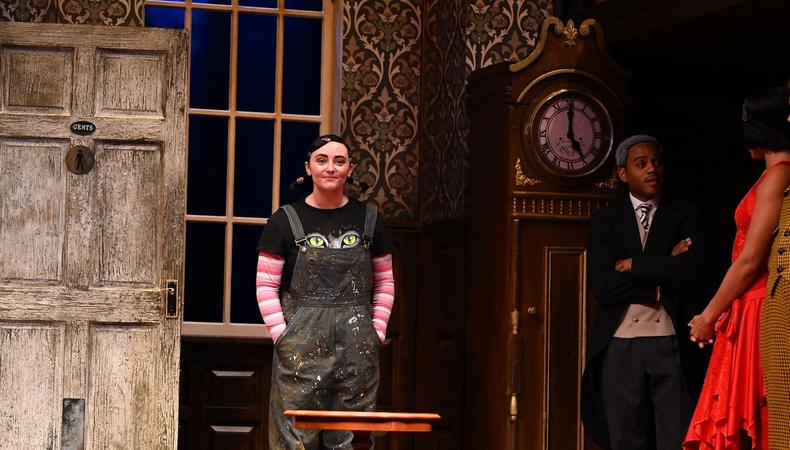
When you think amateur theatre, you may conjure an image of Mischief Theatre’s iconic West End production The Play That Goes Wrong, which is a comedy based on stereotypes of amateur theatre, following a fictional amateur dramatics group disastrously attempting to stage a murder mystery – with the actors forgetting their lines and the set collapsing around them.
Playwright David Eldridge, who has seen many amateur productions of his own plays, tells the Guardian that “anyone that sneers at amateur theatre probably doesn’t see that much of it.” It is unfair to paint all amateur theatre with the same brush, and – just like with professional theatre – quality may vary widely among productions.
Producer Richard Jordan writes in The Stage that amateur theatre should be given more recognition in professional theatre. “Sometimes our industry holds an overtly superior attitude toward amateur theatre,” he argues. “It’s demonstrated when a person moves on to professional training or enters the industry and is told not to include amateur experience on their résumé.” Jordan says an artist’s path into the industry should “never be disparaged, and, in the case of amateur theatre, deserves to be celebrated more.”