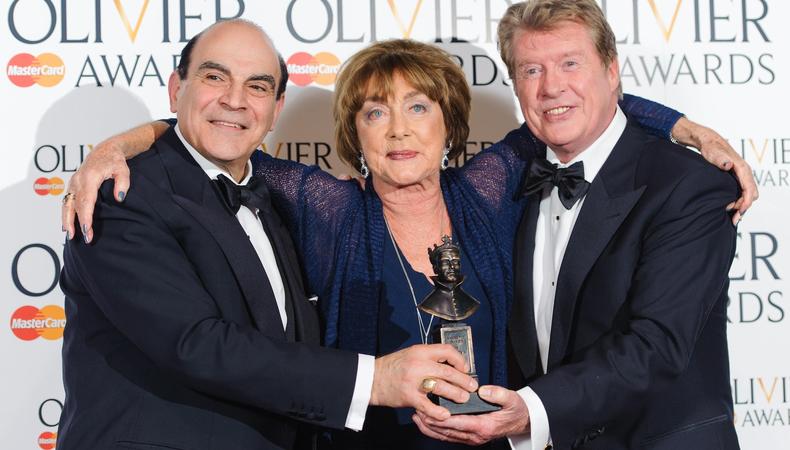
The United States has the Tonys, France has the Molières, and the UK has the Laurence Olivier Awards. Established in 1976 as the Society of West End Theatre Awards (also called the SWET Awards until 1983) by the Society of London Theatre (SOLT), the Olivier Awards are the most prestigious accolade in the industry, celebrating the crème de la crème of theatre from the West End and beyond.
The gongs are given at a glitzy and glamorous event that gathers the who’s who of the theatre industry under one roof. Including plays, musicals, opera, and dance, it showcases the best of commercial theatre. Have you ever wondered how a show is chosen as a winner? Or what one needs to qualify for consideration? Here’s everything you need to know about British theatre’s biggest night.
JUMP TO
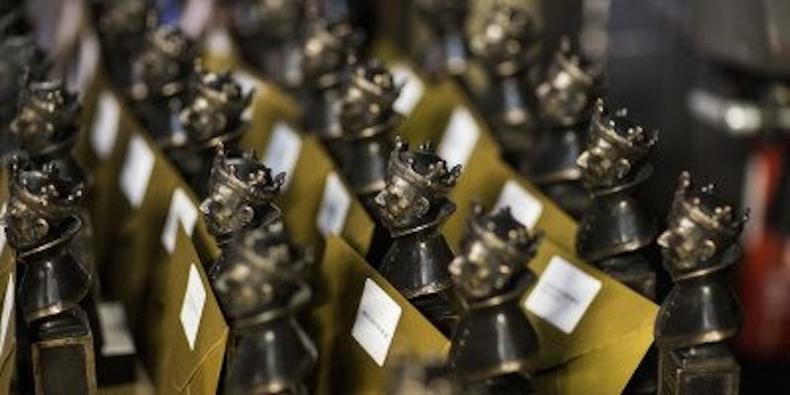
Although they started out as the Society of West End Theatre Awards, a decision was made to rename them in honour of the great British actor and director Laurence Olivier in 1984 – with Olivier’s consent. His younger likeness playing Henry V was cast for the body of the statuette, creating the famous trophy that’s still handed out today. Before Olivier agreed to be immortalised, the awards were also known as the Urnies due to the blue Wedgwood urn that was given to the winners.
Credit: David Levene
Any new show that opened within the judging year (usually February to February) and had a substantial run at a theatre represented by a SOLT member is eligible for the awards. Each category has a different number of minimum performances required to be nominated according to its general industry standards.
To be eligible, a production needs to be affiliated with the trade association SOLT. Members of SOLT include theatre producers, managers, owners, and operators. All major commercial theatres in the West End are part of SOLT in one way or another, which means that, potentially, all new West End shows could be considered for a nomination.
The Oliviers also look beyond the West End, with some venues, such as the Almeida, the Bush, the Young Vic, and the Other Palace, being recognised as affiliate theatres able to campaign for the awards. Successful shows often transfer from these venues to the West End for further runs – it’s not an accident!
The decision-making process that determines the nominations is fairly transparent. SOLT handpicks a control group made up of theatre professionals, luminaries, and passionate audience members. They participate in a number of debates led by five panels that specialise in theatre, opera, dance, family shows, and affiliate buildings. Professionals such as journalists, casting directors, arts administrators, publishers, and other knowledgeable pundits make up the other four, but the theatre panel comprises only members of the public with no professional theatre background.
In order to sit on the panels, you’ll be required to watch every eligible production in the chosen category (it can be up to 120 shows a year!) regardless of your professional status. Each person is chosen by SOLT executives following advice from their Awards Office, as well as external advisers. All you need to do to join the theatre audience-led panel is complete an application form (normally toward the end of the year, which includes writing a short review of a show of your choice). If you’re the right candidate for the job, you’ll be invited for an interview and, if successful, you will be provided with two tickets and a programme for all eligible shows during the year.
 Loredana Sangiuliano/Shutterstock
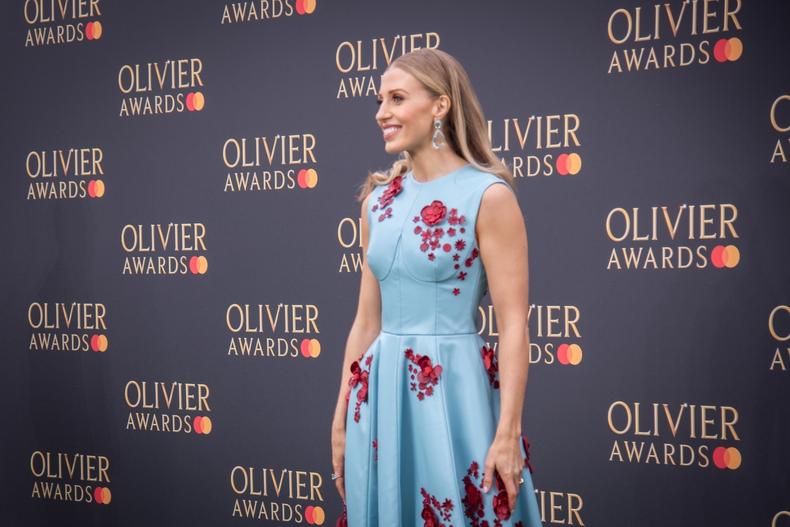
The Royal Albert Hall has been the consistent home of the Olivier Awards since 2017, adding a glamorous backdrop to the green carpet event (green for sustainability, in case you’re wondering). The ceremony was held at the Royal Opera House from 2012 to 2016 ahead of the move and, before that, at other West End venues including the London Palladium and Theatre Royal Drury Lane.
The date changes each year, but the awards are normally held on a Sunday in early April. Why a Sunday? That’s when many West End theatres are dark – closed for the day – making it easier for companies to attend the ceremony without having to compromise their performance schedule. In 2026, the 50th anniversary edition of the Olivier Awards will be held on 12 April.
While in recent years, televised coverage of the Oliviers has been confined to a highlights package on ITV1, this year the ceremony is being broadcast in a primetime show on the BBC, marking the 50th anniversary.
Beyond the small screen, audiences can listen to it live on Magic Radio each year. International viewers can sometimes stream it on YouTube, where more highlights, speeches, and other key events are also uploaded afterward. Live coverage from the green carpet is also regularly streamed live on YouTube, and interviews are uploaded swiftly to social media by various media outlets and theatre influencers.
The 26 gongs can be divided into four main categories (drama, musical, production, and dance/opera) and two outliers (family show and affiliate theatre). The accolades attempt to include every creative team that contributes to the mounting of a production, from design to stage. The categories are:
Drama
Best new play
Best revival
Best entertainment or comedy play
Best actor
Best actress
Best actor in a supporting role
Best actress in a supporting role
Musical
Best new musical
Best musical revival
Best actor in a musical
Best actress in a musical
Best actor in a supporting role in a musical
Best actress in a supporting role in a musical
Outstanding musical contribution
Production
Best director
Best theatre choreographer
Best set design
Best costume design
Best lighting design
Best sound design
Dance/Opera
Best new dance production
Best new opera production
Outstanding achievement in dance
Outstanding achievement in opera
Best family show
Outstanding achievement in an affiliate theatre
An extra award has always been in place to honour creatives outside of the yearly categories: the special award. Since 2020, the award has expanded to include a special recognition, a further category to recognise a lifetime contribution to commercial British theatre.
The special award and special recognition categories have seen former National Theatre artistic director Rufus Norris (2025) and actor Ian McKellen (2020) celebrated for their lasting impact on the industry. The special award isn’t given out every year – the category went unfulfilled in 2022, 2023, and 2024 – but the special recognition slot has seen multiple recipients awarded at the same time, including producer and actress Thelma Holt in 2020 and school founder Sylvia Young in 2022.