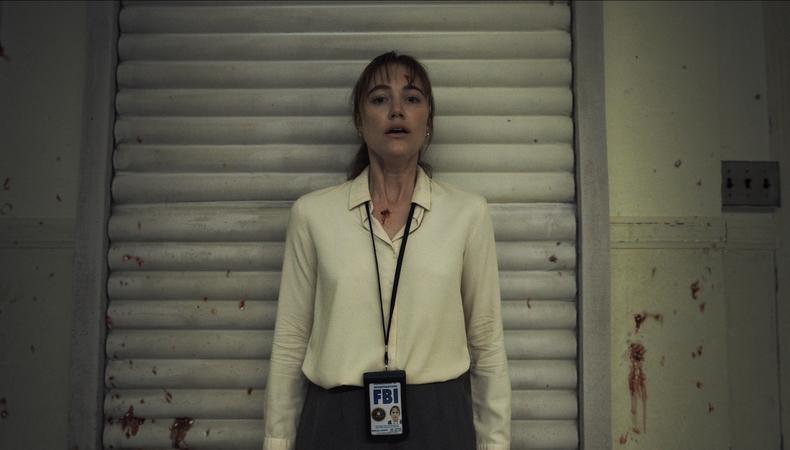
While better known for their later, less terrifying works, it was horror movies that gave actors Tom Hanks (He Knows You’re Alone) and Jennifer Aniston (Leprechaun) their breakthrough roles. Others, meanwhile, have built their entire careers from the genre, including “scream queens” Neve Campbell, Linda Blair, and Samara Weaving.
Think you can capture bloodcurdling terror as a haunted victim or instil it as a fearsome killer? There’s a real art to these types of performances, and having a firm understanding of what horror movie acting requires can be a great way to break into the business.
Here are some tips for bringing the scare factor to any role.
1. Prioritise your fitness
Horror characters are often either hunting or being hunted. As an actor, all that running, crawling, fighting, and struggling is going to fall on your shoulders – and on the rest of your body.
“The most challenging, craziest days were when I was hanging upside down in a tree,” said Weaving of her time shooting Azrael (2024). “The whole movie really pushed me.”
Essie Davis experienced the same challenges while filming The Babadook (2014). “In the script, there was a physical description of [my] character as she goes through her change, and we did a lot of physical work, and looked at a bit of butoh dance, and physical expressions of rage and anger,” she recalled.
Whether you’re sprinting from a killer or scrambling across uneven terrain, actors in horror movies require ample cardiovascular fitness, mobility, and strength. If you’re serious about horror work, consider putting yourself on a training programme to handle it all. Functional workouts focused on moving your own body weight in all planes of movement will be particularly useful.
2. Consider a stunt or movement course
The physicality of horror often demands more than just fitness. You may need to shuffle like a zombie, fall without hurting yourself, or know how to take and give a punch. Such skills are advantageous but not essential since stunt performers are hired sometimes too, especially when a project involves riskier stunts. However, those skills can secure work, as happened when Nicholas King was cast as Pagan deity Bughuul in Sinister (2012). “[One] reason why I got the role is because I had the stunt background,” he explained. “They were looking for a certain body type, but with that they had to also be able to do stunts as well, which is always a benefit.”
Consider a combat course from:
For an introduction to stunts, look to:
Playing an animalistic villain? You could take a specific course on how to move like a movie monster, such as the two-day course from Creature Bionics or the online training in monster suit performance from Stan Winston School.
3. Commit to the emotional intensity
“I think [horror] is arguably the hardest genre for an actor because you have to tap into an emotion that none of us are used to,” said scream queen Maika Monroe, who has starred in It Follows (2014) and Longlegs (2024). “The feeling of complete fear for your life is not normal for humans to experience.”
To nail auditions and deliver strong performances, you’ll need to embrace the genre’s intensity. Remember, your character is unaware they’re in a horror movie and must act with authenticity. That isn’t just about feeling scared, but about showcasing all the emotions and thoughts behind the terror.
“You have to basically be able to hit emotions on a dime,” acting coach Matt Newton told Backstage about auditioning for horror roles. “You need to have a different skillset and be able to hit extremes really quickly.”
Your own experience can inform those emotions. Daniel Kaluuya drew on his own experience with racism for filming “the sunken place” in Get Out (2017): “Just feeling, that’s how being Black sometimes feels like. You can’t actually say what you want to say because you may lose your job and you’re paralyzed in your life…. Your self is being controlled and being managed, by someone who doesn’t have your best interests at heart.”
Others draw on their imaginations, like Mary Elizabeth Winstead did while filming 10 Cloverfield Lane (2016). “When you’re doing an emotional scene or something, you can kind of draw something from your memory. But not many of us have been in a situation as scary as what Michelle is going through in the film. And I certainly haven’t. So, you do have to use your imagination a little bit more,” she explained.
4. Ground your performance in character
“Fear is a secondary aspect that comes out of the situation,” remarked M. Night Shyamalan, director of horrors like Knock at the Cabin (2023) and Old (2021). “If you’re thinking about protecting your child or your spouse and someone says, ‘I’m coming in the door,’ you don’t concentrate on fear. You concentrate on the love for your spouse or your child. And you have a natural reaction to that.”
Focus on what your character wants beyond simply staying alive or murdering their next victim; instead, consider exactly why they’re taking each action and how your knowledge of their personal idiosyncrasies would impact their behaviour.
“Make it real and make it grounded,” advised Keke Palmer of Nope (2022). Similarly, Winstead recalled “entering into this storyline that was maybe far-fetched or unrealistic, and trying to make [her character] really real and relatable” in Final Destination 3 (2006). The result? Both Palmer’s and Winstead’s characters were easy to empathise with.
Even famous horror movie antagonists are motivated by more than bloodlust and anger. Tobin Bell, who played John “Jigsaw” Kramer in the Saw franchise, understands his character on a level that almost has you wondering if he considers him evil at all: “We live in a world where people are upset about so many things, and they do nothing about them…. Whether you agree with what John does or not, he doesn’t do nothing,” he reflected. “He has an MO. He knows where he’s going and why he’s going there and what he’s doing.”
5. Perfect your screams and shouts
Horror actors are dubbed “scream queens” for a reason. It’s an unexpectedly tricky skill to master.
As summed up by acting coach Scott Sedita, “If you’re gonna scream, it has to come from something instinctive inside of you with a strong emotional base.” A scream needs to come from the belly rather than the throat and communicate a genuine sense of panic and terror.
Whether you’re a villain or a victim, yelling, screaming, and howling is the norm. As such, working on your entire vocal range is key. “I cannot stress enough how important your voice is, particularly when acting in horror movies,” writes actor Frazer Shepherdson for StageMilk. “You’ll need to work in extreme vocal ranges: screaming, growling, shouting, and crying are just a few examples, all of which can be very taxing and even dangerous if you don’t do them properly.”
6. Practice self-care
The emotional toll of horror movie acting can be as great as the physical. Bill Skarsgård, who portrayed Count Orlok in Nosferatu (2024), felt relief once shooting wrapped on the film. “It really affected me,” he recalled. “It did a number on me in terms of just trying to inhabit that space.”
Toni Collette found Hereditary (2018) similarly challenging. “At the end of every day, even if I was exhausted, I could still feel an intense energy,” she said. “I would get on the elliptical cross trainer and just run for an hour, just to literally move the energy out of my body. Just to cleanse.”
Emotional burnout can interfere with your performance as well as sour your mental health, so eat well, get plenty of sleep, and give yourself time to decompress and release your pent-up horror energy.