We all know a great actor when we see one – the kind who can transform themselves into another person and leave us feeling utterly convinced. But how do you define what makes a great actor, and what sets their performances apart from simply good acting – or even bad?
Great acting, after all, has no set form. It can look wildly different depending on the actor, role, or medium. But there are common threads: a sense of truth, spontaneity, openness, and control.
Let’s explore what elevates a performance from good to great, as well as what to aim for and what to avoid.
Great acting can be hard to explain. It’s not just about crying on cue or nailing an accent (although those things can help!). It’s about connection – between the actor and the character, the actor and their scene partner, and, ultimately, the actor and the audience.
People have different definitions of great acting. “The actors I love seem to think quicker and move through an emotional spectrum more lightly and swiftly and truthfully than ordinary mortals,” director James Grieve told The Stage. Stephanie Street, co-founder of Act for Change, suggests an actor’s greatest skill is empathy and having a desire to connect with other people.
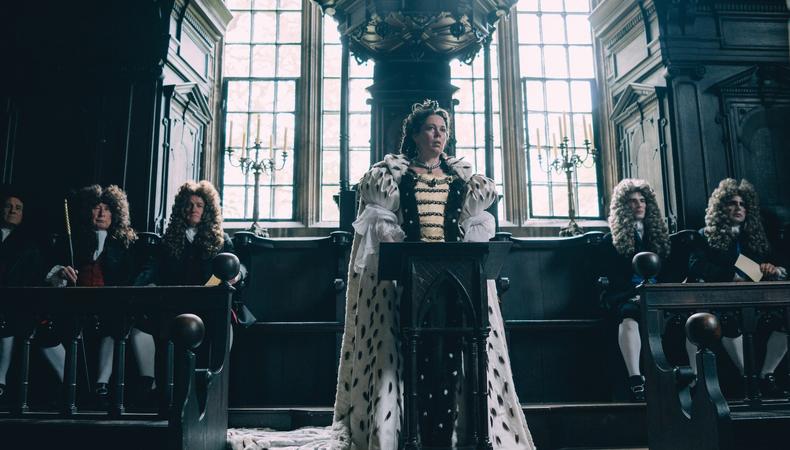
It’s probably a combination of things. Just think about Olivia Colman as Queen Anne in The Favourite. She is unpredictable, grotesque, childish, and hilarious – often all in the same scene. Her performance is full of detail – a twitch of the mouth or a drop in her voice – yet nothing feels overly rehearsed. You get the sense that she’s discovering each emotion in real time. She won an Oscar for a reason.
What are we looking for when we say a performance is great? Here are a few key characteristics.
1. Genuine emotion
Great actors don’t imitate feelings, they find a truthful connection to them. That doesn’t mean they’re drawing on personal trauma, but infusing their performance with something real. “The ability to convey genuine emotions is what sets apart exceptional actors from mere performers,” Ilana Rapp wrote for Casting Networks.
Look at Adam Driver in Marriage Story. In the memorable scene in which his character, Charlie, argues with his soon-to-be ex-wife, Nicole (Scarlett Johansson), Driver goes from exploding rage to almost involuntarily collapsing. His voice cracks, his body goes limp; it is a masterclass in emotional authenticity.
2. Listening while performing
Bad actors perform in a vacuum. Great actors are constantly listening and responding. “A listening actor has the elusive ability to be spontaneous with their thoughts and emotions, rather than draw on stock responses or a preplanned reaction,” according to Act Up North.
Julie Delpy and Ethan Hawke in Before Sunrise are great examples. The film is essentially one long conversation, which demands that the actors constantly react to each other in real time. “[Director Richard Linklater] was keen to capture something very true,” Delpy recalled to the Guardian.
3. Taking risks
Great acting often involves risks. “Risk-taking allows actors to tap into their creative potential, bringing a level of authenticity and spontaneity to their performances,” says writer Sarah Lee.
In Midsommar, for example, Florence Pugh plays a character who undergoes psychological trauma in an unconventional daylight horror setting. She uses a mix of vulnerability and strength, showing her character’s mental unravelling with subtle shifts in expression and body language.
4. Voice control
“An actor’s voice is one of the most important tools they can develop as part of their craft,” Alexander Lee-Rekers wrote for StageMilk. “It aids in the pursuit of a character’s objective, as well as the crafting of said character’s personality.” An accent, a vocal rhythm, or even a specific breath pattern can completely transform a performance.
This is particularly important if an actor is playing a real person or historical figure. Austin Butler committed years to mastering Elvis Presley’s accent, drawl, and singing voice for his role in Elvis. His vocal work helped him capture the emotional shifts and inner world of the man behind the legend.
It’s not always helpful to dwell on bad acting, but knowing the red flags can help you avoid them. Common signs include:
1. Overacting
Although overacting can be useful in genres such as pantomime, it generally signifies that something has gone awry. “Overacting is when an actor goes overboard with their performance, making it seem unnatural or forced,” Rapp wrote. It may manifest as overly dramatic facial expressions, exaggerated gestures, or a lack of modulation in vocal delivery – basically anything that breaks the illusion of reality and reminds the audience they’re watching a performance.
2. One-note delivery
This is when an actor plays every line, scene, or even an entire role with the same emotional tone, energy, or rhythm. The result is often a hollow performance with no depth. “Humans have a huge vocal range, but most people don’t use theirs,” according to HuffPost. “Since an actor’s main tool is speech, he must know how to.”
3. An inability to listen
“Bad actors don't listen,” continues HuffPost. “They deliver a line, pause for the other actor to speak, and then deliver their next line. When they’re not on, they’re off.” That kind of acting feels mechanical, like a rehearsed script being read out loud rather than a genuine conversation unfolding in real time.
4. No sense of objective
Every character wants something, but bad actors often forget about intentions. They act angry or sad without anchoring it in clear reasoning. “Having a clear objective is crucial,” according to BJAS Media School.
Bad acting often comes from trying too hard. Sometimes it’s nerves, sometimes it’s over-rehearsal. But usually it comes down to this: The performer is acting self-consciously. “The biggest hurdles come when they try to protect themselves,” writes director Marcus Geduld. “Different actors do that in different ways: Some flinch from the uglier sides of human nature, others have certain feelings they'd rather not explore, and some simply don’t want to look unattractive.”
There’s no single blueprint for a great actor, but the best performances stay with us – whatever the potion poured into them. They’re surprising, specific, and alive, and they show us something truly authentic.