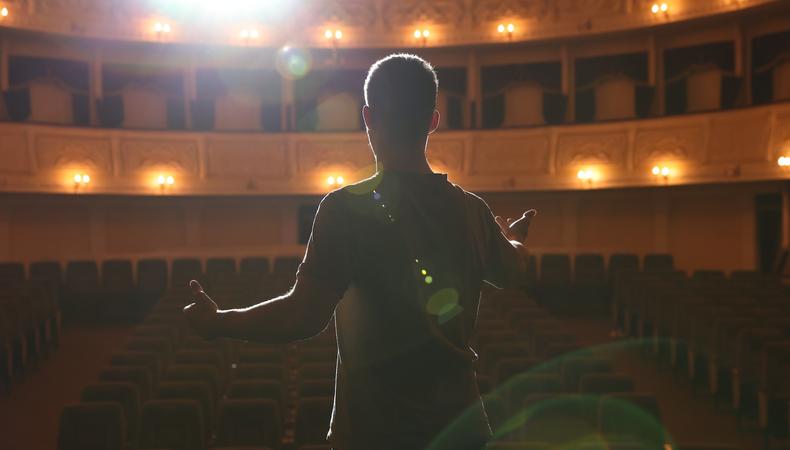
Have you ever been to a show and found yourself unable to take your eyes off a certain performer? It’s probably because they have an excellent stage presence. That je ne sais quoi that mesmerises an audience could be innate, but it can also be cultivated and nurtured. Whether you want to be an actor, a singer, or a standup comedian, it can become one of your most useful assets. But how do you capture something as volatile and ephemeral as an aura? How do you learn how to exploit it to your benefit? First, let’s try to understand what stage presence is.
JUMP TO

LightField Studios/Shutterstock
It’s quite challenging to nail down a sturdy definition of “stage presence.” It’s one of those features that you can identify instantly in other people, but how do you acquire it? It’s important to recognise that it’s a combination of elements that come together to create a vibe. Defining it solely as charisma or predisposition would be narrowing it down too much to something that you can hardly control. Self-assuredness helps give you the confidence to have a particular attitude onstage, but it can easily tip into arrogance. The concept of stage presence is closer to a positive, raw energy that you project – making you magnetic to the audience – rather than a specific personality trait.
It’s a palpable change in vibrations when a performer takes the stage or when someone walks into the room and has everybody turn toward them without speaking a word. Having that type of control over the public is not a forceful act at all; instead, it mostly consists of making a genuine, authentic connection with people around you.
There are common denominators that unite people with arresting stage presences: They are confident but vulnerable, unique but relatable, authentic but intentional. Their performances as actors may be directed by someone else, but they pay attention to their environment and are entirely present in the moment, ready to engage with every minute aspect offered by their circumstances.
You will need to be confident in your abilities to master your stage presence. Even the slightest slip in trust could make you hesitate and lose your composure, so you’ll need to learn how to charm your way through blunders. Here’s where the ol’ fake-it-till-you-make-it philosophy comes in handy. Being in control of your body language is crucial to building your stage presence. Your physicality is not only the first visual impression you’ll make on your audience, but it’s also how you convey your artistry. Physical posture adds depth to your delivery, and taking up space concretises your attitude.
Firm eye contact is another building block. It establishes intimacy and accentuates your engagement with the people with whom you’re interacting. It will benefit you no matter the type of art you make. If you’re an actor, it will transmit your emotions more directly; if you’re a musician, it will make you relate to your audience. It focuses your energy on a point, and it will grant you the ability to make a more directional emotional impact on your spectator. Remember: Owning the space doesn’t have to be loud. Sometimes the smallest choices have the biggest impact.
Your castmates and colleagues will be of significant help too. The energy of a show flows from body to body, so sharing the scene with someone who uplifts you (and doing the same for them) will successfully establish your collective stage presence. Cooperation is key. The director will also be able to influence the stage presence of individual players. If, for instance, you’re an actor of small stature tasked with playing a character who physically intimidates larger actors, your director should be able to help you – and them – with your movements to deliver a performance that portrays this effectively.
LightField Studios/Shutterstock
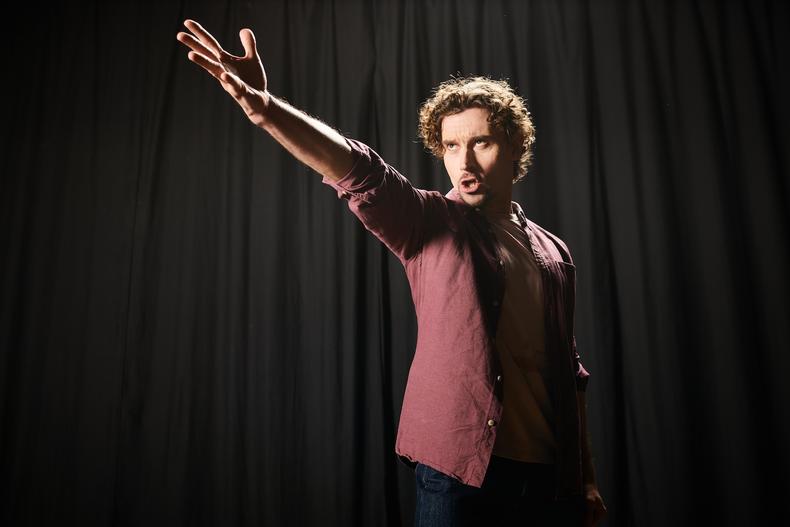
You don’t need to have a strong stage presence to start working as an actor. It will, however, help to establish you as a personality, which will ultimately transfer to the stage, screen, or whichever medium you prefer. It’s good to remember that a performance isn’t a one-way street. You don’t step onto a stage and only act, or play, or tell jokes. You step onto a stage to entertain, provoke emotion, and connect with the audience. It’s tough to do that if your “aura” doesn’t break the fourth wall. Your energy is infectious, and excitement is an irresistible feeling. It’s easy to seduce a crowd if your stage presence is built on actively channelling your love for the job.
Finding your stage presence doesn’t have to be a deliberate struggle either. Applying strategies such as managing your physical stamina and directing your gaze to specific individuals will introduce a new layer to your work, actively building your stage presence for you. Likewise, becoming confident and skilled in your technique will easily make you captivate the room. Paying attention to the people who surround you will aid your charm, as will listening intently to those who are speaking to you. Develop it, and your stage presence could be considered a transferable skill – supporting you in your offstage endeavours too.
Remember that becoming a well-rounded performer is a marathon, not a sprint. It takes time to understand what works and what feels natural to you. The better you know yourself and the more you learn, the easier it will be to project your confidence onto your surroundings and win people over.
Developing your stage presence won’t happen overnight. You will need a lot of practice, which may lead to brief spells of feeling like you’re stalling. Try different things, and remember that mistakes are all part of the process, allowing you to move on from what is not serving you as a performer. Finding your stage presence will make you grow into your artistry and give you more insight into how you can fully own your craft.