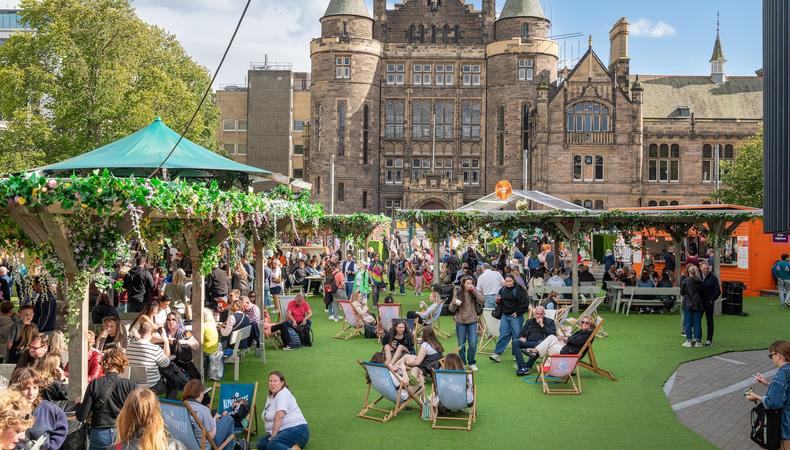
If you go to Edinburgh in August, you’ll find thousands of performers, writers, producers, and even puppets lining the streets. That’s because it’s the month of the Edinburgh Festival Fringe, the biggest arts festival in the world. An all-encompassing creative takeover of the city, it sees artists from across theatre, comedy, music, and performance transform the Scottish capital into a hub of new work. For many, it has been the launchpad for careers, propelling the likes of Phoebe Waller-Bridge, Hannah Gadsby, Richard Gadd, Rose Matafeo, and even Emma Thompson to superstardom. For first-time performers, it can be an exciting opportunity, but one that requires careful planning and emotional stamina. Here, we offer advice for first-time Edinburgh Fringe performers, with specific guidance on how to survive the month.
JUMP TO
- What is the Edinburgh Fringe?
- How does Edinburgh Fringe work for performers?
- How long is the Edinburgh Fringe?
- How to apply for Edinburgh Fringe
- How to choose the right Edinburgh Fringe venue for your show
- How much does it cost to perform at Edinburgh Fringe?
- Marketing your Fringe show
- Looking after yourself during the Fringe
Officially called the Edinburgh Festival Fringe, but commonly referred to as the Edinburgh Fringe or Ed Fringe, it is the world’s largest arts festival, taking place every August across venues throughout the city. The festival began in 1947, when eight theatre companies turned up uninvited to perform alongside the inaugural Edinburgh International Festival. Since then, it has grown into a global showcase for new work. Now, thousands of shows take place across hundreds of venues, from major theatres and pubs to churches and pop-up performance rooms.

Credit: Yatzek Photography/Shutterstock
First, you need to develop a show. It could be a play for a solo performer or multiple cast members, a comedy hour, a cabaret, or something else entirely! There are no strict rules about format, but it is important to consider what works for a Fringe audience. The standard running time is an hour or just under.
“The biggest prep you do before going to Edinburgh is writing a good show,” says comedian Amy Webber. “Some people start doing this 18 months before, but I do it around six or seven months ahead.”
Think carefully about the kind of work you want to present at the Fringe, particularly if it’s autobiographical, says comedian Leila Navabi. “Leave out any bits you don’t want to talk to people about afterwards!” she warns.
The festival typically runs for around three weeks in August, although the exact dates vary each year. You don’t necessarily need to be there for the whole festival; some performers choose to do a two-week run or even shorter. If you choose to do a show for the whole month, you’ll often have a couple of days off too.
One of the benefits of the Fringe is that there is no formal audition process. The festival is open access, which means performers can register their show through the official Edinburgh Fringe registration system.
You need to decide on your show details, including your title, description, performance venue, dates, and times. Many performers work with venues or producers who help organise registration and practical arrangements.
Credit: Yatzek Photography/Shutterstock
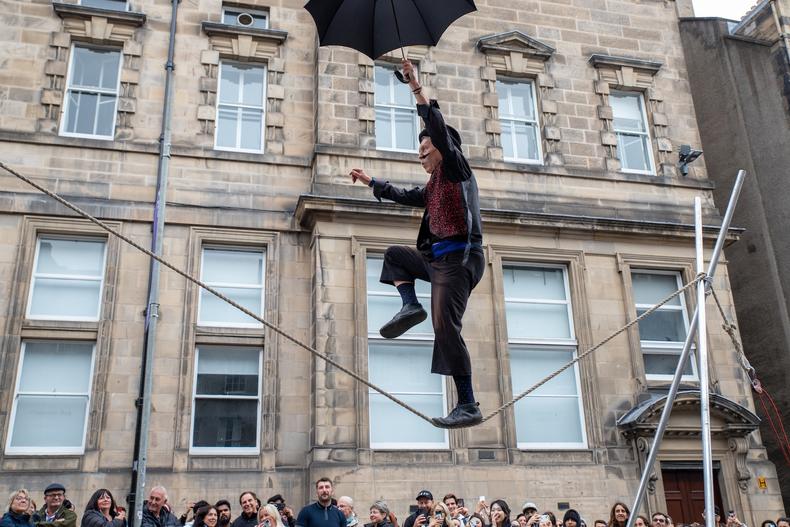
Edinburgh Fringe venues range dramatically in size and cost. Large venues may offer better footfall and industry recognition, but they tend to come with higher prices too. Smaller venues are typically more intimate, which could be a better fit for your show – making it more impactful. After all, a packed room in a small venue can often create more atmosphere than an empty big one. Furthermore, “the best venues with the biggest reach tend to get booked up by January,” Webber says.
Another thing to consider is the time of day you want to perform. “Comedy tends to dominate in the evenings and family shows do well in early-morning slots,” the Guardian explains. “On the face of it, 2 p.m. to 5:30 p.m. is the ideal slot for drama, but of course this is also when competition for audiences is strongest. Don’t be afraid of looking at those noon or midnight slots.”
The cost of taking a show to Edinburgh varies hugely depending on your production size, accommodation, venue, and how long you stay. Need a helping hand planning costs? The Edinburgh Fringe website has this tool to help you budget for taking a show to the Fringe.
Costs to consider include:
Venue hire and registration
One of the biggest production costs will be your performance space. There’s no standard pricing model at the Fringe. At the budget end of the spectrum, free venue networks such as PBH’s Free Fringe don’t charge performers for venue hire. At the other end, established venues can require guarantees running into the thousands. At popular multispace venues such as the Pleasance, companies work on a box-office split with a minimum financial guarantee. For example, in 2026, Pleasance asked for a share of at least £2,376 for a 27-performance run in its 50-seat Attic, while the 750-seat Grand required at least £58,320. Remember to check your contract carefully before signing.
Accommodation
Edinburgh becomes extremely expensive during August. TripScot estimates that in 2026, an Airbnb will cost from around £150 to £300 per night, while a central hotel will set you back £200 to £350 per sleep! Fortunately, there are cheaper alternatives. Lots of people stay in shared university accommodation, rent rooms, or arrange housing swaps to reduce costs. The earlier you can book, the better.
Marketing
Designing posters, printing flyers, photography, and a PR campaign can all add up too. “For most clients, projects cost between £1,250 and £4,400,” according to PR company Opening Lines.
Going to the Fringe is a huge financial expense and risk, but it can also be a big benefit to your career. “I went up to the Fringe because I was so fed up with writing for other mediums – TV, film, etc. – that were never going to see the light of day,” says actor and writer Izzy Radford.
Webber says performing at the Fringe is a great way to bring new people in to see your work. “The best thing about the Fringe is that it gives you the opportunity to create new fans out of people from all over the world, and these fans are loyal and they will come back in the year after to see your new show,” she says.
With thousands of performances competing for attention, marketing is essential – whether you choose to have a PR team or not. It is useful to start promoting your show before arriving in Edinburgh. Make an Instagram, and share video updates of rehearsals and the all-important details, including venue, dates, and a link to book tickets. Build a bit of excitement where possible.
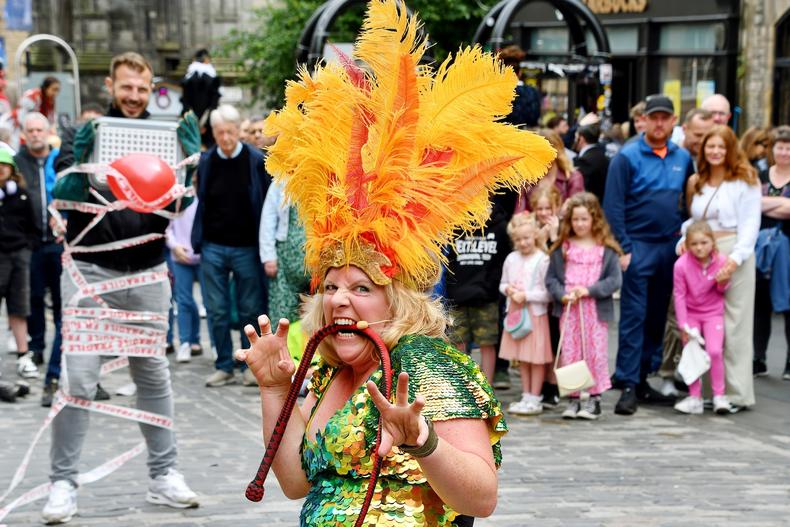
Flyering on the Royal Mile remains a major part of Fringe culture, but it can be emotionally difficult. “Starting any day by flyering in the street to uninterested strangers is pretty tough,” Webber says.
Thankfully, there are other ways to bring people into the audience too. “I truly think that making friends and horizontal networking with other people making shows is a much better marketing tool than handing people a piece of paper with information on it,” says actor Camilla Anvar.
Credit: Pete Hancock/Shutterstock
The Fringe can feel like a long slog, as emotionally draining as it is rewarding. It is difficult to get into a routine. It can feel like a competition with the people around you, and it is expensive. “It helps to keep things in perspective,” Webber says. “Remember that you’re living in a bubble of an industry that can feel fickle, shallow, capitalist, and like a popularity contest.”
Radford admits she was very impacted by the audience’s opinion when she took her show Seating Plan to the Fringe in 2025. “If someone liked the show, I thought I was the second coming; if someone didn’t, I considered asking a random woman in the street to perform instead of me,” she says. “I would say the best solution to this is to call a friend back home who works for a normal and genuinely challenging job.… It’s good to remember that, ultimately, it is not that deep.”
Writer Phoebe Eclair-Powell advises first-timers to go easy on themselves. “Try not to lose your mind,” she says. “Eat a baked potato when things get really bleak. And always have a pint if you’re that way inclined.”