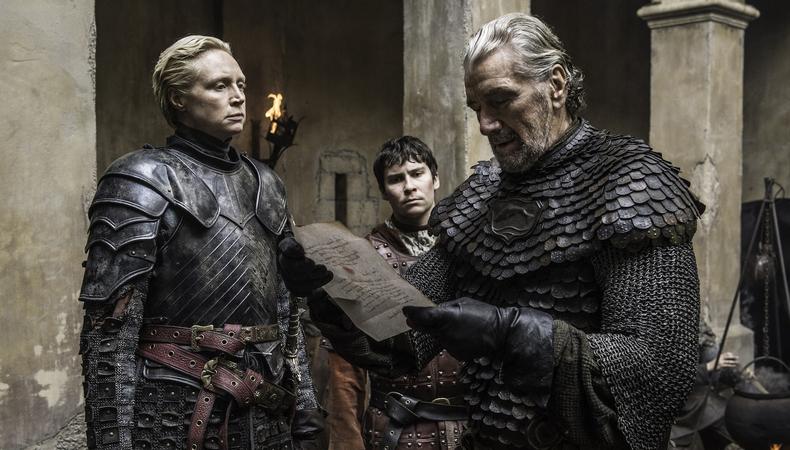
As England’s biggest county, Yorkshire has a rich and diverse range of dialects. Yorkshire accents and personalities have long been prominent in British culture, from Monty Python’s Four Yorkshiremen sketch to Downton Abbey, but the region’s linguistic heritage was put firmly on the global culture map when Game of Thrones premiered in 2010.
Let’s take a look at the nuances of the wide range of dialects that collectively comprise the Yorkshire accent.
JUMP TO
With its distinctive colloquialisms, transcendental slang, and appealing sound, a Yorkshire accent is usually pretty easy to recognise. Through a long history, it retains some excellent examples of Old English, such as “owt,” which is used in the words “nowt” (meaning “nothing”) and “owt” (meaning “anything”).
Many actors speak the Yorkshire dialect originating from West Riding (West Yorkshire and South Yorkshire), but others use the accents of the North and East Ridings (North Yorkshire and Humberside/East Yorkshire), which have stronger Scandinavian influences.
“Yorkshire is vast, and accents vary from Leeds, Sheffield, and Hull to rural areas like the Dales,” says acting coach Sabrina Hunt, of British Accent Coaching. “Each region has subtle variations in vowel sounds, intonation, and rhythm. Phonics studies and listening practice are key to distinguishing them.”
“A good Yorkshire accent feels authentic and natural, showing control of placement (forward and low in the mouth) and intonation (often flatter),” says Hunt, who also co-presents the accent-focused YouTube channel Love English With Leila and Sabrah. “A bad one sounds forced, overexaggerated, or inconsistent, often because the actor hasn’t anchored the voice properly or studied the musicality of the accent.”
“There are two vowel sounds that change considerably from a [Standard Southern British] accent,” Hunt says. “One is that the flatter and shorter æ sound is used much more like most of the north of England, so ‘castle,’ ‘dance,’ and ‘glass’ are all said with a shorter æ sound compared to [Standard Southern British] English. This is commonly referred to as the trap/bath split.”
“There is also no change between the vowels in ‘foot’ and ‘strut’ in a Yorkshire accent. ‘Shut’ and ‘put’ will sound the same, which gives words with those sounds a slightly heavier and lower tone,” she says. “Two other main features are monotonal pitch – Yorkshire speakers often have a flatter intonation than RP speakers – and dropped Hs and Gs, so ‘happen’ becomes ‘’appen’ and ‘going’ becomes ‘goin’’.”
“Study phonics. Understand how vowel shifts and consonant clipping work,” Hunt says. “And work on vocal placement. The voice should feel low and forward. Practise pitch and intonation. The intonation should be kept relatively flat compared to more singsongy accents. Listen extensively to real Yorkshire speakers, not just actors. And record yourself and listen critically.”
Yorkshire parlance is often sprinkled with slang, and it’s good to get a handle on examples. Common phrases include “How do?” (How are you?), “bagsy” (I claim that), “now then” (hello), “ta’ra” (goodbye), and “faffing” (messing).
“Overdoing the accent and making it cartoonish is to be avoided,” Hunt says. “And [don’t] forget musicality. Flatten the pitch, but keep the rhythm natural.”
“Warm up with specific vowel exercises,” Hunt says. “Focus on placement and vowel clarity, and be consistent throughout the piece.”
To learn to speak with a Yorkshire accent, do the following:
1. Study Yorkshire dialects
One of the best ways to master a Yorkshire accent is to record yourself and then play it back repeatedly. Use training resources, such as one-to-one tuition with an actors’ accent coach.
Watching films, TV shows, and YouTube videos – and listening to podcasts – with Yorkshire performers or performances will help you nail a Yorkshire accent. Visiting the county and immersing yourself in local accents would also be a plus!
Brooklyn-born actor Anne Hathaway revealed that she watched the British soap opera Emmerdale to perfect her Yorkshire accent for One Day. You could also check out Yorkshire accents on the International Dialects of English Archive.
2. Learn from the pros who got the accent right
Film and TV are filled with examples of excellent Yorkshire accents. Watch the clips below to follow in the footsteps of the ones who did it best.
- Ridley Scott’s 1970s Hovis ad
- Sean Bean narrating A Playground Like No Other
- Mark Addy in Game of Thrones
- Patrick Stewart speaking about his West Riding dialect
- Jodie Whittaker in Doctor Who
- The cast of The Full Monty
- The cast of God’s Own Country
- The cast of Happy Valley
3. Be specific
Sounding like you’re from everywhere will make you sound like you’re from nowhere. Instead of adopting a mishmash of Yorkshire dialects, narrow down your accent to a specific example.
4. Practise
Nothing beats lots of practice. The more you do so, the better your accent will be. The process of learning a new accent isn’t instant; it involves listening, absorbing, and speaking it over an extended period of time. So ta’ra from us, and on with your learning.