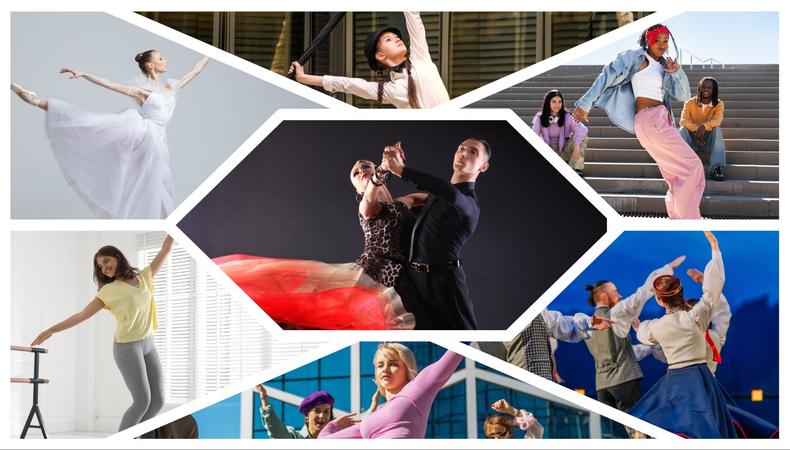
You’ve set your sights on a career as a professional dancer, and now it’s time to think about which genre of dance you want to concentrate on. There’s a whole range of dance styles – perhaps you’ve had lessons in several already – but the skills and training involved to turn your hobby into a career will vary depending on which you choose to pursue.
Asking Les Twins to Riverdance is as unlikely as spotting Shirley Ballas pirouetting with the Bolshoi Ballet troupe. It’s important to know what types of dance are out there and what suits you. But while you’re still finding your feet, being able to turn your twinkle toes to different styles may help you leaps and bounds. Here are seven dance styles to know.
Ballet
Known for its grace, precision, and athleticism, ballet (and the rigorous training it involves) often forms the foundation for many professional dance careers whatever the genre. Classical ballet is highly technical and requires a lot of training, often from a young age. The ballet repertoire can involve a mix of classical works, such as Swan Lake and Giselle, alongside more contemporary pieces. Ballet dancers often perform at bespoke venues, such as Sadler’s Wells in London, as well as multipurpose venues, and they can find themselves working nationally or internationally with ballet companies such as the Royal Ballet, Northern Ballet, or English National Ballet. Famous ballet dancers include Carlos Acosta, Misty Copeland, and Darcey Bussell.
Tap dance
The sound of Fred Astaire tip-tapping his way across the dance floor is characteristic of tap dancing’s unique mix of musicality and percussive elements. Tap is all about rhythm and the sound your feet make when you’re dancing. Dancers attach metal taps to the toes and heels of their shoes to make the distinctive tapping sound.
Tap originated in the US and became popular in the 1930s, fusing jazz, improv, and folk elements. Broadway tap, or theatrical tap, is now widely performed in musical theatre, and tap generally is a very marketable genre of dance. Famous tap dancers include Gene Kelly, Gregory Hines, and Savion Glover.
Street dance
Street dance is a collective term for a range of urban dance styles, including hip-hop, breaking, locking, and freestyle. The choreography is often improvised and rooted in authentic street culture. Dancers can use elements of their own story and their communities to enhance the dance too. Top professional street dancers are often in demand, performing in music videos, on live tours, and in films, or even competing in the Olympics. Ashley Banjo, Twitch, and Kenrick “H20” Sandy are notable street dance names worth checking out.
Ballroom
The genre that has become household-famous in the UK thanks to annual talent contest Strictly Come Dancing, ballroom includes styles of dance such as waltz, tango, quick step, and foxtrot. Almost always performed in partnership with another dancer, ballroom is very technical and requires a high level of training to become proficient – just ask Ann Widdecombe! Professionals are adept at footwork and precision, and they have excellent posture. They compete internationally, go on tours, and sometimes even perform on TV. Well-known ballroom names include Derek Hough, Anton Du Beke, and Oti Mabuse.
Commercial dance
There’s a clue in the title: Commercial dance focuses on performances for commercial entertainment media. You can see it in pop videos, on TV shows, and behind the lead singer at concerts. Energetic and showy, commercial dance takes bits and pieces from lots of genres to make a splash. It’s hard to pin down when it comes to structure and technique, but it has broad, mass-market appeal. Check out the work of Parris Goebel and Brian Friedman for wow-factor examples.
Jazz
Dynamic, rhythmic, and expressive, jazz dance started in the US when African American dancers started blending African and European dance styles. Steps such as the ball change, Charleston, and jazz walk are typical of the style, which showcases syncopation and sharp, fluid movement. In the 1950s, choreographers such as Bob Fosse used jazz stylings to great effect, and now jazz steps are often used in commercial dance. You can find live jazz dance in musical theatre, on cruise ships, and at concerts. If you’re an actor practising your steps, knowing a few Fosse moves may go down well in certain auditions.
Folk Dance
Morris dancing, Irish dancing, and Bhangra are all part of the folk dance genre. The genre’s broad range of styles are deeply rooted in the culture they come from and often reflect traditions shared by a community. The choreography can be passed down through generations and the dances are performed everywhere, from outdoor festivals to humble church halls.