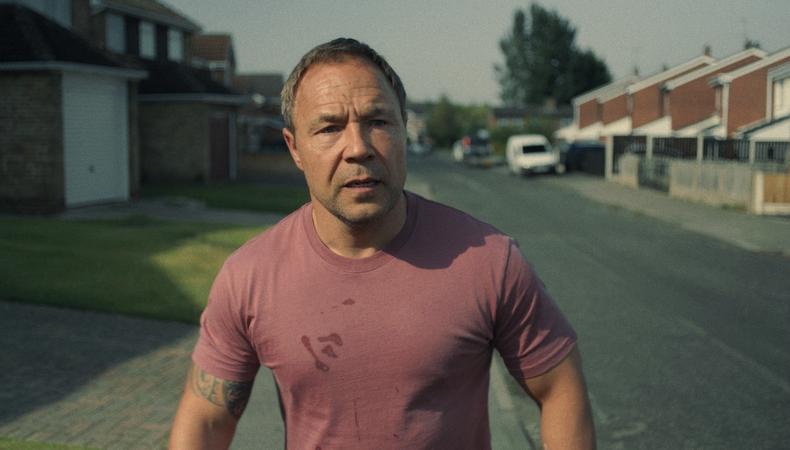
Stephen Graham is a leading British actor with national treasure status and an OBE for his services to the drama industry. Over the past 35 years, he’s starred in numerous Hollywood films – from gangster hits like The Irishman and Gangs of New York to family favorites including Pirates of the Caribbean and Matilda: The Musical – and been a fixture of the small screen with leading roles in Line of Duty, Peaky Blinders, and Boardwalk Empire.
This year, he’s been the talk of the industry after co-writing, executive producing, and starring in one of the most watched shows of the year: Adolescence. The Netflix four-part miniseries follows a 13-year-old boy accused of murdering a female schoolmate. It’s currently up for 13 Emmy awards, including writer and lead actor awards for Graham.
In an interview with Backstage, Graham discussed how the show came about, its one-shot filming style, his theatrical influences, and the ideal creative partnerships. Here’s a snapshot of what he had to say.
On the conversation that planted the seed for Adolescence.
It all began when Graham and director Philip Barantini were approached to make a television series using the one-shot concept, which was how they’d shot their 2021 series Boiling Point. Graham’s initial thought was, “I don't want to do that.… I don’t want to do something about one person for like eight episodes; I think it’d be boring.” But in a moment, the idea for Adolescence came to him. His inspiration, sadly, “was a spate of cases not too long ago, where young girls were being murdered – stabbed to death by young boys. And they are boys, they’re not men.” He found he “just managed to narrate episodes one, two, three, and four in how I saw them and what it would be.” He credits his mapping of the procedural elements to his “slight obsession with 24 Hours in Police Custody.” He felt Jack Thorne was the “only person that can write this,” and his wife, Hannah Walters, with whom he runs Matriarch Productions, agreed. Graham knew he wanted the independent production company Warp Films on board too.
“It felt really, really, really relevant,” he recalls, and he was right: The show has deeply resonated with audiences across the UK and further afield. “Although what we made was a piece of fiction, I think there were certain elements, especially in our country, that resonated with people, because they had seen these things happen.”
On making Adolescence a “whydunit” rather than a “whodunit.”
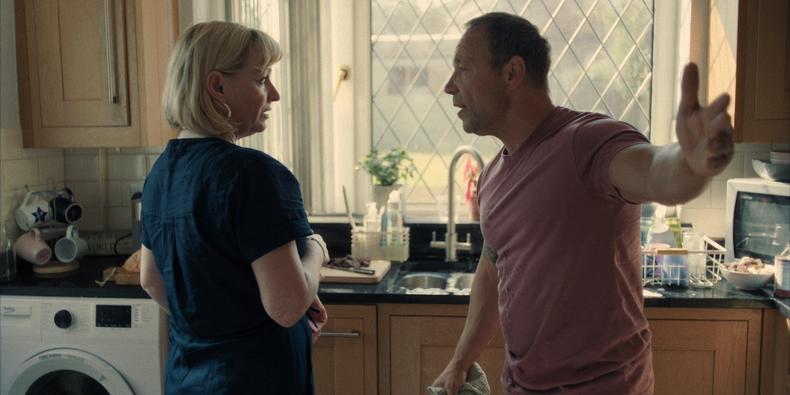
In putting the emphasis on why, rather than who, “you break all conventions of drama in many ways.” By showing the audience the evidence at the end of the episode, “nobody can think, Well, he didn’t do it.”
Choosing to follow the perpetrator’s family rather than the victim’s was another subversion. “I wanted you to go on a journey with a family who were a good, hard-working, decent, law-abiding, loving, caring family – just a normal family,” Graham says. “And I wanted the audience to try and understand with the family, ‘Why has this happened to us?... What's gone wrong for our boy to do such a horrendous act like this?’.”
On each episode being like a play.
The creative team spent three weeks crafting each episode and, as a result, “every episode was like a brand new play,” Graham says. “We spent lots of time talking about the language and what was going on and why we were saying this and what was happening.” In Episode One, for example, which follows the Miller family finding out about Jamie’s arrest, “we spent four days in the living room talking about the script.… Then we got up and moved it around.” For Graham, it was “the most wonderful experience I’ve ever had as an actor,” because he and his co-stars “got to really analyse the script and really understand the language together as a collective.” He felt the project was marrying the “live creativity” of theatre with the “naturalism and the nuance” of film and TV. “It was a beautiful, beautiful thing to be a part of.”
On theatre inspiring his use of the one-shot concept.
“I think [for] most of us actors, [theatre is] our first love,” Graham says. He was inspired by the resourcefulness of stage work, and how challenges are overcome without opportunities for second, third, or fourth takes – to shoot each episode in one go. He knew the format would hook the audience from the start. “That’s what I [envisioned] in the very beginning: coming up the drive, going into the house, going into the bedroom, and going past the family…then coming in and seeing a 13-year-old boy in bed.” It kept the viewers guessing, “because instantly I wanted the audience to go, ‘Well, what, he’s only a kid’.” Graham also purposefully positioned himself on the stairs as a decoy. “I’m not speaking out of turn, but you go past Stephen Graham on the stairs because you think, ‘Oh, he’s done it.’... So I knew that would have the audience thinking, ‘What’s going on?’.”
On the creative relationships – such as with Martin Scorsese, Shane Meadows, and Jack Thorne – that keep him coming back.
“I have a very simple answer: trust and joy,” he says. “I trust them implicitly, and I know that I’m going to have a joyous experience when I work with them, because it doesn’t feel like work. You have that trust for each other, but at the same time respect and joy in what you’re doing.