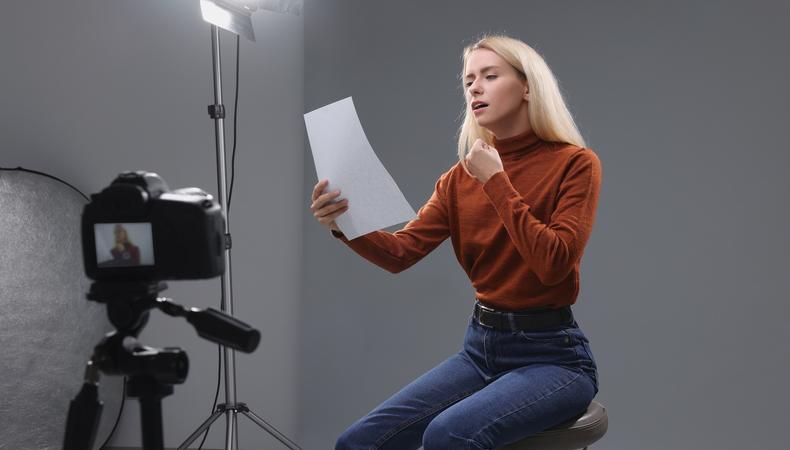
You’ve booked an audition. What do you do now? How do you stand out, nail it, and get cast? Everyone approaches auditions differently: George Clooney started out by flipping through the script and shifting his mindset to believing he was the answer to a problem. Paula Abdul swears that failing to prepare means preparing to fail. Although there isn’t a one-size-fits-all answer, here’s a list of audition tips to support and inspire you on the way to landing your next role.
1. Prepare thoroughly.
Acting auditions can be stressful, but preparation is key. Whether you’ve been given a couple of days or only a few hours to learn your material, try to absorb it as much as you can. Print off your sides and learn your lines. Try to read the entirety of the script if it’s available, and build an idea of your character for yourself. Understand your character’s motives and the context of the role you’re auditioning for.
2. Dress for success.
Wearing something comfortable that also reflects the character you’re reading for is a great start. An outfit that allows for movement will help with any potential requests that may involve physicality, while sporting clothes that your character could wear may help the casting panel visualise you in the role right away.
3. Be confident.
It’s not easy to exude confidence if you’re nervous, so start by telling yourself you’ve got this. Remember: Your audition begins the moment you walk through the door, so try to project your determination with your body language. Hunched shoulders and downcast eyes won’t do you any favours. Don’t forget that everybody on the panel is on your side and wants you to do well – they need to cast the project, after all – so try to have some self-belief.
4. Be enthusiastic (but don’t overdo it).
The casting director or project director may ask for your opinion of the script or the character, so be ready to give it. The production team will want to work with someone who’s enthusiastic about their project, so make sure you have a few positive points to make or questions to ask. Show how you connect with the character and how you can bring your personal point of view to it, highlighting your individual strengths.
5. Be present.
You may feel like bolting for the door, but do your best to stay in the moment. Your audition is an opportunity to be in the room where it happens and learn from experienced professionals. You’re being given the chance to show your interpretation of a role and get immediate feedback. Embrace it! It can provide you with valuable insights and help you to refine your performance. Constructive criticism is a time to grow as an artist and as a person.
6. Be nice.
Every member of the panel will have a mental image of how the role should be performed, and each face in that room could be the one to tip the scales in your favour. Nerves can influence our behaviour and make us come off differently from how we wish, so make an effort to be polite and courteous – at the end of the day, we all want to work with friendly colleagues.
7. Be on time.
Your presence (or lack thereof) will be your introduction before you utter a single word. The panel may be delayed and you may have to wait to be seen, but as the auditionee, you should always be on time, patient, and committed. Being late (or not turning up altogether without warning) is a big no-no.
8. Go with the flow.
The casting director may ask you to deliver something you haven’t prepared, do another take trying something different, or read some material you haven’t seen at all. Don’t let on-the-day requests throw you off. Instead, impress them with your flexibility and adaptability. After all, they’ll want someone who isn’t afraid to change things up, and who can take fresh direction and run with it.
9. Be yourself.
The panel will want to see what you can do with the material, but they’ll also be interested in who you are as a person and artist. Don’t pretend to be someone you’re not. Highlight your skills and play into your strengths to let your personality shine – it’s what will make you stand out. Remember that an audition is only the first step in a collaborative process, and the casting panel will want to see how you work as well as how you become the character.
10. Network.
See your audition as a door opening. Each member of the panel will have multiple projects that you may be perfect for. Even if you’re not the best fit this time, more opportunities could come your way through the experience. Similarly, the actors you meet on the day could be future collaborators. Be curious and open-minded, and try your best to leave a good impression.
11. Enjoy the process.
Auditioning is stressful, and it can feel like a job in itself. The more you do it, the better you become at it. Unfortunately, rejection is just part of the process. Don’t see it as defeat, see it as a learning curve and take every audition as a stepping stone in the right direction.
Remember: Auditioning means people are taking notice of you, so welcome the challenge! Stand out by letting your personality and professionalism shine. These tips on auditioning will give you an idea of what you can do to leave a lasting, positive impression on the casting panel, but you are your own secret weapon. Trust your instincts and don’t be afraid to be yourself. Good luck!