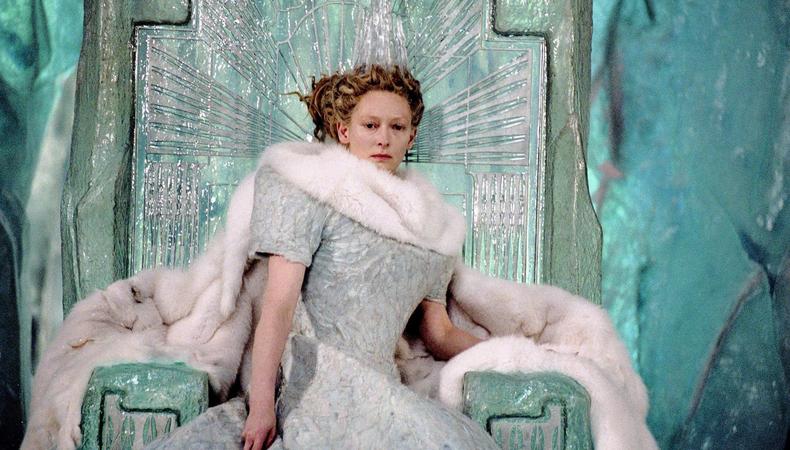
When people think of acting, they may picture the glamorous lead roles – Hollywood’s shining stars and stage leads. Standing right next to them, however, are a crucial but frequently overlooked subset of the profession: character actors. Think of Tilda Swinton as the White Witch in The Chronicles of Narnia, Mark Strong as Lord Henry Blackwood in Sherlock Holmes, and Toby Jones as the voice of Dobby in the Harry Potter films. These larger-than-life characters take their own sort of skill to bring to life.
But what exactly is character acting? And what does it take for a character actor to deliver a performance that’s remembered for bringing something surprising, strange, or simply unforgettable to the screen or stage?
Here’s a look at how this style of acting differs from other types of performance, and how to sharpen the techniques so you’ll be first in line for big character roles.
JUMP TO
Put simply, character actors make a career out of disappearing into a range of roles. Their parts tend to involve exaggerated traits, defined movements, and idiosyncrasies. They may be comedic or dramatic, but they’re rarely naturalistic portrayals of everyday folk.
A leading role is usually steeped in realism, but a character actor is expected to explore eccentricity. They’re rarely the main event, but their performances are often the ones that define a project. Heath Ledger gave one of the greatest performances of all time as the Joker in The Dark Knight, after all.
For actors, playing a bold, eccentric character can bring great joy. As character actor Helena Bonham Carter told the Times: “I’ve had more interesting parts. If you’ve played ingénues, beauty goes. Luckily, I can always change myself.”

Credit: Denis Makarenko/Shutterstock
Leading actors tend to give performances grounded in reality – often searching inside of themselves to grasp their essence – while character actors build roles from the outside in, crafting a new walk, voice, posture, or rhythm of speech.
Leading actor Hugh Grant became known for fronting rom-coms, even saying he was “just the guy from romantic comedies,” but it is nearly impossible to box in character actors as one thing. They’re skilled at morphing into different forms, and they typically jump from one big character to the next.
Just look at Mark Rylance. He has made a career out of playing eccentrics, including Thomas Crowell in TV’s Wolf Hall, Rooster Byron in Jerusalem on stage, and Rudolf Abel in the film Bridge of Spies. “He’s a chameleon. He’s able to transform himself into almost anything,” director Mike Alfreds said of Rylance. “Everything he does, he takes into a space you don’t expect. It’s a sort of genius. He has enormous capacity and intense commitment – an animal vitality you can’t take your eyes off.”
The job of a character actor is to make their roles believable, no matter how extreme their traits. Great actors must “dismiss all ideas from their conscious mind in order to provide an experience that is real,” Rylance has said.
How do you actually bring a character to life? Here’s a checklist for building a memorable and grounded performance.
1. Voice work
Training in voice adds “depth and personality to a character,” says voice actor Joe Davis. Most character actors have strong vocal versatility. That may mean learning regional accents, exploring vocal placement, or adjusting pitch and tempo.
To practise, consider how a character may speak in different emotional states. Do they talk faster when they’re nervous? Pause for effect? Change the volume at which they speak, depending on where they are? The voice is a great way to reveal personality and opinions on a situation or event.
2. Physical transformation
In an article in the Guardian, Toby Jones described his process for delving into a character’s physicality. “I’m always interested in knowing what a character looks like when he’s in a neutral state. Not angry or sad, but just walking down a corridor,” Jones wrote. “It's good if, over the length of a film or a play, I have a set of physical mnemonics – he breathes like this, his gait is like this. That helps me to check in and out of a character.”
Start by paying attention to posture and gesture; consider how a character moves and why. Do they lead with their chest, hips, or feet? Do they have a firm or weak handshake? Are they straight-backed or round shouldered?
3. Observation and imitation
Character actors are often keen people-watchers who draw on their observations for inspiration. Spend time in cafes or libraries, or on public transport, taking mental notes of the way people behave. For Meryl Streep, who has played a variety of character roles – including Margaret Thatcher in The Iron Lady, The Witch in Into the Woods, and Miranda Priestly in The Devil Wears Prada – curiosity in other people is key. “That’s the essence of my acting,” she has said, according to Vogue. “I’m interested in what it would be like to be you.”
4. Find reasons
Character acting isn’t caricature. You’re not mocking someone; you’re stepping into their skin. Think about why your character behaves the way they do. What’s their secret pain? What makes them feel powerful? But be subtle with your intentions. “It’s important not to indicate,” Robert De Niro has said, according to the Actor’s Place blog. “People don’t try to show their feelings; they try to hide them.”
Short answer? Absolutely! Many of the industry’s most respected performers have built entire careers as serial character actors. Unlike leading actors, who may find themselves typecast or limited by age, character actors develop a diverse and extensive portfolio of work. “I was a character actor from the very beginning and not really sold as pretty, which is probably what’s allowed me to survive as long as I have,” Susan Sarandon told the Guardian.
Indeed, there is often more work and longevity for actors who can morph, shift, and surprise. “Star players often begin as winsome, floppy-haired Romeos or Juliets,” journalist David Jays says. “But pretty doesn’t always endure – for longevity, look to the odd.”
Character acting is a craft rooted in transformation and observation. It may not always land you the poster role, but it offers something richer: the chance to unsettle and even steal the show.
So why not lean into it? Get specific; get weird! That’s the magic of the character actor, after all.