
Have you got an artistic eye for colour, light, and composition? And have you got the smarts to learn the advanced technical knowledge required to utilise a variety of digital, electronic, and traditional film cameras? Step this way for a career as a camera operator.
Demand for skilled camera operators is high since they’re essential across film and TV productions, but the process of becoming one can be long and demanding, and it often involves taking junior positions first.
Still, if you have the persistence and passion for this exciting but challenging work, read on for how to get started.
JUMP TO
Camera operators plan shots, select and maintain equipment, and expertly capture footage in line with the director’s vision. Common duties include:
- Setting up camera equipment
- Choosing between lenses, camera angles, and lighting positions
- Planning and rehearsing shots
- Providing technical and creative advice for directors of photography (DPs)
It’s not a career for those who like the comfort of a desk and chair: camera operators work on location as well as in a studio. You might be expected to work at considerable height or in all weather, throughout the day or during the night. Duties vary according to the work; a news camera operator tends to film static shots during live shoots, whereas film work typically requires more creative input and long-term planning.
Camera departments adhere to strict standard practices. Instructions must be repeated, lenses passed back and forth in a specific way, and cameras should never be left alone or on an operator’s shoulder after a take. It’s a meticulous world in which each person has their role, and that of camera operator is near the top.
Here’s the hierarchy:
- Camera trainee: Entry-level team member who runs errands and relays messages while gaining experience.
- Camera assistant 1 (loader): Responsible for loading and unloading new film, running the clapboard, labelling shots, and checking equipment.
- Camera assistant 2: Directly assists the camera operator by changing focus during shots, cleaning camera and lenses, and setting up between shots.
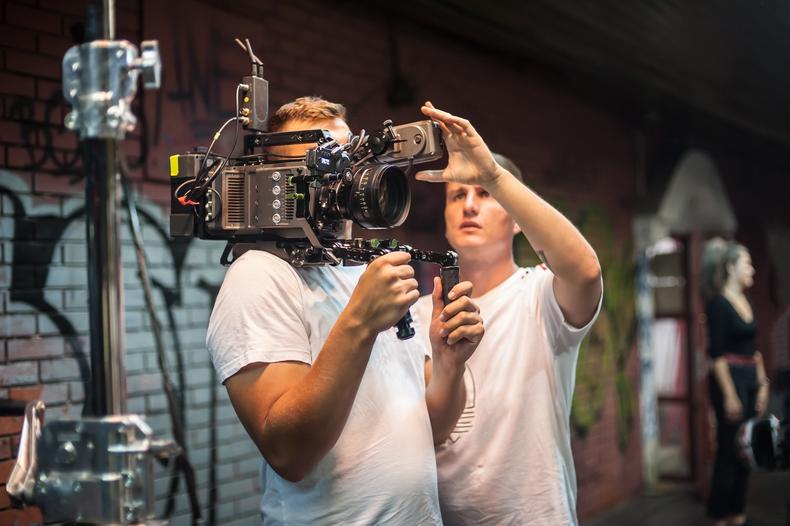
- Camera operator: Physically manoeuvres the camera, is responsible for filming the shots, and supervises their camera assistants.
- DP: Heads up the department. Also known as a cinematographer, the DP works closely with the director to determine camera movement and framing.
guruXOX/Shutterstock
Aspiring operators begin as trainees. Securing that first position often demands the most persistence, so it’s wise to learn what lies ahead and how best to progress.
1. Take a course
Though not necessary, undergraduate courses in media technology, photography, and media production can provide valuable practical experience and technical know-how. Many trainees will have such a background.
Alternatively, one-year Level 3 diplomas may appeal to aspiring camera operators not in a position to attend university. Relevant diplomas include:
- Creative Media Production and Technology
- Film and Television Production
- Photography
For greater practical experience, consider a Camera Prep Technician Level 3 Advanced Apprenticeship. These take around two years and often lead to trainee roles with a production company, thanks to the extensive on-the-job experience they offer.
2. Volunteer
Volunteering on film or TV projects is a great way to get some industry experience. You’ll develop technical knowledge, gain experience with a professional crew, and build a network that can help you find work going forward.
Check out jobs boards and notices on local Facebook groups for opportunities in:
- Student film projects
- Community films
- Production companies seeking a runner
All experience is good experience, but prioritise gigs offering:
- Experience working on a professional shoot
- Time with camera teams
- A job title or acknowledgement in the credits that can be used on your CV
- Useful industry contacts
3. Work with a rental company
While it might not be your first choice of gig, and it won’t offer a clear path for career progression like beginning on the bottom rung of the ladder in a film department, taking on a role with a camera rental company will be a chance to gain an intimate understanding of different equipment, how it all fits together, and which pieces meet different criteria.
You’ll also be in a position to demonstrate equipment for visiting camera operators and DPs who need assistance choosing the right hardware and checking out the latest tech. Who knows? If these professionals sense your interest in camera work, they might keep you in mind for career opportunities down the line if an opening for a trainee position comes up. Once on set, that technical knowledge often eases the transition from camera trainee to camera assistant. You're unlikely to bypass the trainee position entirely, but possessing the technical know-how can certainly speed things up.
4. Secure paid work
Volunteering gets your foot in the door, but you’ll soon want a paid position. Rejection is common and resolution is key. Keep applying, and look for work as a floor runner if trainee positions prove scarce. Listening carefully and working diligently can earn you a place on the camera team over time.
Speaking at a panel arranged by The Guild of Television Camera Professionals, camera operator Hannah Mellish advised contemplating smaller, seemingly less prestigious opportunities. “Look for the small companies,” she said. “I started at a shopping channel. … It’s one of the least respected areas of multi-camera, but … I was operating cameras for live television for around 11 hours a day, and that sort of experience is just invaluable.”
Adhere strictly to rules and standards from the second you walk on set, and be sure to take full advantage of your proximity to experienced professionals. Ask questions and show your passion – as noted by one cameraman, “Be willing and ready to learn. … A lot of energy and enthusiasm, that's what we're looking for from young people.”
5. Build your CV
CVs help more than showreels. Include every camera credit you’ve earned, but also consider transferable skills. For example, knowledge of computers is appreciated by digital imaging technicians (DITs), and an underwater Professional Association of Diving Instructors (PADI) certificate is helpful for underwater photography.
Keep your CV up-to-date and start considering where you’d like to specialise as you add more credits. Be careful not to inflate your credits. As the team at MyFirstJobinFilm.com caution: “Do not label your [job title as] DoP – it will be flung in the bin!”
6. Stay up-to-date
Technology progresses constantly, so even seasoned camera operators take courses on the latest hardware and software. Many television companies develop in-house training programmes to ensure that happens. Those not currently working may keep current by subscribing to trade journals, including:
- Zerb: Produced by The Guild of Television Camera Professionals and written by camera operators, DPs, and other camera tech experts, Zerb brings a “mix of location reports, technical information and human stories related to the craft of camerawork”. The entire archive is available online.
- Camera Operator: Published by the Society of Camera Operators, Camera Operator covers behind-the-scenes experiences as well as “on set etiquette and advice, technical how-tos, profiles of members, and reviews and discussion of tools and technologies relevant to the profession of the operator.”
Trainees certainly can’t let their studies stagnate. In fact, staying current with emerging technology can help you adapt to new shooting styles, hardware, and software, ultimately allowing you to secure more work in the future. Attend available workshops and training, and be sure you’re familiar with the leading software packages.
As summed up by experienced camera operator Steve Jackson: “You do need the technical knowledge. You do need to do photography courses. You do need to bite the bullet and do that.”
7. Keep an open mind
You’ll likely have an ideal career mapped out before even visiting your first set. Maybe you’d love to film TV dramas or have a passion for nature documentaries.
There’s nothing wrong with that, but it’s worth being open-minded if you’re early in your career, and remember that experience could see you change tack. That’s what happened to Fiona Schimmel, camera operator for OB sports:
“I was quite set on working on studio shows, and then I just happened to get offered a job at an outside broadcast company. … It was probably the best thing I ever did, because I absolutely love working on sports. I still do some studio work, but this kind of work, filming sport, is my passion now.”
Explore every avenue that presents itself and stay open to new pathways – you never know when you’ll find your calling.