If you were wowed by Emma Stone’s bold monochrome look in Cruella, loved Timothée Chalamet’s purple velvet in Wonka, or are obsessed with the sequin placement in Strictly Come Dancing, then becoming a costume designer could be the career for you.
From the gowns of Bridgerton and The Crown to the functional workwear of Line of Duty, great costumes enable characters to come to life. Thanks to its thriving film, TV, and stage scene, the UK is home to some of the best costume designers in the world. Oscar winners Sandy Powell, Jenny Beavan, and Holly Waddington are all Brits. So, what does it take to join their ranks? Let’s take a look inside the industry.
JUMP TO
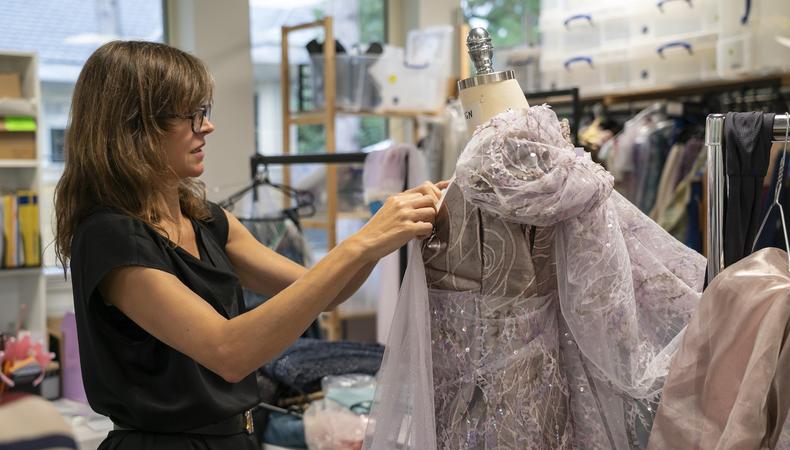
A costume designer envisions and creates the clothing and accessories worn by actors in film, TV, and stage productions. They are creative, visual artists who also manage budgets, schedules, and logistics.
Costumes often need to communicate as much about a character as their lines or movement. As a head of department, the costume designer leads a team that works long hours to ensure the clothing serves the needs of the narrative and looks good on camera.
Top costume designer Richard Cooke, who designed the outfits for shows such as Harlots, The Completely Made-Up Adventures of Dick Turpin, and Mum, explains that collaboration is essential. “You need to be able to realise the vision of your director - it’s one of, if not the most important relationship. You need to be able to solve problems quickly and efficiently with minimum of fuss, as a large part of the job is problem-solving.”
Costume designers begin work before shooting starts, breaking down the script to figure out what they need to make and what they’ll need to hire in. Buying ready-made clothes will often be handled by a buyer, a key member of the designer’s team who works alongside costume assistants and dressers to bring the designer’s ideas to life. The designer will also sketch mood boards, do any historical research, schedule fittings, and remain on hand when the director calls “action!”
The costume department is one of the first places an actor comes to on the morning of a shoot, and it can be a very personal, vulnerable space. Costume designer Betsy Heimann (Almost Famous, Green Book) explained to GoldDerby how she works with actors. “I’ve had them look in the mirror and maybe say a few of their lines, and a becoming starts happening, and you know you’ve found them. You’ve both found them,” she said. “And from there, I give them shoes and I watch them walk away.”

GetMyStock/Shutterstock
To be a successful costume designer, a combination of these skills could help.
Creativity: Costume designers are essentially visual storytellers, revealing character through clothes. They need a good eye for detail and should be skilled at drawing, design, styling, and garment production.
Passion: Long working hours mean you’ve got to be enthusiastic about the job. You’ll know your Regency from your Victorian era, and love nothing more than researching different styles and eras for inspiration.
Team mentality: To thrive in film, TV, or theatre, you’ll need to be a great collaborator. These industries involve a lot of working together towards a common goal, and knowing how to communicate effectively is key.
Organisation: Costume designers, especially senior ones, are often responsible for staying on top of schedules, budgets, and deadlines. You might be ordering materials as often as you’re cutting, shaping, and sewing them.
Cooke adds that, in his experience, top costume designers are hard-working, patient, great people managers, and have a good eye, while having “a sense of humour is key.”
Costume designers either learn on the job or get their training in an educational setting. If you opt for the academic route, it’s likely the course will involve work experience on a set. Once you’ve qualified, you should be able to pursue jobs as a costume assistant or wardrobe trainee.
From there you can move up the ranks to second assistant costume designer, costume supervisor, and, after a lot of work, to head of department. Cooke adds, “When you start out, you’re not a fully formed designer. It takes a long time and you always keep developing and [you] learn something new on every job.”
Costume-related degrees potentially worth pursuing include:
- Costume Design for Film and Television at Falmouth University
- Performance Design and Film Costume at Arts University Bournemouth
- Costume Design at University of Salford
Cooke teamed his studies with learning on the job, and thinks a combination of practical experience and education is “ideal.” He studied at Wimbledon College of Arts and recommends its BA in Costume, where aspiring designers can be “in an environment of like-minded students and bounce ideas around and push each other forward.” During his second year, he gained experience on “big work placements” including the BBC’s Pride and Prejudice, Franco Zeffirelli’s film adaptation of Jane Eyre, and Ang Lee’s Sense and Sensibility, starring Emma Thompson. “I learnt a huge amount that proved to be a great foundation for the rest of my career,” he says.
Like most creatives, costume designers are freelancers often working on short-term contracts. They might earn a large amount one month and nothing the next, with the rate largely dependent on reputation and experience. The National Careers Service estimates an average yearly salary between £22,000 and £34,000.
Chaosamran_Studio/Shutterstock
If you’re keen to get a foot through the door, here are some steps you can take.
1. Build your network
Start networking by sending out emails to costume designers whose names you can find on show credits or IMDb, or check whether they have a website with information on how they’d like to be contacted. Take a look at specialist agents such as Dench Arnold, Berlin Associates, or Gems that represent heads of department and might be willing to help aspiring designers. Also remember to use social media and attend relevant events such as film festivals or screenings.
If you’ve trained, you may already have contacts from your course. Ask your tutors about past students who have found relevant work and get in touch.
2. Get experience
Using your skills in any setting is a good place to start. That might mean offering to make costumes for local film or theatre groups. Check out Facebook groups for local creatives, and keep an eye on job boards, too.
Another route in is to work at a costume store. Angels, based in London, is the world’s largest costume house. Working there is an opportunity to meet designers and directors every day. It’s also where top costumiers Jacqueline Durran and Julian Day started their careers.
3. Create a portfolio
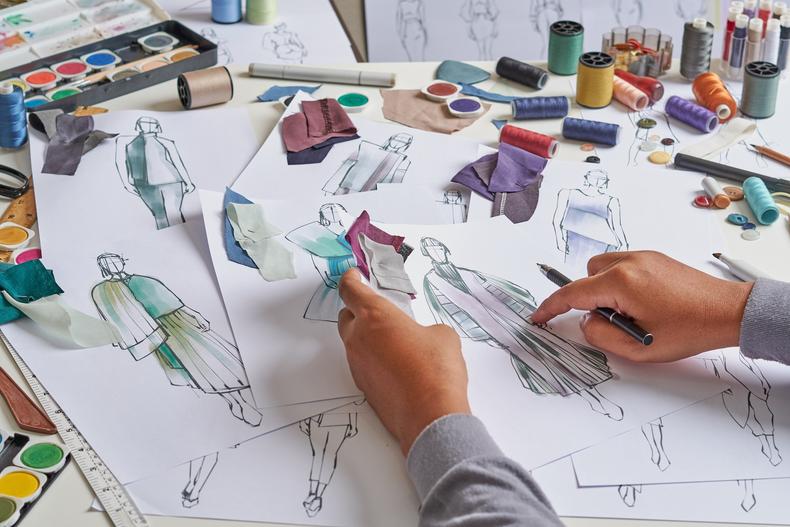
Costume designers need a portfolio to showcase what they can do to prospective employers. Your portfolio should demonstrate your creativity, your sewing skills, and show you can work in various styles. It can include sketches, mood boards, and fabrics, as well as the final designs.
Make sure you take photos of any projects you work on; a couple of pages for each project will do. Aim for 10-20 pages of your best original, varied work, and have it ready in both a hard and digital format so you can send it to employers and showcase it on social media.
4. Prepare to work hard
Cooke’s final piece of advice? “Prepare to work harder than you can imagine!” But, he adds, “I get the chance to do something I love and am passionate about, which not everyone is fortunate enough to do.” In other words, it’ll be worth it.