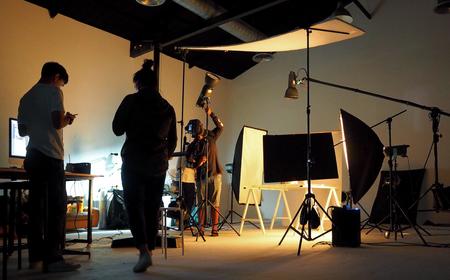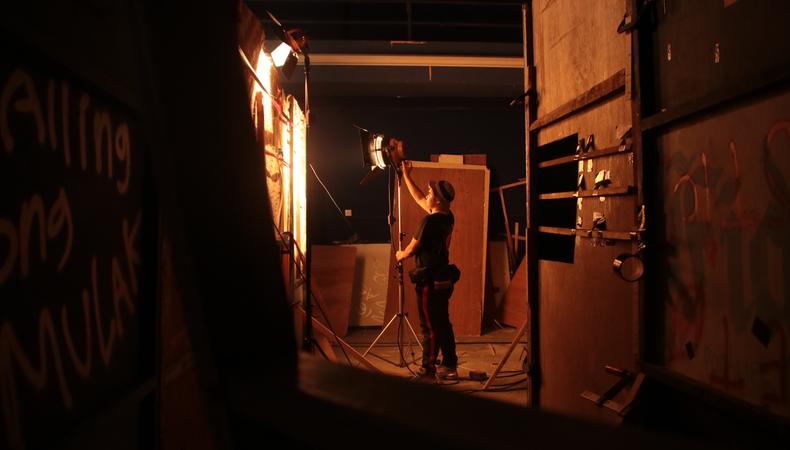
Lighting defines the way a movie, TV show, or even an advertisement looks and feels. Think of the darkness playing across Marlon Brando’s face in Apocalypse Now, the bright high-key lighting setting the fantastical tone of The Grand Budapest Hotel, or the bold contrasting hues of Euphoria’s stylised cinematography. That’s the gaffer’s art.
Staying with a project from preproduction right through to the end of principal photography, a gaffer is responsible for planning and executing the lighting plan.
It’s a rewarding career that can introduce you to inspiring creatives and take you to stunning locations all over the world.
The path to becoming a gaffer isn’t the clearest or most direct – there’s no one way to become a gaffer. But a great place to start is to develop an understanding of the role and the various routes people have taken to get there.
JUMP TO
A gaffer is a production’s head electrician. Within a production crew, they work closely with the director of photography (DP), who is also known as the cinematographer, to understand their vision; gaffers then delegate to their own team to make it all happen.
The DP manages lighting and camera crews as a direct subordinate of the project’s director. Gaffers must understand the DP’s lighting goals, then develop a plan to execute them. Some DPs offer specific technical directions, whereas others give broader conceptual aims and let their gaffer handle the details.
“For me the most fulfilling jobs are the ones where the [DP] asks me about achieving a certain look and then we bring our expertise together to create it,” says experienced gaffer Nea Springer. “As the gaffer, I can bring in my knowledge of light and lights, and we can workshop ideas together.”
A gaffer’s work with the DP starts before a shoot even happens. The gaffer will:
- Meet with the DP to be briefed on their vision and read through the script to note any special lighting requirements.
- Visit locations on a tech scout to determine logistical issues ranging from available electrical sources to possible weather problems.
- Liaise with the DP, director, and others to work out a plan and budget for lighting, then assemble a gear list and crew to work around them.
Gaffers then work as head of the lighting department throughout production.
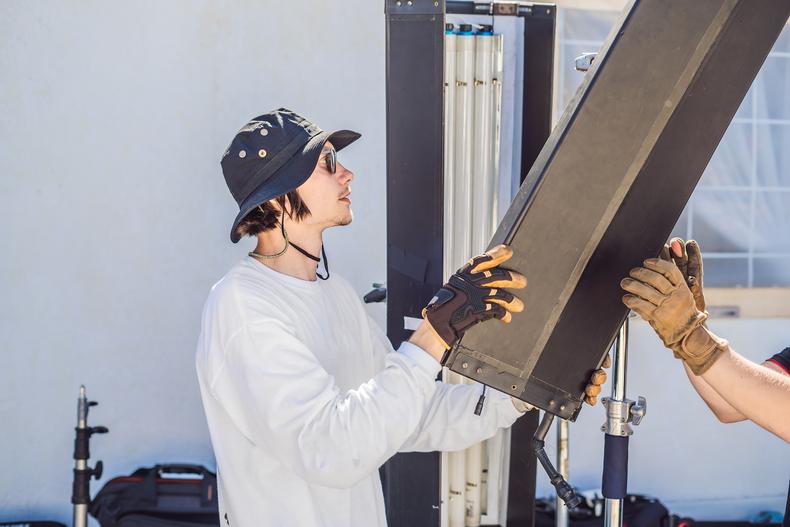
Directly below them is the best boy electric (or as we’re increasingly seeing, best girl electric), who functions as a kind of second-in-command. Then comes a team of assistant lighting technicians (commonly known as “sparks”) responsible for moving, setting up, and operating the gear, plus a genny operator who takes care of power generation and cabling.
Elizaveta Galitckaia/Shutterstock
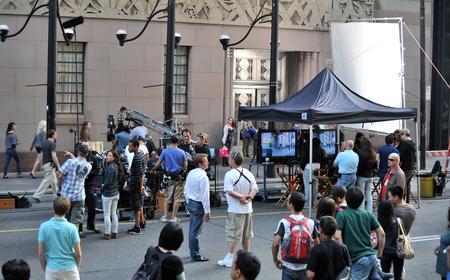
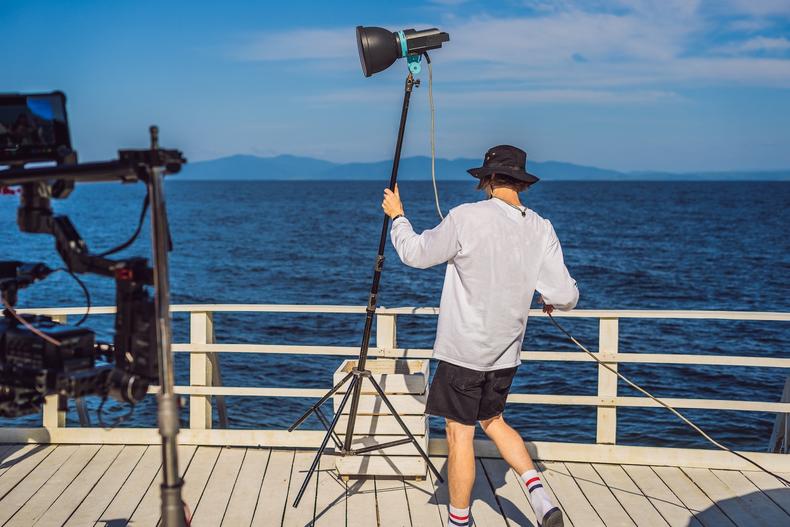
Gaffers usually remain on set close to the DP, instructing their team through radio and earpieces to stay organised and enact changes without delay. Common production tasks include:
- Pre-lighting a location before the rest of the crew arrives to save time while shooting
- Performing lighting tweaks throughout shoots to switch between different scenes and angles – for example, moving a light when close-ups are required
- Communicating with sparks to ensure gear that may be needed is ready and gear no longer being used is packed away or set up in the next location
- Figuring out watts and amperage to ensure there’s enough electricity for everything required during the day’s production – particularly important when shooting somewhere outdoors and remote
- During exterior shoots, using weather apps and a gaffer glass (which lets you look directly at the sun without damaging your eyes) to predict weather and the position of the sun, as this will impact lighting
Gaffer vs. grip: how region plays a factor
The roles of gaffer and grip are often confused, especially because responsibilities differ between countries.
In the European system, which is also adopted across Commonwealth countries, grips are involved with the mechanical side of lighting, including the setup of things like scaffolds and frames. In the US system, grips are also responsible for tasks handled by lighting technicians under the European system, such as lighting and rigging.
You can’t simply enter a career or study for a gaffer degree. Most start as sparks or other production assistants, learn about lighting to work their way up, and then eventually move into gaffing. Still, there are a rough set of steps you can take.
1. Become a qualified electrician
The majority of UK sparks and gaffers are qualified electricians. It’s not strictly necessary, but it will demonstrate your commitment and provide crucial knowledge of circuits, cables, fuses, power supplies, and heating. Many gaffers qualified as electricians before seeking production lighting experience.
Options include:
- Apprenticeships with a NVQ or SVQ qualification
- Diploma or technical certificate
- Domestic installer course
2. Consider educational options
Higher education isn’t required, but a degree can help you understand production aspects of the industry and provide a broad range of skills and experiences. Options include:
- Production Technology and Management
- Lighting Design and Technology
- Performing Arts (Production)
- Lighting and Performance Technology
- Electrical Engineering
Certain Level 3 vocational qualifications can also help, including:
- BTEC Diploma/Extended Diploma in Electrical and Electronic Engineering
- City & Guilds Advanced Technical Diploma in Electrical Installation
- EAL Diploma/Advanced Diploma in Electrical Installation
3. Gain relevant experience
Relevant practical experience is a must to start your journey. As you progress and gain experience, be sure to build a brief showreel of productions you’ve worked on to show potential employers.
Openings may arise with specialist lighting companies, but you can also look to:
- Theatre venues
- Amateur theatre groups
- Lighting kit hire companies
- Student or community stage projects
London-based gaffer Bill Rae Smith explains how he kicked off his career from such opportunities:
“I started out as a runner, and through the help of Mandy, [I] got into short films. Often NFTS [National Film and Television School] graduate films, which are always crying out for support and help, are a great place to cut your teeth. You can be with those people who are all coming up into the industry as well, so you’re surrounded by a network of people really keen to move in the same direction as you.”
4. Keep up with the industry
Gaffers are detail-oriented people with an in-depth knowledge of available fixtures. As an aspiring member of the lighting team, you’ll want to build that know-how yourself by staying current with the latest technology.
This increasingly means more than just lighting fixtures. London-based gaffer Simon Battensby offers the following guidance on emerging technology: “DMX, LumenRadio, CRMX, Art-Net – if you don’t know what these terms mean, you should start watching YouTube tutorials on them since the remote control of LED Lighting is the way the entire industry is moving.”
Elizaveta Galitckaia/Shutterstock
Whether you want to gaffer film, television, or advertising productions, expect to work freelance on constantly varying schedules. You might deal with day shoots and night shoots right after each other, then have long periods of downtime between projects. Time away from home is also common. As you become more well-known, you’ll generally move to larger sets and longer shoots.
Salary will depend on your level of experience and the type of production. Glassdoor estimates an average total pay of £35,213 per year, and the Broadcasting, Entertainment, Cinematograph and Theatre Union (BECTU) recommends:
- £301.60 10-hour day rate for gaffing on television dramas
- £361 10-hour day rate for gaffing in advertisements
- £396.90 11-hour day rate for gaffing in film