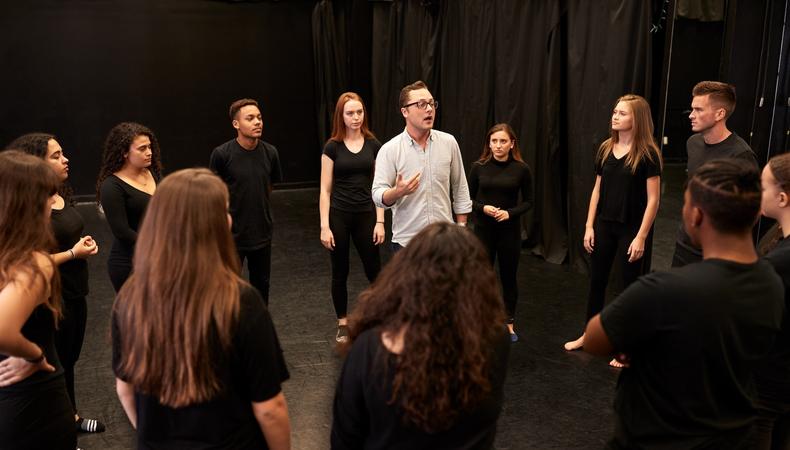
Like any skill, acting requires practice. Whilst raw talent will serve you well, regular acting training can help to develop, hone, and refine your skills as an actor, regardless of whether you’ve been treading the boards for decades or are just starting out.
But which acting classes are worth it? And, with the huge array of classes on offer, how do you know which class is right for you? Here, we break down what to consider when it comes to choosing an acting class.
JUMP TO
When it comes to a career in acting, there’s certainly no “one size fits all” route to success. Whilst some incredibly successful actors – Helen Mirren and Idris Elba, for example – have been lucky enough to learn on the job, without formal training, many would agree that acting classes offer a unique and valuable chance to develop skills and experiment with different techniques in a safe environment.
So, no, you don’t need acting classes to become an actor, but they will certainly help to enhance your craft.

jonnyslav/Shutterstock
In the US, the difference between acting classes and acting workshops is fairly straightforward. In the UK, it isn’t quite as clear-cut, and the terms “acting workshop” and “acting class” are used more interchangeably. Whilst acting workshops often include sessions to make industry connections with agents, directors, and casting directors, acting classes can include networking sessions, too. The easiest way to differentiate between an acting class and an acting workshop is probably in their duration and focus.
Acting classes typically span a number of weeks or even months, and may cover various aspects of acting (such as voice, scene study, movement), or an in-depth exploration of one particular technique over an extended period of time. Workshops, on the other hand, tend to be short-term or one-off sessions offering high-intensity, impactful training focused on a specific skill.
Both serve a purpose, and which to choose will likely depend on your acting goals, budget, and diary.
Those at the beginning of their acting career, with little-to-no formal training already, may wish to take a short, general course such as City Academy’s Acting Beginners Course or the Royal Central School of Speech and Drama’s Acting for Beginners. This will allow you to get a taste of a range of acting techniques, as well as ensure acting is something you want to pursue further.
If you decide acting is for you, then a longer-term acting course such as those offered at All in Actors or the Young Actors Theatre could be a good next step. Stephen Sobal, co-principal at All in Actors and theatrical clown teacher, advises taking “as many [different types of acting class] as you can. It’s a buffet,” he says. “You’re collecting skills.” A longer-term course offers the chance to develop your acting skills and technique through a range of different acting classes, and might work out cheaper than taking all of those classes individually.
If you already have a solid foundation in acting, then it’s worth thinking about any specific areas of your acting you’d like to develop further. Do you want to focus on acting for screen? Voice acting? Physical theatre? Maybe you want to sharpen your audition technique?
Below are common types of acting classes you might come across:
1. Scene study
- The focus: Here you’ll analyse and perform scenes from plays, TV shows, or films, with direction and coaching from your teacher.
- The benefits: It helps actors to develop a deeper understanding of character, motivation, and scene dynamics. It offers actors the opportunity to practise and refine their craft through consistent feedback and collaborative exercises.
2. Acting technique
- The focus: To teach students specific acting techniques such as Meisner, Method, Stanislavsky, or Chekhov.
- Benefits: These techniques provide different tools, methods, and philosophies for actors to explore and develop their craft. Some actors may choose one specific technique to use throughout their career, others may draw on multiple techniques as part of their practice.
3. Voice
- The focus: Voice classes should focus on improving your vocal clarity and health, including techniques to protect your voice from damage. You may also wish to take voice classes focusing on nailing a specific accent.
- Benefits: Freelance director and voice coach Barbara Houseman speaks of the importance of voice when it comes to acting, “[It] is one of the main ways actors communicate their thoughts and feelings to the audience. Voice work helps actors reconnect with their authentic voice and use it in a way that is healthy, truthful, and flexible whether they are working onstage or screen.”
4. Movement
- The focus: From the Alexander Technique (for improving posture) to physical theatre practice and mask work, movement classes focus on improving an actor’s awareness of their body and physicality.
- Benefits: Becoming more in tune with the body helps actors to develop greater physical awareness, versatility, and be more adept at using physicality to express emotions and character.
5. Acting for screen
- The focus: This is about learning how to act on camera, which requires a different skillset to acting for stage. Classes tend to focus on techniques such as subtlety in performance, learning how to work within the frame, and understanding camera angles.
- Benefits: Actors get to develop acting skills specific to screen work, as well as gain a greater understanding of the technical aspects of filming which will improve confidence on set.
6. Improvisation
- The focus: Classes in improvisation – or improv, as it’s known – focus on spontaneous, unscripted acting, which fosters skills such as quick thinking, creativity, and adaptability.
- Benefits: This encourages spontaneity, playfulness, and resilience – invaluable skills for actors in both auditions and performances.
7. Clowning
- The focus: More than red noses, clowning is a specific type of comedic performance: one that, according to Sobal, is about “truly listening to the audience and embracing playfulness.”
- Benefits: Sobal says that “clowning is an essential tool and experience for actors because it’s about being open and honest, as yourself, in front of an audience. That level of openness is so useful in acting, and it gives you a genuine level of confidence in yourself.”

Tejas Takale/Shutterstock
- Recommendations: One of the best ways to find an acting class that suits your needs is to ask your actor friends and peers, or anyone whose work you admire, for suggestions. Nothing beats a personal recommendation for a great class or teacher.
- Online research: Investigate the types of classes you are interested in taking and seek out testimonials and reviews.
- Book a taster session: Some acting classes, such as Anthony Meindl’s Actor Workshop, will allow you to observe a class for free before deciding whether you want to book. This can be a good way to get a sense of the teaching style and content. Other studios, such as the Centre, offer drop-in classes that allow you to get a sense of their style of teaching before you commit to attending longer term.
- Don’t be afraid to quit: If you try a class and your gut is telling you that it’s just not the right one, don’t be afraid to quit and move on to something new.
- In-person versus online: Acting requires emotional and physical connectedness, and for that reason, in-person classes tend to be the norm. However, online classes offer greater flexibility if you’re juggling acting with other commitments, and they can bring prestigious training programmes into your home – ideal if you don’t have easy access to the city in which they’re taught.
A good teacher can have a significant impact on your acting experience. Here are four things to consider when looking into acting teachers.
- Experience: What is their background in the industry? Do they have any qualifications or a wealth of practical experience in the area they are teaching in?
- Teaching style: Freelance director Madelaine Moore advises that “a good teacher will be sensitive, and adjust their style according to an individuals’ needs…. Being able to create and hold a safe space is really important, but a good teacher is also there to challenge students to explore working just slightly out of their comfort zone.”
- Student success: What are the success stories of the teacher’s former students? Are they working in the industry? Have they won awards or landed significant roles?
- Passion and compassion: A brilliant teacher is likely to be one who loves teaching and has a genuine interest in wanting to help students learn and grow. Sobal tells us “compassion is key.” As an employer, they will only work with teachers who “have compassion and don’t assume they have the answer to everything.”
If you are investing in a longer-term class, Sobal recommends you “meet the teachers and go watch a class” so you can see how they teach.

LightField Studios/Shutterstock
The cost of acting classes in the UK varies widely depending on your location, the institution, the instructor’s experience, the length, and the type of class.
A six-to-eight-week course, with weekly acting classes, could set you back anywhere between £200-£600. For example, City Lit offers a weekly Scene Study class over six weeks for £199, whereas the Royal Central School of Speech and Drama’s eight-week Acting for Camera course consists of 16 classes and costs £615. Drop-in acting classes can range in price from £10-£30 per hour, usually depending on how specialised classes are. If you are looking for one-on-one coaching you can expect to pay anywhere between £50-£100 per hour, depending on the coach’s experience.
Whilst acting classes can be a significant financial investment, it’s also clear they are a crucial part of growing and evolving as an actor. On balance, investing in acting classes is likely to see a significant pay-off in terms of the work you book, and it should prove worth the expense.