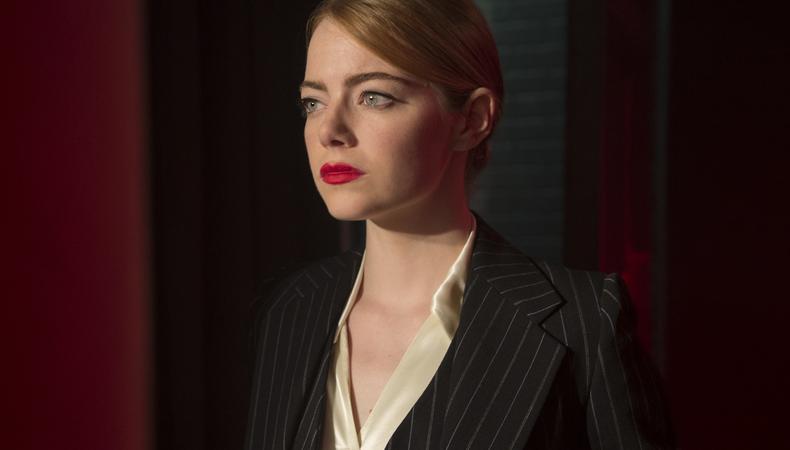
Auditioning with a monologue from a film can work in your favour for several reasons. It provides an opportunity to step into a character who is likely familiar to the casting team, potentially evoking a smile of recognition when they realise what you’re doing (and how well you pull it off). You also have a chance to put your own spin on a well-known piece – far more interesting than performing a straight-up impersonation.
Here’s a selection of film monologues perfect for auditions, plus tips on how to really shine in your performance. Make sure you watch the whole movie that the piece is from to fully understand your character’s journey and motivations.
1. Captain Koons’ watch monologue in Pulp Fiction, by Quentin Tarantino
This scene sets up the importance of a watch to a young boy so that he will risk his life for it later in the movie. It doesn’t have direct action in it or much emotional transition. That makes it tricky to do well, but, if you have the skills, its focus on storytelling makes for a captivating and powerful speech that could really help you stand out in the audition room.
Find the beats in the scene in order to introduce variety; take your time over pulling out the watch, and the line ‘This time they called it World War Two’, which reveals something of Koons’ war-weary manner, and the revelation of where the watch has been hidden. These are moments where the delivery pivots, and the last of them leads to a great comic conclusion as the watch is held out to the recipient.
It’s a long monologue, so consider making cuts where you feel the text is superfluous – especially if the full piece runs over the length you’ve been asked to prepare.
CAPT. KOONS: Hello, little man. Boy I sure heard a bunch about you. See, I was a good friend of your Dad's. We were in that Hanoi pit of hell together over five years. Hopefully, you'll never have to experience this yourself, but when two men are in a situation like me and your Dad were, for as long as we were, you take on certain responsibilities of the other. If it had been me who had not made it, Major Coolidge would be talkin' right now to my son Jim. But the way it turned out I'm talkin' to you, Butch. I got somethin' for ya.
(The captain pulls a gold wrist watch out of his pocket.)
This watch I got here was first purchased by your great-grandfather during the first world war. It was bought in a little general store in Knoxville, Tennessee. Made by the first company to ever make wrist watches. Up until then, people just carried pocket watches. It was bought by private Doughboy Erine Coolidge on the day he set sail for Paris. This was your great-grandfather's war watch, and he wore it in every day he was in that war. Then when he had done his duty, he went home to your great- grandmother, took the watch off, put it in an old coffee can. And in that can it stayed 'til your grandad Dane Coolidge was called upon by his country to go overseas and fight the Germans once again.
This time they called it World War Two. Your great-grandfather gave this watch to your granddad for good luck. Unfortunately, Dane's luck wasn't as good as his old man's. Dane was a Marine and he was killed with all the other Marines at the battle of Wake Island. Your granddad was facing death and he knew it. None of those boys had any illusions about ever leavin' that island alive. So three days before the Japanese took the island, your granddad asked a gunner on an Air Force transport name of Winocki, a man he had never met before in his life, to deliver to his infant son, who he had never seen in the flesh, his gold watch. Three days later, your grandad was dead. But Winocki kept his word. After the war was over, he paid a visit to your grandmother, delivering to your infant father, his Dad's gold watch. This watch.
This watch was on your Daddy's wrist when he was shot down over Hanoi. He was captured and put in a Vietnamese prison camp. Now he knew that if the gooks ever saw the watch they’d confiscate it, take it away. The way your Dad looked at it, this watch was your birthright. He'd be damned if any slope’s gonna put their greasy yella hands on his boy's birthright so he hid it in the one place he knew he could hide somethin'.
His ass.
Five long years, he wore this watch up his ass, then, he died of dysentery, he gimme the watch. I hid this uncomfortable hunk of metal up my ass two years. Then, after seven years, I was sent home to my family. And now, little man, I give the watch to you.
2. Venetia’s bath scene speech, Saltburn, by Emerald Fennell
After her brother’s sudden death, Venetia has finally started to doubt the presence of Oliver in her family’s luxurious home. He is from an entirely different social class, and though she had a brief romantic moment with him, she, like most people in her set, never sees him as her equal.
In this scene, in which he lurks over her bathtub, she finally lets her disgust toward him emerge. The monologue grows more sinister as she realises that not only was Oliver’s sadness at the brother’s funeral exaggerated, but he’s also now wearing the brother’s aftershave. This is the beat in the monologue where her scorn becomes something a little more horrified, perhaps even a little terrified. It’s your job as an actor to move from contempt to scorn to fear in order to bring out that transition.
Venetia: Your politeness is so grating. Do you know that? You’re always sorry. Always flinching away like a little fucking serf.
I saw you. Sobbing in the church at the funeral. I watched you weeping away and I just... I felt so sorry for you. So sorry. But then I remembered... And I started laughing. And I just couldn't stop laughing because I remembered that... that you only knew him for... six months? You hardly knew him, Ollie. You have nothing to do with him, with us, with here. Nothing at all. You're just a stranger!
Yet here you are. Right in the middle of it all. Oooh!
(she wags her finger)
Stranger fucking danger.
Ollie, you know what daddy's started to call you?
(beat)
"Spiderman".
Because you're always skulking around. Weaving your spidery, Olivery web.
(She laughs.)
Hey, Ollie, Ollie, don’t be upset. I don't think you're a spider.
(beat)
I think you're a moth. I'm right, aren't I! Quiet. Harmless. Drawn to shiny things. Batting up against the window...
(She raps her palm against his cheek: bat, bat, bat.)
...Just desperate to get in. Well you've done it now. You've made your holes in everything. You'll eat us from the inside out.
(Venetia, a sudden realisation -)
Isn't that his aftershave?
You are a fucking freak! I bet you're wearing his underwear too, aren't you? You disgusting little nobody. Oh my god. You ate him right up. And you licked the fucking plate.
@ireni.mp4 THIS MONOLOGUE OMG. (my favorite part) #saltburn #saltburnscene #saltburnmovie #saltburnedit #saltburnmonologue #venetiasaltburn #acting #actingchallenge #actingsound #actingsounds ♬ Silent Track 3 Minutes - Sleep Sounds
3. Dominic’s lakeside monologue in The Banshees of Inisherin, by Martin McDonagh
When it comes to great film monologues, Martin McDonagh is one of the best in the game. While the relationship between Colm and Pádraic forms the main plot of the film, Barry Keoghan’s performance as the vulnerable and abused Dominic is a moving master class in character acting. It’s no wonder he won the BAFTA for Best Actor in a Supporting Role and was nominated for both an Academy Award and a Golden Globe.
In this scene, Dominic finds the older, more attractive Siobhan standing at the lakeside, and he makes a misguided attempt to tell her he likes her. The monologue needn’t be all sad, though; Dominic has a core of great resilience, forged in the toughness of his life, and he takes Siobhan’s refusal with peace, even expectation, allowing you to bring more out of the text than just his losing out.
Dominic: It’s a great oul lake, isn’t it? I’m glad I caught you actually... because there was something I was wanting to ask you, actually. And, discovering how much we have in common, well it just makes me want to ask you even more!
What I was... don’t skip ahead... What I was wanting to ask you was... something along the lines of... should’ve planned this, really, but yeah what I was wanting to ask you was... You probably wouldn’t ever want to... I don’t know... to fall in love with a boy like me, would ya?
No, yeah, no. I was thinking no.
(pause)
Not even in the future, like? Like, when I’m your age?
Yeah, no, I didn’t think so, just thought I’d ask on the off-chance, like, y’know? Feint heart and all that!
(pause)
Well there goes that dream!
(pause)
Well I’d best go over there and do whatever that thing over there I was going to do was.
4. Mia’s monologue in La La Land, by Damien Chazelle
Emma Stone won an Oscar for her performance as Mia, and this monologue, in which she shows her vulnerability as a struggling actor, is one of the film’s best. Sebastian, her love interest, brings her news just before this scene that a major film director wants her to audition for a big role the following day. This is when Mia’s frustration, disappointments, and self-doubt kick in.
The challenge for an actor performing this speech is to refuse the audition while keeping an undertone of hope. Mia’s saying that it hurts too much to be rejected so often, but part of her wants to believe again, to hope that this could be the chance she’s been dreaming of. So, even as she says no, find ways to show that she still wants to say yes.
Of course, there’s also something attention-grabbing (and meta!) about performing a monologue about auditioning in an audition.
Mia: I’m not going to that. I’m not going to that. That one’s gonna be… No. That one’s gonna be…
That will kill me.
What? What? Shhh! Stop ! Shhh! Shhh! You have to be quiet. They’re gonna call the police. They’re gonna call the police.
Because… because I’ve been to a million auditions and the same thing happens every time, or I get interrupted because someone wants to get a sandwich, or I’m crying and they start laughing, or there’s people sitting in the waiting room, and they’re, and they’re, like me but prettier, and better at the…
Because maybe I’m not good enough.
No I… No maybe I’m not. Maybe I’m not. Maybe I’m not.
Maybe I’m one of those people that has always wanted to do it, but it’s like a pipe dream. For me, you know? And then you, you said it, you… you change your dreams and then you grow up. Maybe I’m one of those people. And I’m not supposed to.
And I can go back to school. And I can find something else that I’m supposed to do. Because I left to do that, and it’s been six years, and I don’t wanna do it anymore.
Why what?
Because I think it hurts a little bit too much.
5. John’s speech to his father in Guess Who’s Coming to Dinner, by William Rose
This film about a relationship between a Black man and a white woman was released in 1967, only six months after a change in the law meant interracial marriage was no longer illegal anywhere in the US. Despite its serious context, the film is partly a comedy. That’s not evident in this scene, however, which is emotional and powerful.
John, a Black man, is engaged to Joanna, a white woman he met on holiday. He has told her parents that he won’t marry her unless they approve, but he has also faced disapproval from his own father. John must leave for a job posting abroad so is forced to decide quickly whether he will go ahead with marrying Joanna.
In this scene, John moves from anger at his father’s lack of support for the marriage to sadness at not having the father-son relationship he would like. He finally arrives at a point where, assuming his manhood fully, he finds he is more powerful than his elderly father.
The film was nominated for 10 Academy Awards, winning two, including best screenplay. Just about the only main actor not nominated was Sidney Poitier as John. When you watch him deliver this monologue, which surely ranks as one of the best movie monologues of all time, it’s hard to agree with that decision.
John: You listen to me. You say you don’t want to tell me how to live my life – so what do you think you’ve been doing? You tell me what rights I’ve got or haven’t got, and what I owe to you for what you’ve done for me. Let me tell you something. I owe you nothing! If you carried that bag a million miles – you did what you were supposed to do! Because you brought me into this world and from that day you owed me everything you could ever do for me, like I will owe my son – if I ever have another – but you don’t own me. You can’t tell me when or where I’m out of line or try to get me to live my life according to your rules. You don’t even know what I am, Dad.
You don’t know who I am. You don’t know what I feel. How I think. And if I tried to explain it for the rest of your life you would never understand. You are 30 years older than I am, and you and your whole lousy generation believes the way it was for you is the way it’s got to be, and not until your whole generation has lain down and died will the dead weight of you be off our backs! Do you understand, you’ve got to get off my back!
Dad. Dad. You’re my father, I’m your son. I love you. I always have and I always will. But you think of yourself as a coloured man; I think of myself – as a man…
Now, I’ve got a decision to make, and I’ve got to make it alone, and I’ve got to make it in a hurry. So, would you got out there and see after my mother.
6. Rose’s speech to Troy in Fences, by August Wilson
Rose’s husband, Troy, has cheated on her after she stood by him through a life of frustrations caused by racism and poverty. Troy lives as though he is the main character in his family’s shared life, drinking, being abusive to his son, and hurting his wife. But in this scene, Rose finally asserts herself, pointing out that she’s a real person too. Not only that, but she’s a person who stood by her partner, making her morally superior.
Viola Davis won the Academy Award for Best Supporting Actress and the BAFTA for Best Actress in a Supporting Role for her portrayal of Rose. The anger, frustration, sadness, and hurt she conveys show how to maximise the impact of this speech in an audition.
Rose: I been standing with you! I been right here with you, Troy. I got a life too. I gave 18 years of my life to stand in the same spot as you. Don’t you think I ever wanted other things? Don’t you think I had dreams and hopes? What about my life? What about me? Don’t you think it ever crossed my mind to want to know other men? That I wanted to lay up somewhere and forget about my responsibilities? That I wanted someone to make me laugh so I could feel good?
You’re not the only one who’s got wants and needs. But I held on to you, Troy. I took all my feelings, my wants and needs, and dreams…and I buried them inside you. I planted a seed and watched and prayed over it. I planted myself inside you and waited to bloom. And it didn’t take me no 18 years to realise the soil was hard and rocky and it wasn’t never gonna bloom.
But I held on to you, Troy. I held you tighter. You was my husband. I owed you everything I had. Every part of me I could find to give you. And upstairs in that bedroom… with the darkness falling in on me… I gave everything I had to try and erase the doubt that you wasn’t the finest man in the world, and wherever you was going… I was gonna be there with you because you was my husband. ’Cause that’s the only way I was gonna survive as your wife. You always talking about what you give, and what you don’t have to give. But you take, too, Troy. You take… and don’t even know nobody’s giving!
7. Debbie’s speech to the Addams Family in Addams Family Values, by Paul Rudnick
While known among younger viewers for its spinoff Netflix series Wednesday, the Addams family have been fixtures of the screen since 1964. A fan favourite is the 1993 film The Addams Family. In it, the family sets out to rescue Uncle Fester from his gold-digging new love, Debbie. In this scene, the tables appear to be turned: Debbie has them tied up and tortured, intending to kill them. Unfortunately for her, she ends the scene as nothing more than a pile of dust and an American Express card.
Debbie reveals her unbalanced worldview based on a shaky concept of having been neglected. Emphasise the selfishness and exaggerated grotesque humour to make the most of the monologue. Make it your own, but don’t be afraid to draw on Joan Cusack’s deliciously demented portrayal.
Debbie: I don’t want to hurt anybody. I don’t enjoy hurting anybody. I don’t like guns or bombs or electric chairs, but sometimes people just won’t listen and so I have to use persuasion, and slides [shows slides]. My parents, Sharon and Dave. Generous, doting, or were they? All I ever wanted was a Ballerina Barbie in her pretty pink tutu. My birthday, I was 10 and do you know what they got me? Malibu Barbie. That’s not what I wanted, that’s not who I was. I was a ballerina. Graceful. Delicate. They had to go. My first husband, the heart surgeon. All day long, coronaries, transplants. “Sorry about dinner, Deb, the Pope has a cold.” Husband Number 2: the senator. He loved his state. He loved his country. “Sorry, Debbie. No Mercedes this year. We have to set an example.” Oh yeah? Set this! My latest husband. My latest husband, my late husband, Fester. The corpse. And his adorable family. You took me in. You accepted me. But did any of you love me? Really love me? So I killed. So I maimed. So I destroyed one innocent life after another. Aren’t I a human being? Don’t I yearn and ache… and shop? Don’t I deserve love… and jewellery? Sorry. Goodbye, everybody. Wish me luck.
Remember, practice is key. The more comfortable you are with the words, the more you can focus on delivering a standout performance. Set yourself up for success by choosing a monologue that resonates with you.