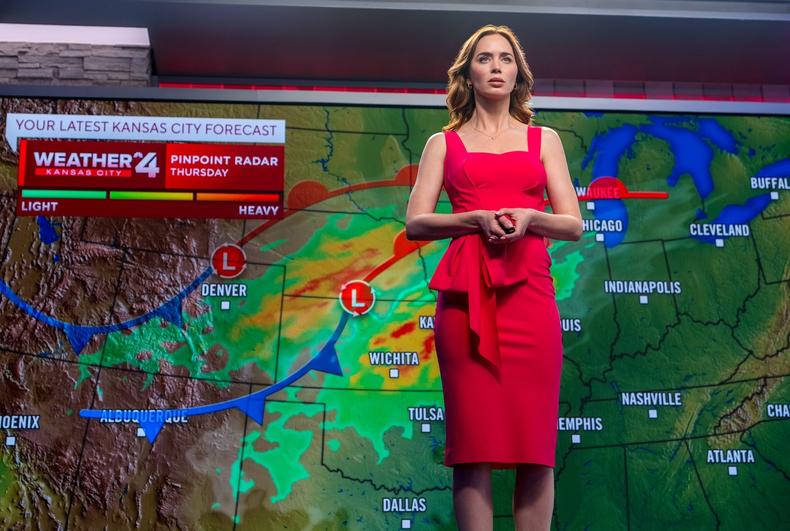
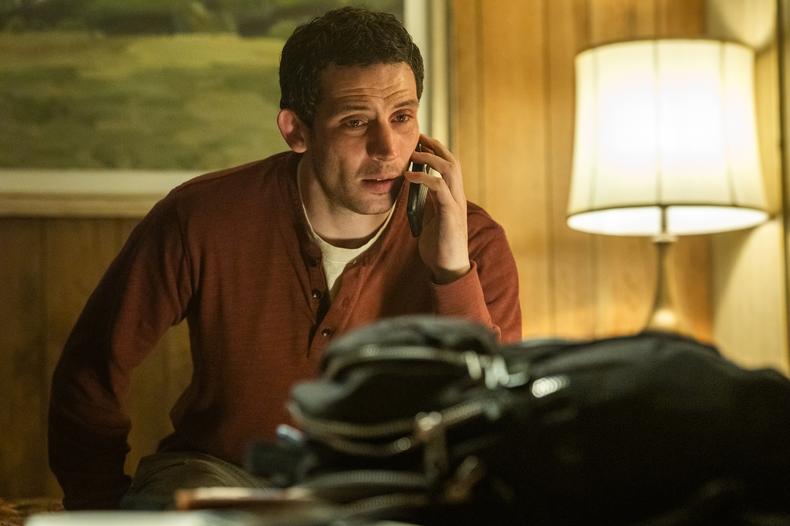
Steven Spielberg’s hotly anticipated sci-fi film Disclosure Day is finally here. A thematic successor to both Close Encounters of the Third Kind and E.T., it opens with the world on the brink of World War III and follows a cybersecurity expert (Josh O’Connor) and a meteorologist (Emily Blunt) as they race to bring classified extraterrestrial information into the public domain.
It is Spielberg’s 37th film, reuniting him with longtime collaborator David Koepp, who has written the screenplay. The pair have a long-standing creative partnership: Spielberg first brought Koepp on to write Jurassic Park early in his career, propelling him into Hollywood’s top tier and establishing him as a must-hire screenwriter. They’ve since worked together on titles including The Lost World: Jurassic Park, War of the Worlds, and Indiana Jones and the Kingdom of the Crystal Skull.
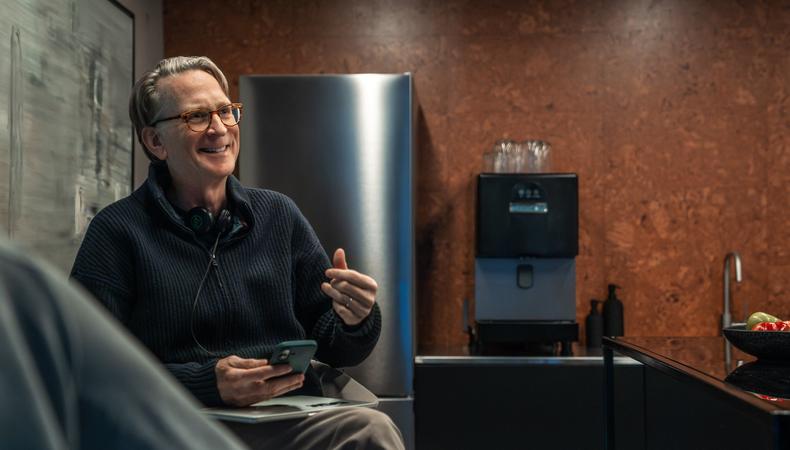
Koepp has remained one of the industry’s most consistent and in-demand screenwriters and directors, known for big studio films such as Spider-Man, Mission: Impossible, and Indiana Jones and the Dial of Destiny. Backstage recently spoke to Koepp about all things Disclosure Day, as well as his creative process and his approach to collaboration. Here are some of the top takeaways.
1. Your No. 1 responsibility when writing a script is to keep the reader’s eye moving.
If someone is reading his script, Koepp wants their experience to feel like watching a movie. For clarity, he avoids over-describing and keeps things as clear and to the point as possible. As a screenwriter, your only tools are what the audience sees or hears, so you have to describe both in the most engaging way possible.
2. The shower is the best place to concentrate.
Koepp gets some of his best ideas in the shower, and he’s convinced there’s science behind it. He’s even googled it and discovered the combination of sensory deprivation and steady background noise helps free up thinking space, making it an unexpectedly effective environment for focus and idea generation.
3. He was so impressed by Ricky Gervais’ improv skills that he let him ad-lib on his script.
Koepp directed Gervais in the comedy Ghost Town, which he also wrote alongside John Kamps. The script was tightly constructed and packed with jokes, but he handed over a certain amount of creative agency to Gervais during filming. His rule is simple: Actors should say the lines as they are written, unless they can make them better.
4. Spielberg’s early movies made Koepp the writer he is today.
Koepp has always been a fan of Spielberg, and between the ages of 13 and 22, he watched Jaws, Close Encounters of the Third Kind, E.T., and Raiders of the Lost Ark. Those were the films he loved as a child – and the kind he aspired to make himself – so, of course, they also helped shape him as a writer.
5. Spielberg read the script for Disclosure Day every day for a year.
During the writing process for Disclosure Day, Koepp produced a whopping 42 rounds of drafts and revisions. He believes that’s partly because Spielberg was so focused on what he wanted from the film – more than on any project they’ve worked on together in the past. With each read of the script, Spielberg would come back to Koepp with a fresh perspective, almost as if he were encountering it for the first time each time.
6. After working with Spielberg on nine projects, Koepp can predict what he’ll think.
If Koepp is writing for Spielberg – or any collaborator he’s worked with a few times – he usually has a sense of what he will and won’t like. Whether intentional or not, he says you start to see a script from their point of view, and, by the end, you land on a hybrid of what they think and what you think.
7. He has self-doubt, just like the rest of us.
Even Koepp doubts himself when he feels like he’s written himself into a corner. He panics, wonders whether he can quit and how he can get out of the whole project. But it’s what you do with those moments of inevitable panic that are important. The problem may seem enormous, but it often can be easily fixed.
8. Simple solutions can take a long time.
Over the course of his career, Koepp has found that problems that initially seem enormous often have relatively simple solutions – be it cutting sections, adding lines, or reshaping a scene. But you still have to really think through the solutions to work things out properly, which can take time.