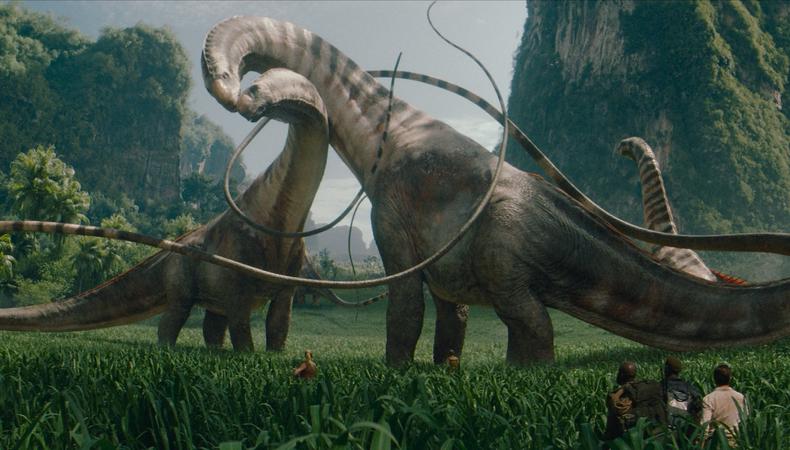
CGI often feels like the cutting edge of modern technology, but CGI in movies has been around since 1973, when a pixellated screen represented an android’s point of view in Westworld. (Some even date CGI back to Alfred Hitchcock’s Vertigo in 1958, but the computer-generated images in the credits sequence were not used in the film itself.)
Things have come a long way since the 1970s though. Toy Story, the first fully CGI feature film, was released in 1995, and almost all new films now feature some form of CGI. That means actors in TV and film are often required to perform alongside CGI, so if you’re going to be a screen actor, it’s a good idea to get to grips with what CGI is and how to work with it.
JUMP TO
Special effects (SFX) involve effects being created on set in front of the camera. Think fog from a fog machine or a blood pack bursting when someone is shot. That’s different from visual effects (VFX), which are usually done off-set during postproduction. It can be anything from compositing two images into one shot to matte painting.
None of them are made by a computer though. That’s the key difference.
Even though CGI is a category of visual effect, it differs from others in that it’s generated entirely through software (directed either by a human user or, increasingly, by artificial intelligence). CGI can be used to create, manipulate, or enhance what’s seen onscreen to build environments, create characters, or make effects happen (think explosions, floods, or things that could be difficult to do in real life), or to make entire CGI films or TV shows.
CGI is a way to bridge the gap between a creator’s imagination and reality that avoids the constraints of physical reality. Things that would be too expensive, too dangerous, or too complicated to physically make – or things that would simply be impossible – can be done relatively easily by generating the images digitally. As CGI has developed, techniques have improved and costs have dropped. That means it’s a nearly ubiquitous way to recreate the vision of the director, cinematographer, or writer.
CGI is computer-generated imagery. Within the broad umbrella of the term, there are many ways in which the results of computers generating images can be added to TV or film.
- Motion capture: recording an actor’s body using movement sensors so a digital character can mimic it. Example: Andy Serkis as Gollum in The Lord of the Rings.
- Performance capture: more advanced motion capture that records facial expressions and voice, as well as body movement. Example: Josh Brolin as Thanos in Avengers: Infinity War.
- Digital environments: entire locations created in a computer and composited behind or around actors. Example: the world of Pandora in Avatar.
- Virtual humans or avatars: fully digital human characters created using CGI, sometimes based on real performers. Example: the late Peter Cushing’s recreation as Grand Moff Tarkin in Rogue One.
- Creature creation: designing and animating animals or fantasy creatures. Example: some of the dinosaurs in Jurassic Park.
- Particle and physics effects: simulating natural phenomena such as fire, water, explosions, smoke, or destruction. Example: the city folding and explosions in Inception.
- Chroma keying: also known as green screening, in which actors are filmed against a green or blue screen so the background can be replaced digitally. Example: the Toon Town scenes in Who Framed Roger Rabbit?
- CGI matte painting: a modern version of the original painting technique, creating digital landscapes or cityscapes as background extensions to make sets appear much larger. Example: the sky and mountain scenes in Pinocchio.
- Aging, de-aging, and digital makeup: using CGI to change an actor’s age or appearance without (or in conjunction with) prosthetics. Example: Robert De Niro in The Irishman.
- Subtle CGI: removing wires, fixing continuity errors, and cleaning up backgrounds. Example: wire removal in Mad Max: Fury Road.
“The actual integrity of the emotional performance and the way the character’s facial expressions work, that is what is going to be created on the day,” Serkis said of acting with CGI. What that means, in essence, is that regardless of the tech surrounding you or the alterations that will be made later in a computer, acting is acting. Inhabit your character fully and the performance will feel authentic to the audience.
Acting in an empty digital backlot in a body-hugging ping-pong-ball motion-capture costume while interacting with things that aren’t there can be a challenge for even the most seasoned performers. Here are some practical tips to help you:
- Take direction. VFX supervisors generally know what they’re doing and can see more on their screens and storyboards than you can. Trust their instruction.
- Be comfortable with repetition. As with any kind of acting, getting the shot right can involve numerous takes. Don’t take it as personal criticism when you hear “once more!” for the 10th time.
- Develop your physical skills. A mix of formal acting techniques and informal games can help you inhabit your character physically, which will translate into a more powerful performance once the effects are added. Physicality can help make a CGI avatar believable.
- Train your imagination. The coffee cup exercise can be a direct match for what you’ll be required to do when acting with CGI. It requires using your imagination to bring to life something that’s not really there in front of you.
- Master eyelines and spatial awareness. Practise meeting the eyes of whatever imaginary character you’ll be faced with beforehand, nailing not just the technical eyeline but also the emotion behind it.
- Watch behind-the-scenes footage of others doing it. Search for seasoned CGI professionals sharing their tips for free online, and try out their advice.
CGI doesn’t replace actors; it enhances their performances – if you let it. Working with it is a challenge that requires your cooperation, so hone your skills and be ready. You never know when a director will need the next Gollum!