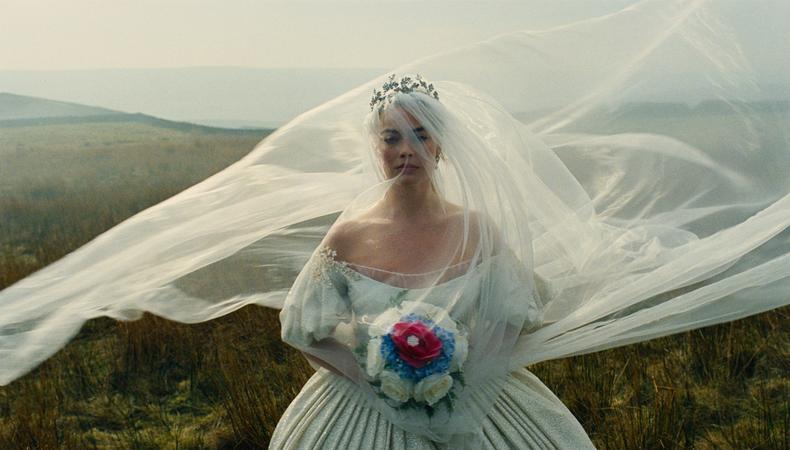
Every shot of a film is set somewhere and filled with something, and good filmmakers will exercise creative control over every single element within a shot, including the set design, the props, the lighting, the costumes, the location of actors, the camera angle, and the depth of focus. Together those elements form the mise-en-scène, a French term that literally translates to “setting the scene.”
If you’re interested in making movies, it’s helpful to have a full understanding of what people mean when they say mise-en-scène – and how it functions within the art of cinema.
JUMP TO
For the wildly influential film theorist Andre Bazin, mise-en-scène was one of cinema’s main visual tools for creating meaning – along with editing. With a well-crafted mise-en-scène, “the placing of objects in relation to the characters is such that their meaning cannot escape the spectator,” he wrote in his foundational essay 'The Evolution of Film Language', published in his 1958 book What Is Cinema?.
Effective mise-en-scène isn’t just a realistic or unobtrusive backdrop to the acting; it’s intentional, telling us something about the location or era we’re in, or the stakes of a scene, or the characters’ state of mind. Classical Hollywood mise-en-scène can best be understood “as a form of pointmaking in which various elements comprising the onscreen world are so meticulously organised that they function as a critical tool,” Brad Stevens writes in Sight and Sound.
Mise-en-scène is a broad umbrella term, but when people discuss it in relation to making a movie they are usually referring to some or all of the following.
Set or location
When shot indoors, the set can tell us a huge amount about a character, whether it’s how they decorate their home, the kind of office they work in, or the poverty they live in. For more realistic dramas, the set can help ground a story in a place and time. For fantasy or sci-fi films, the set can be about spectacular or detailed world-building; think of the earthy wholesomeness of the Shire in The Lord of the Rings or the shadowy neo-noir stylings of Blade Runner. When shot outdoors, the natural world or a bustling cityscape can help us understand a character’s place in society – and deliver mood and atmosphere. Think of a classic Western: A long shot of a dusty landscape is a key part of the genre’s instantly recognisable visual vernacular.
Props
Props are items that characters use or that add telling details to the set. Props can function like handy visual signifiers or shorthand in a scene. Think of Cher and her friends’ use of those chunky early mobile phones in Clueless, signalling both wealth and the pervasiveness of gossip in their world. Certain props, whether functional or aesthetic, can become iconic in their own right. They can even be a visual stand-in for a character – from Luke Skywalker’s lightsabre to James Bond’s martini.
Costume, hair and makeup
The visual appearance of a character onscreen is also a rich source of information about them or the world of the film. Costumes that read authentic can help transport us to another time, like the dour palette and mucky costumes of Andrea Arnold’s Wuthering Heights. But they can also bring a much more stylised, heightened, or glamorous look to a film – as Emerald Fennell does with her take on the same story through a crimson PVC gown and a red lip. William Wyler’s 1939 version, by contrast, portrays a blinging romanticism through its frocks and jewels. Clearly, these tell us more about what kind of viewing pleasure a film wants to give its audience than they do about how people really dressed in the 18th century.
Lighting
Lighting is a less obvious visual signifier within the scope of mise-en-scène, but a crucial one – and a vital cue for the mood of a scene or film and its time, location, or season. Consider the sun-drenched, juicy light of Call Me By Your Name (2017), which made use of warm, natural sunshine to help whisk the viewer into a long Italian summer and a love affair. By contrast, think of the chilly, pale lighting of Let the Right One In (2022), suiting its snowy surroundings, desaturated colour palette, and cold-blooded vampire protagonist.
Composition and blocking
Composition is how the shot is arranged – where actors and props are placed within the frame. Are they in harmony or does it feel off-kilter? If an item or person is given foreground prominence, we likely assign greater significance to it, while a background detail or lurking presence may let the viewer in on more than the character knows, giving us a privileged omnipotence. Camera angles can also affect the composition – a low-angle shot can make a character imposing and powerful, for instance, while a tight close-up could feel vulnerably intimate or ominous and oppressive.
Blocking is about how the actors move within a frame or scene. Orson Welles was considered a master of it, pioneering “deep focus”: a greater depth of field so he could contrast foreground and background action with almost theatrical blocking. This is most famously seen in the Citizen Kane scene in which young Charles plays in the snow; the camera then tracks backward, taking us inside a room where his parents are signing paperwork to put him under the guardianship of a rich man. Charles can still be seen behind them through the window, innocent and oblivious to the huge changes about to befall him.
The Wizard of Oz
Has any film ever had a more glorious change of mise-en-scène than The Wizard of Oz? The shift from drab black and white in dusty old Kansas to the glorious Technicolor of Oz is unforgettable – and a simple way to see the vast impact of a film’s mise-en-scène. From the Yellow Brick Road to the Emerald City, the world is super-saturated and very brightly lit, with elaborate sets and fantastical backdrops. And has any single item of costume ever been more iconic than those ruby slippers?
The Hours
Stephen Daldry’s 2002 adaptation of Michael Cunningham’s novel is a master class in using mise-en-scène to evoke different narratives in different time periods. Distinct approaches to the visual look of the set, locations, costumes, and lighting are used to distinguish three parallel stories: a sepia, cool-toned, smoke-hazed palette for 1923, when Virginia Woolf is gloomy and depressed in England; a heightened, saturated look for sections in 1950s suburban America (itself evoking the Technicolor 1950s melodramas of Douglas Sirk); and a more neutral, natural feel for contemporary scenes in New York. Visual motifs are also used to cleverly link the stories, echoing across time; yellow roses, for instance, feature notably in each section.
Rear Window
Hitchcock’s claustrophobic and suspenseful 1954 thriller is all about framing: a professional photographer, trapped inside after breaking his leg, watches the flats opposite and becomes convinced a neighbour has murdered his wife. The film puts the viewer in the photographer's shoes – we see only what he sees, snooping with him. Every shot was carefully staged and lit so it feels like it is being seen at a distance or through binoculars, to give the viewer that same sense of watching through the tight frame of a window and of sharing in that partially denied voyeurism.
Legally Blonde
It may not be quite as dizzying as Dorothy’s switch from Kansas to Oz, but a striking shift in mise-en-scène is vital to the storytelling of this 2001 movie. When we meet Elle Woods, she’s in the tooth-achingly bright milieu of a sorority house; when she gets into Harvard Law School, everyone and everything around her is drab and brown. But not Elle. She rocks up in a cerise suit, wielding fluffy pens and blonde waves, tapping around in high heels. Even her CV is pink. This not only visually sets up the fish-out-of-water comedy, but it also reinforces the main messages of the movie: Stay true to yourself and don’t judge by appearances.