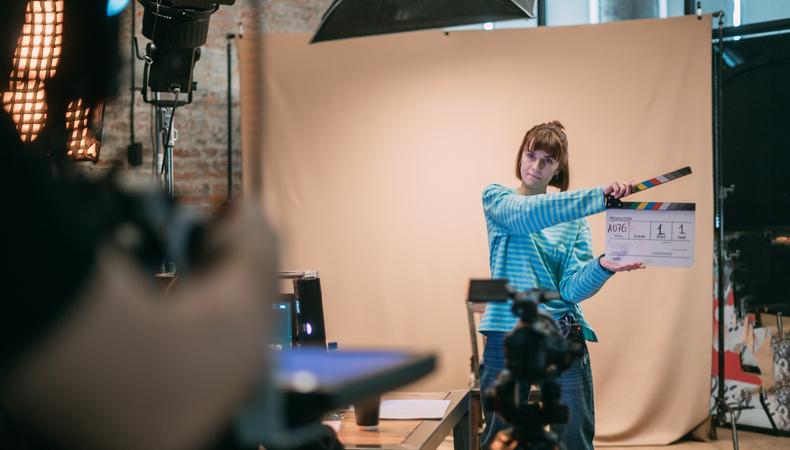
Creating a film from scratch can feel daunting, but making your own movie could be one of the key steps to breaking into the film industry. Many successful filmmakers started out grafting away on their own project.
So what exactly goes into the production of a movie? First, you need an idea and a screenplay (script). Then there are logistics such as obtaining the right equipment, booking the locations, and funding it. And that’s before you even start filming.
It can be a long, intense process that some filmmakers struggle to get off the ground or complete, simply because they aren’t well prepared. To help you, we’ve put together a step-by-step guide to what it takes.
JUMP TO
- Step 1: Idea
- Step 2: Script
- Step 3: Budgeting
- Step 4: Breaking down the script and visuals
- Step 5: Cast and crew
- Step 6: Equipment
- Step 7: Production design and location
- Step 8: Detailed shoot plan
- Step 9: Shoot your film
- Step 10: Post-production
- Step 11: Distribution and promotion
- DIY moviemaking: Are you set?
An idea doesn’t have to be complex. All you need is a story you want to tell that you can easily visualise and execute.
How do you come up with ideas? Start by asking what kind of film you’d like to create. Explore various movie genres, watch different types of films, and brainstorm ideas alone or with others. Note any inspiration you come across in your day-to-day life, such as through conversations, observing others, or the content you consume.
London-based filmmaker Rahel T. Yohannes describes her inspiration as a mix of real-life experiences, exposing herself to nature, walks, and meditation. “Having a relaxed state inspires creativity,” she says.
Once you have an idea you want to develop, think about the story you want to tell. Where is it set? Who is the protagonist and what do they want?
Try writing a logline – a short summary of your film – to help you get clear on your story.

Credit: megaflopp/Shutterstock
Once you know your story, it’s time to put it into a script. Storytelling on screen is about what you see and what you hear. You should show viewers your story, not tell them. Keep it concise, as one page of a script usually equals about one minute of screen time.
Learn how to properly format a script, ideally using software such as Final Draft or Celtx. Read professional screenplays and guides to screenwriting, such as The Screenwriter’s Bible by David Trottier. Take courses to learn important aspects such as character arcs.
Once you have a first draft, edit and make changes to get it to be the best it can be. Get feedback from those you trust and use any notes to improve and refine what you have.
When you begin making movies, you can work with next to nothing by leaning on free help and resources. Funding can be challenging to obtain. Look at applying for industry schemes, seek financial investors, or use crowdfunding platforms such as Kickstarter and GoFundMe.
Costs you’ll need to consider include:
- Equipment rental or purchase (cameras, lighting, microphones, etc.)
- Props and costumes
- Location permits and insurance
- Cast and crew (wages, food, and transport)
- Post-production (editing software, sound design, music, etc.)
Look at what you need to spend to create your film and track costs. Try this formula to estimate a budget:
- Calculate the number of shooting days (d) by dividing the number of pages (p) in the script by the number of pages you plan to shoot each day.
- Total shooting days = p/d
- Calculate a daily cost (c) for essentials
- Multiply the number of shooting days by the daily cost to get a production budget (b)
- Budget (b) = (p/d) x c
How do you want the film to look? Think about technical aspects such as camera angles, shot sizes, light exposure, and colour temperature to help those on set and in post-production understand what you want to create.
Prepare a shooting schedule, including shot lists, which describe the contents of every shot or scene, what will happen, and what’s needed.
Storyboards also act as a visual guide to depict various scenes and shots you plan to film. You can either do rough sketches by hand or use storyboarding software such as Plot or StoryBoard Quick.
Credit: Aji Yudistira/Shutterstock
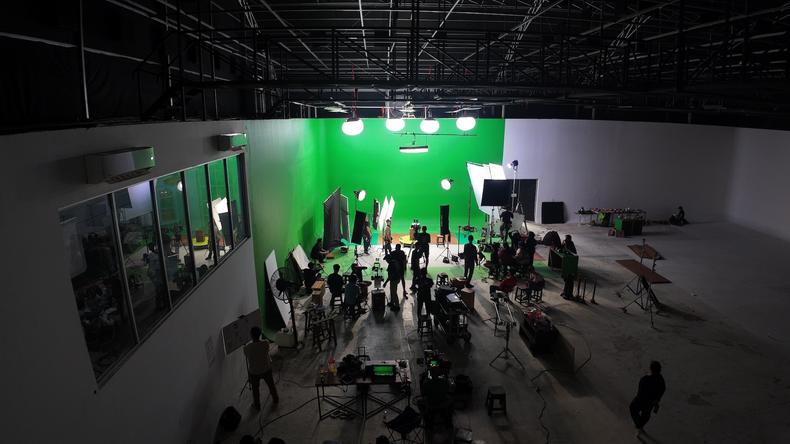
Filmmaking is all about collaboration. Take your time selecting people who understand your vision and who you get on well with to come on board and fill roles such as:
- Director
- Cinematographer
- Producer
- Editor
- Sound designer
- Costume, hair, and makeup artists
- Actors
You may work with friends, family, or film students as volunteers on a low- or no-budget film and get them (and yourself) to take on several roles to cut costs. Or you could recruit people with more experience. Post callouts on social media, network at film industry events, and search or advertise jobs on casting platforms.
“Filmmaking is like this temporary family of people that come together to breathe life into an idea,” says Yohannes, who got her first short film off the ground after meeting fellow aspiring filmmakers at a Raindance Film Festival event.
“Do lots of research on how everyone started making movies and figure out a route that suits best – and be aware that route may change in the future,” says Yohannes, who actively seeks out diverse cast and crew.
Try to find the best people you can afford, particularly those who can bring skills you don’t have. Hold casting auditions, look at past work, request to see showreels, and get to know individuals to find out what they can bring and if they share your vision.
You don’t need top-of-the-range equipment to make a film, especially on a limited budget.
You can even shoot on a smartphone using a tripod or stabiliser to keep the camera steady. If you don’t want to use a smartphone, look at buying a DSLR camera. For anything more expensive, remember you can rent it.
Make sure you get decent sound-recording equipment and microphones, because audio quality can make or break a film. And don’t forget to invest in some lighting equipment.
If you’re working with a cinematographer, agree with them in advance on what equipment to use.
You need somewhere to film. Production design includes location scouting and building sets and lighting rigs. Start scouting locations (both interior and exterior) that best fit the narrative. Take photos of potential settings for specific scenes so you have them as a reference.
Public places will require permits and clearances, so be sure to apply for them ahead of shooting. Of course, using your own home or that of a friend or family member could be free. Shooting in just one location, using versatile spaces (such as a studio), or green screens can all help.
Whatever you use, check if the space is easily accessible, safe, and adaptable. Is it, for example, a public space that may get interrupted during filming? Can you control sound and lighting? Is there enough room for both cast and crew to manoeuvre equipment?
Once you’ve decided on the locations, you’ll need to consider lighting, props, set dress, and costumes. Look at where you can find free, reusable, or low-cost resources, such as asking actors to provide their own wardrobe or using a crew member’s home for filming.
Once you have your cast, crew, and locations, begin to make a detailed plan of your film shoot. The more you prepare and organise in advance, the easier it will be on set and the more successful filming will be.
Once you have a team, work together to get their input on the script, discuss how things will be shot, and plan what is needed, including:
- Production schedules, shot list, and shooting scripts. Be realistic about how much you can film in a day. Allow extra time for setting up shots, complex scenes, rehearsals, and breaks. Be sure to schedule the shoot in practical filming order rather than in script order.
- Hiring other crew members, such as gaffers, sound engineers, tech scouts, and production assistants.
- Wardrobe fittings, rentals, and purchases that are needed.
- Preparing and distributing call sheets to communicate details such as times, locations, and contact information to cast and crew.
This is when you capture the raw footage, shots, and sounds that follow the script. Before you begin, gather and test your equipment and film some practice shots.
During filming, be flexible but focused. Take the job seriously, but don’t get stressed out when things go wrong, such as unexpected weather or unwell cast or crew. Those are out of your control. Work closely with your team so they remain involved and motivated.
Top techniques for a successful shoot:
- Allow plenty of time to shoot scenes, because some can take hours to film.
- Block scenes – i.e., how actors will move through the space and how the shot is framed.
- Pay attention to lighting: Use enough to set the mood and achieve proper exposure.
- Use multiple cameras and angles, and shoot multiple takes if you can.
- Track progress: Check off the shot list, review footage, and note the best takes as you go along.
- Capture great sound: Don’t rely on the built-in camera mic to capture audio.
- Make sure actors understand what is required of them in a performance.
Credit: DC Studio/Shutterstock
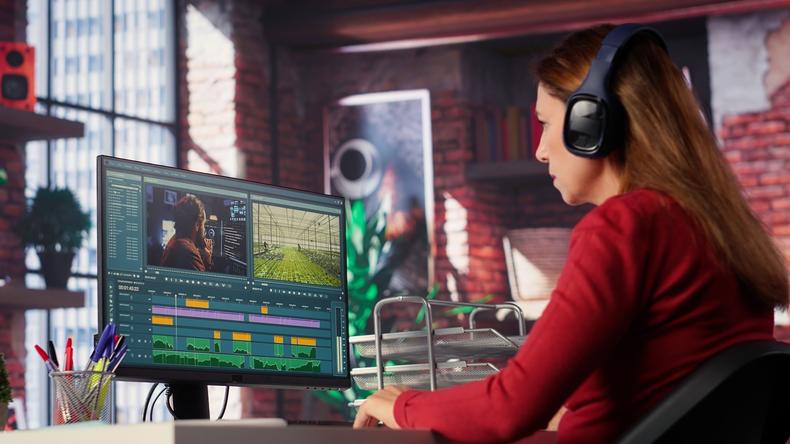
One of the most important parts of filmmaking, post-production, or editing, requires a lot of time and skill to shape a story. Here are the key steps:
- Import video and audio into editing software.
- First assembly: Organise and log footage.
- Rough cut: Choose the best takes and refine pacing to create a first draft.
- Sound design and music: Clean up audio, add sound effects, and choose or compose a score.
- Colour correction: Adjust lighting and colours of shots.
- Fine cut: Perfect every transition, frame, and cut between shots.
- Final cut: Add colour grading, sound mixing, VFX, and similar.
- Create title and credit sequences.
- Export your film to a digital format.
It can be worth bringing on board people with relevant experience to take on these roles, but if you do the edit yourself, use software such as Premiere Pro, Final Cut, or After Effects. There are plenty of online tutorials to learn how.
Like the scriptwriting process, it’s good to get feedback on the rough cut (first draft) to see what isn’t working before audiences see the final version.
Once the film is completed, it’s time to share it with audiences.
Finished films are marketed and shown by distributors such as Sony and Universal, or streaming platforms such as Netflix and Amazon. You could also independently distribute it through YouTube or Vimeo.
Get the word out about your film by creating a trailer, website, and social media accounts. Submit it to film festivals, hold community screenings, and, perhaps, sell your film.
Now that you know how to create a film, the best way to learn is to actually do it.
Don’t try to get it perfect. Keep it simple and be as prepared and organised as you can. Don’t let a limited budget or resources stop you. There’s more opportunity than ever to make a movie for almost zero budget using a smartphone and supportive collaborators.
Whatever challenges you face while making a movie will only help you become a better filmmaker. Once you complete any movie, don’t forget to reflect on the work put in and what was achieved. More importantly: Enjoy the creative process!