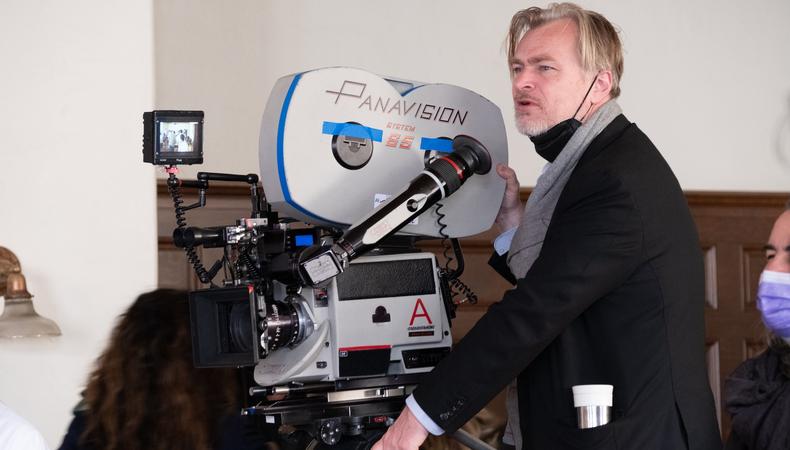
Becoming a successful film director doesn’t necessarily mean becoming the next Alfred Hitchcock. You can make a decent living even without that level of acclaim, and there's a much wider range of directing gigs available these days than during the Golden Age of Film. Directing for the screen can be immensely fulfilling work once you get it, and the journey can be as rewarding as it is challenging, what with learning to operate cameras and sit in on important meetings with industry professionals.
The road from committing to a career as a director and seeing a project through to the screen is typically a long one, requiring perseverance and hard graft. If you’re at the beginning of this journey, here’s what to expect and some steps you can follow to make it happen.
The movie director is the project’s creative lead, taking it from script to final edit while supervising all departments throughout production. If the cast and crew were an orchestra, they’d be the conductor.
Given a director’s overarching importance, their duties can be divided into pre-production, principal photography, and post-production.
What does a director do during pre-production?
- Work with producers to appoint heads of department
- Work with casting directors to select actors
- Work with directors of photography (DPs) to develop a filming style
- Rehearse with actors
- Plan production schedules
- Develop storyboards and shot lists
- Edit scripts
- Meet with wardrobe, makeup, and prop supervisors to prepare for filming
What does a director do during principal photography?
- Supervise lighting and camera teams
- Direct and motivate actors
- Liaise with department heads
- View raw footage from the previous day
- Adhere to schedules and budgets
What does a director do during post-production?
- Collaborate with editors to decide on shot selection, pacing, and overall narrative flow
- Work with sound teams on everything from dialogue to sound effects
- Work on colour grading with colourists
- Oversee integration of visual effects
- Work with composers and music supervisors
- Arrange test screenings
- Create a final edit
- Participate in marketing (creating promotional materials or taking part in interviews)
Do film directors need a degree?
Directors don’t need a degree, but one can help secure your first industry job, and the courses themselves, which are largely practical, can provide invaluable experience.
Undergraduate degrees in the following areas often prove advantageous:
- Film or television production
- Broadcast production
- Filmmaking
- TV, film, and theatre studies
Postgraduate courses typically focus on more specialised areas, such as cinematography, and tend to be highly practical, offering the scope to direct short films.
If university study isn’t the right option, you could take a Level 3 diploma in:
- Film and Television Production
- Performing and Production Arts
- Creative and Digital Media
Finally, short courses offer focused instruction across key filmmaking areas. Explore options from:
1. Develop your knowledge
Directors require an extensive knowledge of film. Much is gained on the job, but you can start developing a foundation right away by doing the following things:
- Read scripts and imagine how you’d shoot them
- Watch films critically, paying close attention
- Read books about directing, cinematography, and the history of cinema
- Explore YouTube channels that break down famous scenes and directing styles
2. Start shooting
You don’t need huge crews or top tech to make a film. Tom Hooper made short films as a teenager. Christopher Nolan was using his father's Super 8 camera at 7. Either would have killed for the camera and processing power of a smartphone, the tool behind an increasing number of films.
So, develop ideas, plan out how you’ll shoot different scenes, film your shots, and then edit it all together. Extra points for getting friends and family involved. You can even post it online for feedback. No need to worry about film producer vs. film director duties – in the early days, you’ll be doing everything yourself.
Schindler’s List it will not be, but creating your own movies from scratch lets you hone skills and nurture your passion.
3. Start at the bottom
Nobody enters filmmaking as a director. Ridley Scott didn’t kick off with Gladiator – he started as a BBC trainee set designer and “bullied the BBC into letting him do a directors course”. Guy Ritchie was a runner before he earned acclaim directing Lock, Stock, and Two Smoking Barrels.
Beginning with production work is a useful chance to make contacts, understand all aspects of film direction, and develop your technical knowledge.
Common entry-level positions include:
- Production assistant
- Location trainee
- Camera trainee
- Grip trainee
- Lighting trainee
- Sound trainee
- Video assist trainee
- Floor runner
- Production runner
- Post-production runner
Entry-level, paid positions can be hard to come by, so consider volunteering or seeking unpaid internships. Some film directors start in theatre – Sam Mendes was first hired as assistant director at the Chichester Festival Theatre, while Danny Boyle started as artistic director for the Royal Court Theatre Upstairs.
Over time, you can work up to more senior positions, including first or second assistant director, gaffer, production coordinator, or cinematographer. Wherever you land, ensure you’re asking questions and learning everything you can.
4. Create a strong network
Aspiring filmmakers must know (and be known by) the right people. Your network should stretch beyond other directors and producers – a minor actor could be the star of your first short, or a gaffer could recommend you for an indie job.
To meet people beyond the set, consider attending:
- Film festivals
- Conventions
- Premieres
- Mixers and parties
- Amateur film groups
- Workshops
Online exposure is increasingly important, with many professionals curating their social media profiles like visual CVs. Consider creating profiles on:
LinkedIn: Ideal for identifying and connecting with producers, cinematographers, and other industry professionals. You can also stay in touch with former colleagues and join relevant groups.
Facebook: Less formal than LinkedIn, Facebook groups are ideal for discussion and spreading the word about local opportunities.
Instagram: Visual at its core, Instagram lets you upload short clips and stills from current or previous projects. You can also post behind-the-scenes shots of you at work.
5. Assemble a reel
Your reel functions as your video CV. As well as showcasing examples of your previous work, it provides information about your education, experience, credits, and contact details, plus any festivals you’ve participated in. Anything from stills to storyboards to animated shorts can show your process and potential.
Add to your reel as you gain exposure. For inspiration, check out how emerging director Ella Bennett showcases her work, which ranges from no-budget short films to university coursework.
6. Enter film festivals
Before hits like We Need to Talk About Kevin and You Were Never Really Here, Scottish director Lynne Ramsay’s short film Small Deaths won the 1996 Cannes Film Festival Short Film Prix du Jury and put her on the map.
Once you’re making shorts you’re proud of, start entering them into film festivals. Just a few British festivals aimed at newcomers include:
- London Short Film Festival
- BFI Future Film Festival
- Glasgow Short Film Festival
- Cambridge Film Festival
- Wimbledon International Short Film Festival
Beyond exposure and potential prizes, film festivals are opportunities for networking. Many also feature talks, workshops, and presentations from experts – all opportunities to expand your film knowledge, sharpen your skills, and glean industry insights.
7. Secure early directing work
Any paid directing experience is good experience, regardless of the budget or audience. Alan Parker, director of features such as Mississippi Burning and Evita, spent 10 years filming adverts, while Christopher Nolan started with corporate and industrial training videos.
With experience, you can follow their lead by applying for entry-level directing jobs. These may include:
- Commercials and promotions, typically for small, local businesses
- Promotional content
- Training videos
- Indie films
- Student films
- Individual television episodes
Such work might not receive BAFTAs, but it can launch you towards something that will.
8. Put yourself forward
Your first feature may not be huge. Edgar Wright’s feature film debut, A Fistful of Fingers, had a modest $15,000 (£11,567) budget. But it put him on the map, and he’s since made Scott Pilgrim vs. the World ($60,000,000/£46,587,300 budget) and Baby Driver ($34,000,000/£26,390,290 budget).
Once you’ve gained some experience, contacts, and credits, you can put yourself forward as a first-time director. Look to studios you’re familiar with or reach out to production companies or agents to secure representation.
It’s also worth noting that many first-time directors launched their careers with their own projects. Wes Anderson wrote and directed his first-feature length production, Bottle Rocket, after securing funding from James L. Brooks. Such financing typically involves finding or writing a script you’re passionate about and pitching it to studios or investors. Remember, you’ll be expected to work around their demands and should be able to talk about everything from lighting to locations in your pitch.
Yes, there will be long days, humble roles, and ample rejection along the way, but reaching one of filmmaking's pinnacle positions is attainable for those passionate few willing to go the distance.