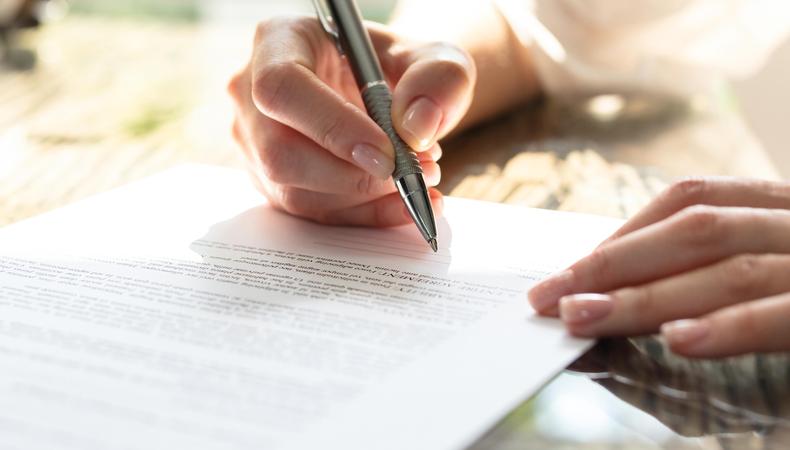
Navigating the legal side of modelling may not be glamorous, but everyone has to do it – even Kendall Jenner. Whether you’re stepping onto a commercial set for the first time or collaborating on a creative test shoot, one document is more important than almost any other: the model release form. It dictates where, in what way, and how long images of you can be used, so it’s important for your privacy and legal rights.
Legal stuff can feel overwhelming, and it could be tempting to sign on the dotted line and get on with the fun. But it’s crucial you understand what you’re agreeing to first.
Here’s a comprehensive guide to what a model release form is, when you need one, and what to look out for before sealing the deal.
JUMP TO
A model release form – sometimes called a talent release form – is a legally binding contract between a model and a photographer, client, or production company. It grants them legal permission to use, publish, and distribute images of the model taken during a specific shoot.
Under UK copyright law, the legal copyright of a photograph automatically belongs to the photographer or creator who took it, not the person standing in front of the camera. Everyone – model or not – also has personal privacy and publicity rights when it comes to their image being used, particularly for commercial purposes. A signed model release form bridges that gap by waiving or restricting certain privacy claims, giving the creator the right to license or publish the pictures they took.
A professional release form will clearly outline how your image will be used. That should include:
- Details about where the images are allowed to appear, such as social media, print advertising, global billboard campaigns, editorial magazines, stock photo websites, TV, or other digital media.
- Where the images can be used geographically. That could be in the UK only, in a few countries, or worldwide.
- How long the rights to your image will last, from a set period of months or years to “in perpetuity,” which means forever.
- The kind of payment you’ll get. The release form doesn’t outline all the terms and details of payment; it just acknowledges that something is being exchanged in return for you granting the rights to your image. The form should specify what kind of payment that’ll be, such as a fee, a day rate, or in some cases “time for print” (TFP), which is when you trade your time and talent for prints of the professional photos.
- The full legal names and contact details of both you and the photographer or production company. If you’re under 18, a parent or legal guardian can be named and sign on your behalf.
- Whether the photographer or client has the right to crop, retouch, or digitally alter your image.
Release forms can be easy to confuse with other industry documents, such as contracts and agreements. Getting to know the difference will help you protect your rights and understand what you’re signing up for.
An agency contract is between you and your modelling agency, and it sets out the terms of your representation. It will specify whether you’re exclusively represented by them, how much commission they’ll take when you book jobs, and how they’ll act on your behalf to find work.
A job or engagement contract lays out the details of a shoot, including the call times, location, day rates, overtime pay, travel expenses, and safety protocols.
Model release forms, on the other hand, focus on copyright, ownership, and image-licensing rights. They explicitly give permission for the photographer to market and distribute the final images created on that job.
As a model, you’ll likely need a release form for almost all the work you do – but there are a couple of instances in which an artist, photographer, or creator may not need release forms to share images of individuals.
Release forms are nonnegotiable for commercial work, in which your image will be used for things such as brand campaigns, product packaging, social media ads, or stock photography websites. Without a signed release, your face could end up selling products or services you haven’t agreed to – indefinitely.
Similarly, a release is essential for a creative test shoot or TFP collaboration, even if no money changes hands. It protects both parties by clearly setting out how the resulting photos can be shared. It may, for example, allow both you and the photographer to show the work in personal portfolios or on Instagram, while preventing either of you from selling the pictures to a third party without mutual consent.
Meanwhile, news coverage, documentary storytelling, or editorial commentary generally don’t need a release form. That’s because they fall under public interest and fair reporting guidelines. If you’re photographed in a public space where you’re not the identifiable focus of the shot, a release isn’t normally called for. Photographers displaying work as fine art exhibitions often don’t need commercial releases either, as long the image isn’t being repurposed for corporate branding.
Here’s an example of a basic release form for a UK shoot. They may look slightly different, but they should include the same content and follow a similar structure.
MODEL RELEASE FORM (UK)
1. PARTIES
This agreement is entered into on [Date: DD/MM/YYYY] between:
Model Legal Name: ______________________________________________________________
Address: ________________________________________________________________
Email / Phone: ________________________________________________________________
Photographer / Client Name: ____________________________________________________
Company / Organisation: ________________________________________________________
2. SHOOT DETAILS
Date of Shoot: ________________________________________________________________
Location: ________________________________________________________________
Project Name / Brief Description: ______________________________________________
3. GRANT OF RIGHTS
For valuable consideration received (e.g., fee payment or receipt of digital image
files), I hereby grant [Photographer/Client Name] and their legal representatives
the absolute right and permission to copyright, use, publish, and distribute photographic images of me taken on the date specified above.
Permitted Media: [ ] Digital / Web [ ] Print Advertising [ ] Social Media
[ ] All Media
Territory: [ ] United Kingdom [ ] Worldwide
Duration [ ] ______ Years [ ] In Perpetuity
4. ALTERATIONS & RETOUCHING
The photographer [ ] MAY / [ ] MAY NOT alter, edit, crop, or retouch the images
for artistic and commercial purposes, provided such alterations do not depict me
in a defamatory manner.
5. SIGNATURES
Model Signature: ____________________________________
Date: ___________________
(If Model is under 18 years of age):
Parent/Guardian Signature: ___________________________
Date: ___________________
Make sure to read any fine print thoroughly before signing, and make sure the distribution matches the pay. You may not want to grant perpetual, worldwide permission for a small or lower-paid job, for example. Always keep copies of your forms, and, if you’re represented, remember that your agency is there to help. Ask your booker to review releases before you sign them on set.
The release form may sound daunting, but remember that its purpose is to protect your rights. Take your time with it, don’t be pressured into rushing, and make sure the permissions work for you. And once it’s signed, you can forget all about it and get on with the important business of showing them what you’ve got.