The musical, as an art form, is a many-splendored thing – a dizzying array of different styles of shows come under its umbrella, from huge song-and-dance spectacles and fluffy entertainment to grittier offerings and experimental shows that push the genre to its limit. As an actor interested in working in musical theatre, it’s helpful to know some of the forms a musical can take and to be familiar with some of the greatest examples from theatre history, as well as some of their best numbers, which could be useful inspiration for audition songs.
The following are all famous within musical theatre for being a noble or particularly enduring example of a specific kind of musical, or for moving the art form on – pushing its boundaries and expanding what we think of as a classic musical. Getting to know them will help build your knowledge base, while you search for your next dream job in a musical.
1. Oklahoma!
Rodgers and Hammerstein are the grandaddies of musical theatre: from Carousel and The King and I to South Pacific and The Sound of Music, their shows remain very much loved (even if some are not without their issues in the modern day). But making the cut here is their 1943 debut, Oklahoma! – in part, because it is so famously influential, helping establish the musical form as we know it, in which songs and dances are fully integrated into a story that has real heart and dramatic stakes. Set in rural farming country and centring around a love triangle, it has traditionally been a romantic, nostalgic, all-American affair – but Daniel Fish’s reinvented recent production found hidden darker, sexier depths in the tale, proof that Rodgers and Hammerstein’s classics contain multitudes if you’re willing, as a performer, to search for them. Oh what beautiful mornin’, indeed.
2. Les Misérables
Perhaps the most famous mega-musical of all time, Les Mis is always topping votes for musical fans’ favourite shows. When it premiered in London 40 years ago, it was panned – but the critics missed the show’s sweeping mass appeal, and it’s duly been onstage ever since. Based on Victor Hugo’s novel, the epic and emotional story set amid the poverty of 19th century France follows a reformed convict, Jean Valjean, who rescues and raises a young girl while being pursued by a police officer, Javert. Nothing in Les Mis is subtle, but its sentimentality is potent enough to carry most viewers along, while composer Claude-Michel Schönberg and the lyricist Alain Boublil’s songs land with the power of a sledgehammer: On My Own, I Dreamed a Dream, Do You Hear the People Sing?, One Day More. It’s the most musical-y of musicals – the sort of show people think of when they say they do or don’t like the art form – but also proof to a performer of what rewards can be reaped when you wholeheartedly commit to the material.
3. Jesus Christ Superstar
Andrew Lloyd Webber could have taken up half this list. Love or hate his bombastic approach to musicals, he’s undoubtedly written many of the best tunes and is enjoying something of a renaissance. It’s fair to say that, at the height of his powers, he was also stunningly audacious, making musicals about dictators’ wives, based on poems about cats, and featuring roller-skating trains. Jesus Christ Superstar makes this list because it was a hugely influential work. It was the first major sung-through musical, in which the storytelling all comes through the songs, and one of the earliest rock musicals. Plus, it’s a ballsy move to make a musical based on the Bible, and even more so to centre Judas. It seemed like “the worst idea in history” as Webber himself admitted on the show’s 50th anniversary. Yet when performed well, it has an unbeatably propulsive rock-, gospel-, and soul-filled score.
4. The Lion King
This show helped turbo-power the Disney musical juggernaut when it opened in 1997, but it also remains a high-water mark for the studio’s stage shows – and for family musicals in general. The Lion King is the highest-grossing show in theatre history, popular all around the world – and it’s easy to see why. Disney bosses gave visionary director Julie Taymor lengthy reins to explore a theatrical language for the show, inspired by masks and puppetry traditions from around the globe. The result is an extremely theatrical visual feast that puts herds of animals onstage and that feels far from Disney cutesiness, while still appealing to children and adults of all ages. Plus, the combination of Elton John’s already hit tunes and Lebo M’s score that incorporates South African choral singing proved a winner. The Lion King is a perfect example of how artistic ambition and commercial success can go hand-in-hand: a salutary lesson for any would-be creator or performer.
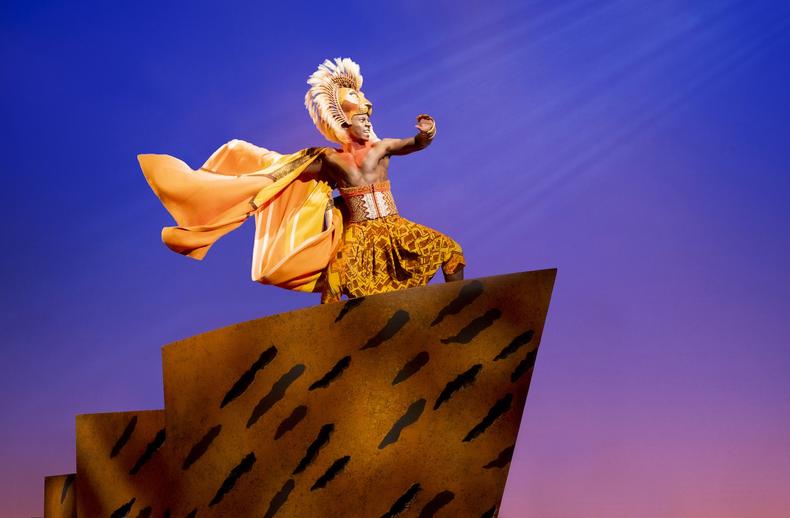
“The Lion King” Credit: Deen van Meer
5. Hamilton
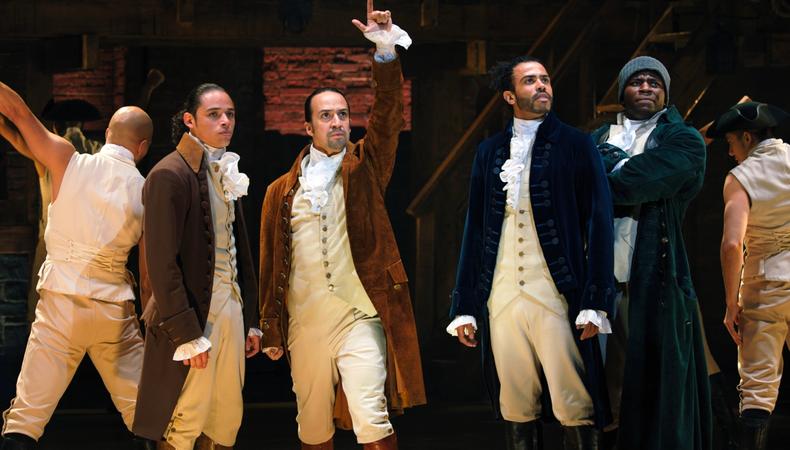
A modern classic – and another lesson in having faith in even the most unlikely material. Lin-Manuel Miranda spent six years honing his “ridiculous” pitch for the show, turning a history book about a U.S. founding father into a rap mixtape. The show was rapturously received from the moment it opened in 2015, and it has helped expand both the style and subject of the modern musical. Lyrically dense and rapid-fire, it’s a virtuoso bit of writing that demands sizzling performances and has persuaded the world that hip-hop and musical theatre could be natural bedfellows.
6. West Side Story
Many musicals are based on other source material, but few adaptations are as fully realised or acclaimed in their own right as West Side Story, which relocated Shakespeare’s Romeo and Juliet to 1950s Manhattan amid a turf war between a white gang, the Jets, and a Puerto Rican one, the Sharks. The love-across-the-divide story of youthful passion also took on a potent message of racial tolerance, while still maintaining the sweeping romantic tragedy of the original. Leonard Bernstein’s score is matchless in its danger-laced exuberance, as well as boasting memorable tunes such as Tonight, Maria, and America. Jerome Robbins, who came up with the idea for the show, proved a musical’s choreography can be as essential, enduring, and narrative-driving as the songs. Nearly 50 years on, his finger-clicking, high-kicking dancing is still instantly recognisable.
7. Guys and Dolls
Frank Loesser’s 1950 hit typifies many of the things we still love about Golden Age musicals: It has cracking tunes and plenty of razzle-dazzle, and if the plot, set among gamblers in “Noo Yoik,” is rather daft, the characters are outsized and properly funny in Jo Swerling and Abe Burrows’ book, based on Damon Runyon’s short stories. There’s a screwy, cheeky comedy to the show, matched by an ebullient score and many good excuses for a flamboyant dance sequence. This is the musical as good old-fashioned entertainment – although to judge by the recent long-running smash-hit version in London, such a thing hasn’t aged a bit.
8. Assassins
Stephen Sondheim: another man who could practically fill this list singlehandedly. The macabre Gothic of Sweeney Todd, the yearning nostalgia of Follies, the formal innovation of Company – many of his shows make a perfect showcase for an interesting mood or movement in musical theatre history. But the unforgettable Assassins is included here for its boldness. It was controversial in 1990 when it premiered – taking a revue-like structure, it told the stories of nine real-life would-be assassins of American presidents, imagining that they meet each other at a shooting gallery. Sondheim’s music is a pastiche of American song traditions, and the show’s biting humour and dark inquiry into the soul of a nation has seen it lauded by some and considered in bad taste by others. But it proves an important reminder that musical theatre doesn’t need to schmaltzy, and it can be used to explore virtually any topic.
9. Hadestown
First there were rock musicals, then there were folk musicals. From Once to Come From Away to The Curious Case of Benjamin Button, recent decades have seen a rise in less flashy shows that use acoustic instrumentation, actor-musicians, and folksy stylings to help stories feel more organic and intimate. Hadestown may be the leading example of the genre. Written as a concept album version of the Orpheus myth by an actual folk singer, Anais Mitchell, it took a long journey through various stage adaptations before fully embracing the musical format, but its blend of delicate balladry, swinging New Orleans jazz and blues, and gut-punch emotional delivery have made it a long-runner on Broadway and the West End alike. It proves musicals don’t have to do bombast or showbiz glitz to find an ardent following.
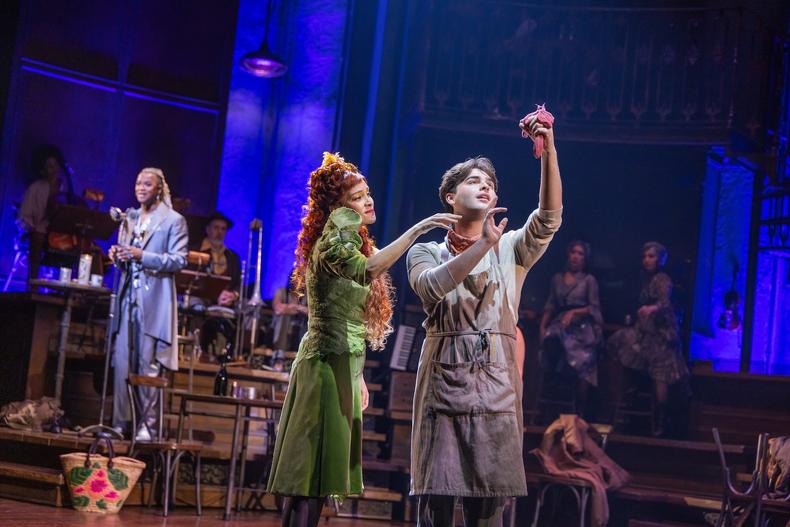
“Hadestown” Credit: Matthew Murphy
10. A Chorus Line
When it opened in 1975, A Chorus Line was considered a musical revolution. Rather than one traditional storyline, it was a series of monologues or musings on a theme, connected by a rather meta context: that we are watching a series of hopefuls try out to appear in a Broadway musical. Michael Bennett’s long-running show was also innovative for being based on a workshop process, and taking inspiration from real chorus performers’ accounts of their own experiences in auditions. It has long been a sacred text for theatrical types, but it’s loved by audiences, too, for pulling back the curtain on the brutality of Broadway – and for featuring some stunningly well-drilled dance sequences, of course.