
Facebook is dying, right? Wrong. But it’s only for boomers, yeah? Nope.
Anyone labouring under such misapprehensions is missing a trick, especially if they’re hoping to become an influencer or content creator. A digital creator on Facebook will encounter:
- A vast and diverse user base
- Impressive monetisation options
- The freedom to post everything from long-form videos to classic text posts
Whether you’re hoping to succeed as a user-generated content (UGC) creator or build an audience of your own, learning how to become a digital creator on Facebook is the right thing to do.
JUMP TO
“Digital creator” is an ambiguous term. Can anyone be a digital creator on Facebook? Does reposting a Simpsons meme mean you qualify?
As a general rule, Facebook digital creators:
- Have an account or profile with Pro Mode turned on
- Enable public content sharing
- Grow their audience beyond personal friends
- Create their own original content rather than simply reposting from others'
Credit: sdx15/Shutterstock
Large and varied audience
Facebook boasts over 3 billion monthly active users and 2 billion daily active users. In the UK alone, about 68.4 million (81% of the UK population) are active Facebook users.
Research reveals that Facebook’s huge audience is surprisingly diverse. Here’s how UK users break down by age:
- 18 to 24: 14.5%
- 25 to 34: 25.8%
- 35 to 44: 19.7%
- 45 to 54: 14.5%
- 55 to 64: 12.8%
- 65 and up: 12.6%
Gender demographics are similarly balanced, with about a 50/50 split between men and women in the UK.
If there’s an audience to find, you’ll likely find it on Facebook.
Multiple monetisation options
“Your community has many options to support you as a creator,” says stand-up comedian Daphnique Springs.
Creating sponsored posts and submitting paid UGC are two ways to earn as a creator on Facebook, but the platform also boasts its own extensive monetisation tools.
Content Monetisation Program
Paying creators nearly $3 billion (£2.24 billion) during 2025, Facebook’s Content Monetisation Program allows eligible creators to earn through Reels, Stories, photos, and text posts.
Sydnee Saucedo says she has made just under $25,000 (£18,700) since starting in October 2025.
Stars
Viewers buy bundles of Stars and award them to eligible creators. Graphed calls them “especially valuable for creators who do live content…where audiences feel personally connected enough to tip.”
One US cent (£0.0075) per Star isn’t much, but it adds up. “You can even set a Stars goal and viewers can help you reach that target,” says creator Jane UGC.
Subscriptions
Offer followers additional content and perks in return for a small monthly subscription fee. Grace from theggoldenroad reported earning over $2,000 (£1,500) from subscribers during 2025.
Facebook Affiliate Partnerships
Facebook is the top social media platform for product discovery. Facebook’s native affiliate tool makes it easy to earn a percentage when those products are found and purchased through your content.
Facebook Shop
Not every creator needs to make merch, but those who do can integrate it with their Facebook content by adding products to Facebook Shop.
Millions of engaged group members
There are 1.8 billion monthly users contributing to over 70 million active Facebook groups. Whatever your niche, there’s almost certainly a Facebook group where you can contribute. The groups provide:
- Direct engagement with your target audience
- The opportunity to connect with other creators
- The ability to link interested members back to your own page
- Peer-to-peer support from other creators
You can even start your own Facebook group specifically for your audience. It’s a great way to engage followers each day and turn them into your own brand advocates willing to answer questions for the rest of the community and potentially create UGC.
Range of formats
Nothing beats Facebook for versatility. Your content can consist of:
- Text posts
- Photo posts
- Short-form video
- Long-form video
- Facebook Live
- Stories
- Link posts
Already creating content elsewhere? Facebook has a place for you to repurpose it. Just starting out as a content creator? Facebook’s range of formats offers scope to experiment and find the best way to build an audience.
Convenient cross-posting
Facebook overlaps significantly with other Meta brands. Research shows that:
- 78% of Facebook users also use Instagram
- 73% also use YouTube
Since it’s already part of the Meta ecosystem, Facebook makes it easy to cross-promote or auto-share across those platforms. Instagram Reels can even be posted directly to your Facebook page.
1. Reuben and Rebekah of ReuBekah Vidz (1 million followers)
The Milton Keynes couple started sharing pranks online for their friends, and then took the idea and ran with it when others connected with their content.
2. Laura Middleton of Bump, Baby and You (579,000 followers)
Connects parents and soon-to-be-parents to help them share with others and seek guidance. Posts plenty of relatable quotes and photos of kids’ products from popular UK shops.
3. Lorna Cooper from Feed Your Family for About £20 a Week (751,000 followers)
Usually abbreviated to fyf20quid, Cooper shares healthy meal plans for budget-minded families. You’ll notice quite a few affiliate links, so she’s likely earning plenty.
4. Corey B (10 million followers)
Posting mostly Reels, Corey started filming food hacks for fun before realising Facebook earnings had overtaken those from his day job. He’s now a full-time Facebook creator.
5. Xavier Mortimer (18 million followers)
Reels from this French magician and entertainer consistently surpass 1 million views as he amazes audiences with spectacular illusions.
6. Beth from She Is the Lost Girl (57,000 followers)
Beth’s follower count snowballed after she started sharing photos and videos of her travels in 2023. As more people followed, she engaged further with travel tips and personal stories.
You can either create a Facebook account and set it to Pro Mode or turn on Pro Mode for your current account. Pro mode sets your “Who can follow me” preference to public and provides:
- Analytics
- Enhanced safety features
- Enhanced discoverability
- Monetisation products (once eligible)
To turn on Pro mode:
- Click your profile photo in the top-right corner, and then click your name.
- Click “Options” below your cover photo.
- Click “Turn on Pro Mode.”
Facebook also recommends setting up a Facebook page, since it allows you to assign admins and provides access to features like Ads Manage.
To create a Facebook page on desktop:
- Click “Pages” to the left of your Feed to open the Pages dashboard.
- Click “Create new Page” below Pages and Profiles.
- Enter the page name, and then select the category that best describes it.
- Click ‘“Create Page.”
To create a Facebook page on mobile:
- Open the app and tap ‘Menu’ at the top left.
- Tap “Pages,” then “Create.”
- Enter your page name and tap “Next.”
- Choose a category.
- Tap “Create.”
1. Post consistently
Experts suggest posting once or twice a day.
Creator Chef Darius stays on top of it by using a posting schedule, which “not only lets you become more organised, but lets your audience know which days you’ll be posting on,” he says. He also recommends the native post composer to “schedule posts in advance and cross-post your posts to different and various Facebook Groups.”
2. Optimise your profile
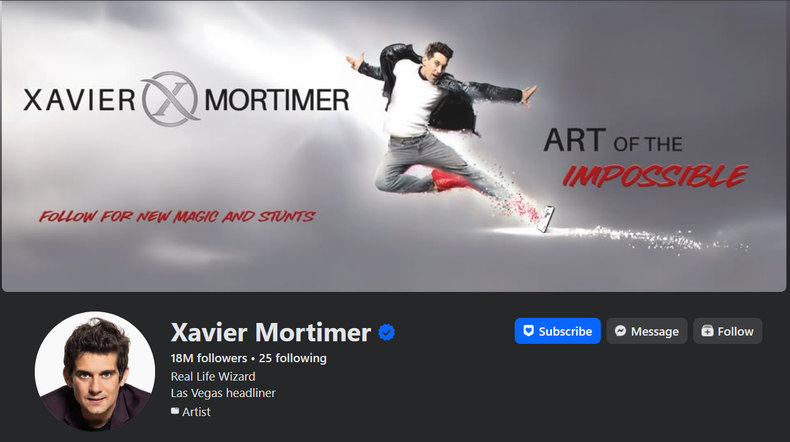
Select a clear, engaging profile photo, a username that reflects you or your content, a concise bio that tells visitors exactly what you offer, and an attention-grabbing cover photo that cements your brand.
Xavier Mortimer’s profile offers a great example:
3. Engage
“While other platforms might focus on virality, Facebook continues to be a cornerstone for community,” according to creator agency the Goat Agency. Engagement is absolutely crucial.
You must:
- Reply to comments
- Ask open-ended questions that prompt discussion
- Answer DMs
- Join relevant discussions
- Engage with similar Facebook Groups
4. Track your progress
Facebook’s professional dashboard offers deep insights into the makeup of your community and how it interacts with your content. Top Facebook creators make expert use of that information.
Gen-Z history teacher Lauren Cella, for example, found that:
- Over 40% of viewers are ages 35 to 44, so they’re likely watching partly to learn Gen Z and Gen Alpha slang.
- Nearly 80% of viewers are female, so women’s history content is going to do well and get shared.
- About 75% of viewers are from the US, so content covering US history is likely to succeed.
5. Embrace originality
In 2026, Meta announced it “made Facebook Feed and Reels more relevant by cracking down on spammy content and making it harder for copycats and impersonators to crowd out authentic creator voices.”
The conglomerate is also prioritising original content by penalising:
- Low-effort edits, such as minor adjustments to existing content
- Duplicative content, such as reposting content that already exists
Whatever you’re creating, just ensure that you’re also prioritising original content.