Whether you’ve got your sights set on stardom or are honing your performance skills for your local drama club, having a couple of impactful, well-chosen monologues in your back pocket — memorised, rehearsed and ready to perform — could be your ticket to a successful audition. Even if you haven’t booked an audition just yet, you never know when the opportunity might come knocking, so it’s worth having a couple of character pieces prepared.
JUMP TO
- What makes a good audition monologue?
- Monologues for Teen Girls: Contemporary Plays
- Monologues for Teen Girls: Classical Plays
- Monologues for Teen Girls: Film
- Monologues for Teen Girls: Television
- Monologues for Teen Boys: Contemporary Plays
- Monologues for Teen Boys: Classical Plays
- Monologues for Teen Boys: Film
- Monologues for Teen Boys: Television
- Gender-Neutral Monologues for Teens
Your audition monologue should be age-appropriate and play to your strengths. If you’re preparing more than one, go for contrasting pieces. For example, if you’ve already got a comedic piece in your repertoire, make your second a serious speech. This will also help you avoid being typecast at the beginning of your career (for instance, if you’re naturally a comic actor, you may find you’ve got a knack for playing villains too!). A good monologue should take your audience on a journey, with an engaging narrative arc to hold their attention.
There are plenty of age-appropriate monologues for teenagers across TV, film, and plays. The challenge is finding original pieces that both suit you and help you stand out from the popular choices casting directors see all the time. Here are some top-notch audition monologues for teens to get you started.
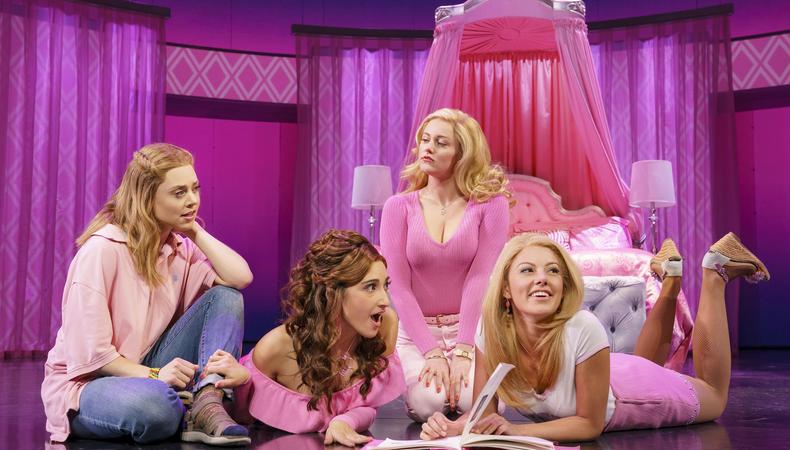
Mean Girls the Musical, Tina Fey (2017)
Act 2, Scene 8
Character: Regina George
Why choose it? Regina George is a stereotypical mean girl and a fun comedic part for a teen to play. This speech reveals glimpses of vulnerability beneath her otherwise hard exterior as she references being perceived as less than human. She’s attempting to apologise and her failure to do so is humorous and moving at the same time. The monologue is delivered with Regina in casts after being hit by a bus, so there’s an opportunity for physical comedy too.
I’m going to forgive you. Because I’m on a lot of pain medication right now. You know I died for fifteen seconds, right? Spoiler alert: heaven looks like a really nice hotel in Miami. When I woke up in the street, all I could see was my mom’s face and Gretchen’s big face looking down at me. And they looked so surprised. Not even sad, just like, surprised that I could be bleeding. Like they forgot I was a human person. I’ve actually been a human person this whole time. I know I was harsh. And people say I’m a b—. But you know what they would call me if I was a boy? “Reginald”. That’s what my mom was gonna name me if I was a boy, so honestly I’d rather be “b—”.
Tusk Tusk, Polly Stenham (2009)
Act 1, Scene 4
Character: Maggie
Why choose it? This hard-hitting piece has an unexpected narrative arc, beginning in the style of a children’s story in the third person and ending with an abrupt revelation in the first person. There’s a chilling contrast between the childlike tone of the story and the traumatic things Maggie is describing. Her complex character and the sense of being burdened with responsibility make Maggie a challenging and compelling part to play.
Once upon a time, there was a family. One mummy bear, two baby boy bears, and a girl cub. And the thing is, mummy bear was sick. But she didn’t want to frighten her darling boy cubs. But the girl cub? Well, scaring her she didn’t mind so much. Time passed and the poorly mummy bear started coming to the girl in the middle of the night. She would share her dark secrets with the girl, and in those few poisonous hours, they would be close because what brings you closer than sharing hell?
And so the girl would walk her around, night after night when she couldn’t sleep, and it was her, only her, who would change her mummy bear’s clothes when she was too low to even move, and it was only this girl, this girl cub, who knew she tried it twice. But I sorted her out, I helped her be sick, and never told anyone. Anyone.
And then something inside me just... I just knew it would be like every other time, and I was so angry with her. You know, she was walking circles, she couldn’t sleep, I was begging her to calm down, but it was like she couldn’t see me. And then she started threatening things, what she would do, so I said, "Just go and do it then.”
A Raisin in the Sun, Lorraine Hansberry (1959)
Act 3, Scene 1
Character: Beneatha
Why choose it? This speech marks a pivotal moment for Beneatha as she wrestles with questions about her purpose in life. She might be giving up hope, but the piece is energetic as she vents her frustration with the naive beliefs of her suitor, Jason Asagai. There’s a great arc for the actor to play with, starting with a dramatic anecdote and culminating in a philosophical crisis.
When I was small… we used to take our sleds out in the wintertime and the only hills we had were the ice-covered stone steps of some houses down the street.
And we used to fill them in with snow and make them smooth and slide down them all day… and it was very dangerous, you know… far too steep… and sure enough one day a kid named Rufus came down too fast and hit the sidewalk and we saw his face just split open right there in front of us…
And I remember standing there looking at his bloody open face thinking that was the end of Rufus. But the ambulance came and they took him to the hospital and they fixed the broken bones and sewed it all up… and the next time I saw Rufus he just had a little line down the middle of his face…. I never got over that… What one person could do for another, fix him up – sew up the problem, make him all right again.
That was the most marvellous thing in the world… I wanted to do that. I always thought it was the one concrete thing in the world a human being could do. Fix up the sick, you know – and make them whole again. This was truly being God… It used to be so important to me. It used to matter. I used to care.
Yes – I think [I stopped]. Because it doesn’t seem deep enough, close enough to what ails mankind! It was a child’s way of seeing things – or an idealist’s. You are still where I left off. You with all of your talk and dreams about Africa! You still think you can patch up the world. Cure the Great Sore of Colonialism – (loftily, mocking it) with the Penicillin of Independence – !
Independence and then what? What about the crooks and thieves and just plain idiots who will come into power and steal and plunder the same as before – only now they will be black and do it in the name of the new independence – WHAT ABOUT THEM?
Spring Awakening, Frank Wedekind (1891)
Act 2, Scene 2
Character: Ilse
Why choose it? Ilse is a free-spirited character with a streak of recklessness. Those qualities can make a good performance of this monologue spellbinding to watch. Her colourful stories about the chaotic, dangerous life she’s leading are a stark contrast to her question about school, which reminds the audience she’s only a teenager. She’s making light of traumatic things she’s experienced, with an undertone of fear that creates a nice tension.
All those old buggers, Moritz, are so wild, so bohemian. All they want to do is dress me up and paint me. That Johann Ferendorf, he is a wicked one, actually. Always knocking easels down and chasing me, dabbing me with his paintbrush. But then again that's men, if they can't stick you with one thing they'll try another.
Oh god, Moritz, the other day we all got so drunk, I passed out in the snow. I just lay there unconscious all night! You know, I spent an entire week with Nohl, inhaling that ether of his. Then this morning he woke me, with a gun! Set against my breast. One twitch, he said, and it's the end. Really gave me the shivers, I tell you. But how about you, Moritz? Still in school?
As You Like It, William Shakespeare (c.1599)
Act 3, Scene 5
Character: Phebe
Why choose it? Phebe’s light-hearted monologue is delivered the first time we meet her. She’s a confident, sparky character, attempting to shake off Silvius’s romantic pursuits and urging him not to be so dramatic. Written in verse, the speech is a chance for a teen actor to show off their grasp of Iambic pentameter, which lends it a fun, bouncy rhythm. Almost all of the piece is metaphorical, making each thought best delivered with an air of spontaneity.
I would not be thy executioner:
I fly thee, for I would not injure thee.
Thou tell’st me there is murder in mine eye:
‘Tis pretty, sure, and very probable,
That eyes, that are the frail’st and softest things,
Who shut their coward gates on atomies,
Should be call’d tyrants, butchers, murderers!
Now I do frown on thee with all my heart;
And, if mine eyes can wound, now let them kill thee;
Now counterfeit to swound; why now fall down;
Or, if thou canst not, O! for shame, for shame,
Lie not, to say mine eyes are murderers.
Now show the wound mine eye hath made in thee;
Scratch thee but with a pin, and there remains
Some scar of it; lean but upon a rush,
The cicatrice and capable impressure
Thy palm some moment keeps; but now mine eyes,
Which I have darted at thee, hurt thee not,
Nor, I am sure, there is no force in eyes
That can do hurt.
“Little Women” Credit: Wilson Webb
The Fault in Our Stars, Scott Neustadter and Michael H. Weber, based on the novel by John Green (2014)
Character: Hazel
Why choose it? Hazel talks about her feelings for Augustus in relation to maths so she doesn’t start crying. This is a good chance to explore playing suppressed emotion and convey a heart-wrenching story without ‘disappearing into a puddle of tears’.
Augustus Waters was the great star-crossed love of my life. Ours was an epic love story, and I won’t be able to get more than a sentence into it without disappearing into a puddle of tears. Like all real love stories – ours will die with us, as it should. I’d hoped that he’d be eulogising me, because there’s no one I’d rather have. I can’t talk about our love story, so instead I will talk about math. I am not a mathematician, but I know this: there are infinite numbers between 0 and 1. There’s .1, and .12, and .112, and an infinite collection of others. Of course, there is a bigger infinite set of numbers between 0 and 2, or between 0 and a million. Some infinities are bigger than other infinities. A writer we used to like taught us that. I want more numbers than I’m likely to get, and God, I want more numbers for Augustus Waters than he got. But, Gus, my love, I cannot tell you how thankful I am for our little infinity. You gave me a forever within the numbered days, and for that I am eternally grateful. I love you.
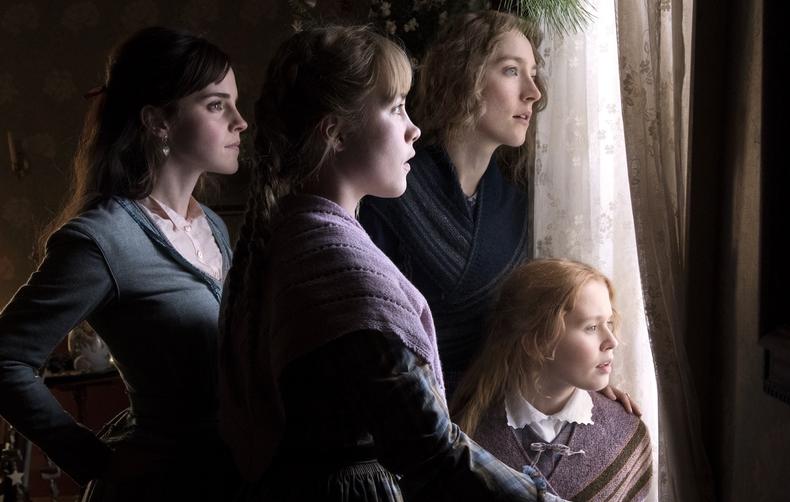
Little Women, Greta Gerwig, based on the novel by Louisa May Alcott (2019)
Character: Beth
Why choose it? In this speech, Beth accepts her impending death and implores her sister Jo to help her family prepare for it too. It captures her gentle, selfless nature. There’s a quiet intimacy to her delivery that shows their close relationship. This is a chance for a soft and subtle performance of a big, brave life moment.
You’ll tell the others won’t you Jo? I’ve heard that people who love us best are often blindest to such things. If they don’t see it you can tell them for me. I don’t want any secrets and it’s kinder to prepare them. Meg has John to comfort her, Laurie will comfort Amy, but you must stand by Father and Mother. Won’t you, Jo? I don’t know how to express myself and shouldn’t try to anyone but you, because I can’t speak out to anyone but you. Jo, dear. Don’t hope anymore. It won’t do any good. I’m sure of it. We won’t be miserable, but enjoy being together while we wait. We’ve had happy times together, haven’t we, Jo? And I think the tide will go out easily, if you help me.
Sex Education, Laurie Nunn (2019)
Season 1, Episode 8
Character: Maeve
Why choose it? The stakes are high for Maeve in this speech as she makes her case for not being expelled from school. The tough, often cynical character reveals an unexpected passion for her studies in a rare display of self-belief. There’s a punchy, stirring tone to the piece, and a characteristic dry wit that lends the part a bit of an edge.
I’m really smart, sir. I’d read all of Jane Austen by the time I was 12, including her lesser known work, ‘Lady Susan’, which is a severely underrated piece of feminist literature. I can debate the inherent difference between existentialism and transcendentalism, explaining why Sartre is the prominent voice of the former, yet the latter is barely remembered as a philosophical movement. I can gauge the levels of Mr Hendrick’s personal despair based on his choice of Hawaiian shirt. I’m really smart. I just got unlucky in the family department. I don’t get any support, and sometimes I do the wrong thing. But I know I can be better. And if you give me a second chance, I will not waste it.
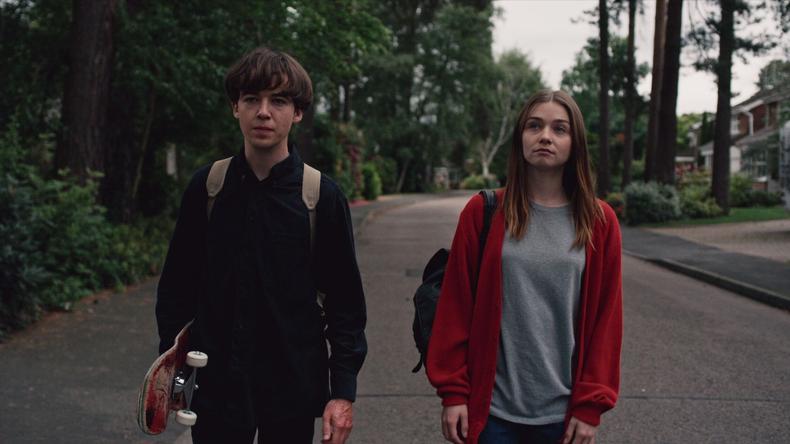
The End of the Fucking World, Charles Forsman and Charlie Covell (2017)
Season 1, Episode 1
Character: Alyssa
Why choose it? Alyssa’s monologue balances comedy and emotional complexity well. It’s filled with revelations about the character, from her relationship with her family to the way she perceives the world. We’re shown how she’s learnt to distrust people who fit in, and there’s a great mix of strength, vulnerability, and unexpected turns to keep an audience engaged.
I get these moments when I have to lie down because everything feels, sort of, too much. And I look up and see the blue or the grey or the black and I feel myself melting into it. And for, like, a split second, I feel free and happy. Innocent. Like a dog. Or an alien. Or a baby. My mum used to be nice, but then she divorced my dad and met Tony. Last week, he said he thought I needed a bigger bra. So I threw a Chicken Kiev at his head. Mum pretended that she hadn’t heard him. Now she has the perfect house and the perfect garden in the perfect neighbourhood with perfect twins. Their heads do smell nice though, it's true. I haven’t seen my dad since I was eight. He never fitted in. He couldn’t settle. So he had to leave. I don’t blame him. But he sends me a card, without fail, every single birthday. I understand, actually. I don’t trust people who fit in.
“The Book of Mormon” Credit: Joan Marcus
Lord of the Flies, Nigel Williams after William Golding (1996)
Scene 6
Character: Simon
Why choose it? Simon’s disjointed rambling is filled with horror and fear. He’s losing his grasp on reality, so this is a good opportunity to play with spiralling madness. The visceral image of the puppet-like pig’s head is a chance to disgust and shock an audience and leave them wondering if this is real or part of his hallucination.
My mind isn’t right. It isn’t. I’ll have one of my goes if I’m not careful. My mind--
(He puts his hand to his hurting head for a moment) If Ralph was here...when I was eight, I think...when I was eight I went down to the country and there...there was this horse in a field and... (Puts his hand to his head again briefly) If Ralph was here - Ralph would know. (He stops. The faint moonlight catches the pig’s head. He sees it for the first time. He freezes with fear. A whimper) Oh. Oh no. (SIMON moves slowly to stare at it) It’s blood. And it’s flies. It’s blood. (He starts to reach for the head) That head. That head. When I was eight I saw a man kill a bird. And I thought... (He is touching it with a thrill of horror) There’s blood and there are flies. It’s not my fault there’s blood and flies, is it? You look stupid, come to that. (He starts to work the pig’s mouth like a puppet’s) "Oh no I don’t!" Oh yes you do. "You’re a bad boy, do you hear me!" (Starting to giggle) Like Jenkins on that picnic. "You’re no go, boy. You’re no go!" "I’m not no go, sir!" "Oh yes you are--you’re an ignorant, silly, little boy! And I know you are because I am the beast! You hear me! I’m the beast!" (He has scared himself. Starting to feel the fit coming on him) You’re not. You’re not. Pig’s head on a stick. You’re just a silly... (Very scared) I feel funny. I’m going to...don’t make me have a turn, sir, will you? Please don’t let me have a turn, sir. Ralph! Ralph!
The Curious Incident of the Dog in the Night Time, Simon Stephens after Mark Haddon, 2012
Scene 83
Character: Christopher
Why choose it? Christopher’s neurodiversity makes him a unique character to portray. To nail the part, you will need to invest in his literal interpretation of the world. This monologue is a moment of introspection as he reflects on the perks of being an astronaut and his dreams for the future in an endearingly matter-of-fact way.
To be a good astronaut you have to be intelligent and I’m intelligent. You also have to understand how machines work and I’m good at understanding how machines work. You also have to be someone who would like being on their own in a tiny spacecraft thousands and thousands of miles away from the surface of the earth and not panic or get claustrophobia or homesick or insane. And I really like little spaces so long as there is no one else in them with me. Sometimes when I want to be on my own I get into the airing cupboard and slide in beside the boiler and pull the door closed behind me and sit there and think for hours and it makes me feel very calm. So I would have to be an astronaut on my own or have my own part of the spacecraft that no one else could come into. And also there are no yellow things or brown things in a spacecraft so that would be OK, too. And I would have to talk to other people from Mission Control, but we would do that through a radio link-up and a TV monitor so it wouldn’t be like real people who are strangers but it would be like playing a computer game. Also I wouldn’t be homesick at all because I’d be surrounded by lots of things I like, which are machines and computers and outer space. And I would be able to look out of a little window in the spacecraft and know that there was no one else near me for thousands and thousands of miles.
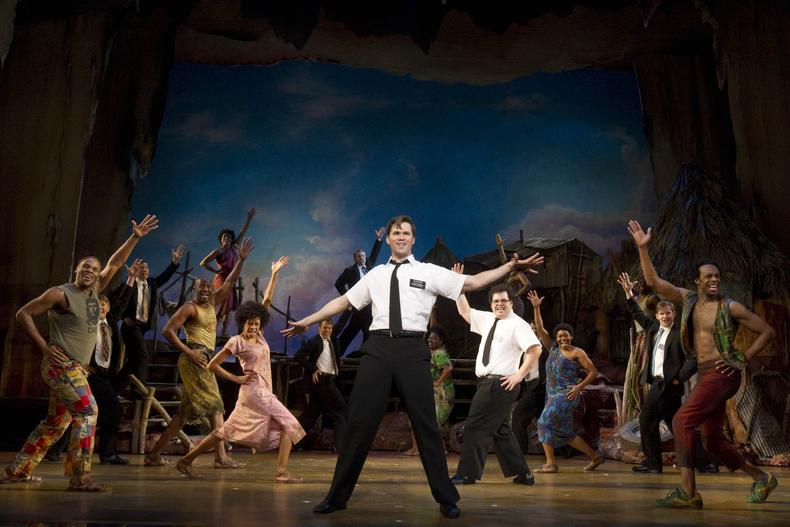
The Book of Mormon, Matt Stone, Robert Lopez, and Trey Parker (2011)
Act 2
Character: Elder Price
Why choose it? In this speech, Elder Price, a previously devout Mormon, is voicing some pretty subversive thoughts. It’s an explosive outburst as he questions his former beliefs and comes to the big, existential realisation that his life has been filled with failures and false hopes. His crisis of faith and personal reckoning is exaggerated enough to make it darkly comic. An earnest performance will add to the humour.
Well, well… If it isn’t the SUPER MORMON. Spreading “the word”?! Making more – BRAIN WASHED ZOMBIES?! How is it YOU converted all those people into Mormons! You get everything you pray for. YOU’RE doing everything I was supposed to do. Doesn’t that seem a little telling to you?! The universe doesn’t work the way we were told! When I was nine years old… My family took a trip to Orlando, Florida. It was the most wonderful, most magical place I had ever seen. I said to myself “THIS is where I want to spend eternity!” My parents told me that if I made God proud, and did whatever the church asked, in the Latter Days I could have whatever I wanted. So I WORKED and I WORKED. And even when I studied Mormon stories and I thought, ‘That doesn’t make ANY SENSE’, I KEPT WORKING because I was told ONE DAY — I would get my reward!! Planet Orlando! But what do I have now? I can’t even get a ticket home…
Measure for Measure, William Shakespeare (1604)
Act 3, Scene 1
Character: Claudio
Why choose it? Claudio’s speech is filled with vivid images as he contemplates the horror of death. He’s trying to persuade his sister to give up her virginity to let him live, and the piece captures the agony of two teenagers battling with morals and existential questions. Work to find each new thought, and don’t hold back — you are portraying a character whose life is at stake.
Ay, but to die, and go we know not where;
To lie in cold obstruction and to rot;
This sensible warm motion to become
A kneaded clod; and the delighted spirit
To bathe in fiery floods, or to reside
In thrilling region of thick-ribbed ice;
To be imprison'd in the viewless winds,
And blown with restless violence round about
The pendent world; or to be worse than worst
Of those that lawless and incertain thought
Imagine howling: 'tis too horrible!
The weariest and most loathed worldly life
That age, ache, penury and imprisonment
Can lay on nature is a paradise
To what we fear of death.
Romeo and Juliet, William Shakespeare (1597)
Act 2, Scene 2
Character: Romeo
Why choose it? Romeo’s famous speech is well known and frequently performed, with good reason. The brilliantly crafted monologue captures the angst and heartache of a teenager in love and gives a young actor the chance to play with verse. It journeys through a roller coaster of emotions, capturing a dramatic yearning and intensity of feeling that lends itself wonderfully to drama.
But soft! What light through yonder window breaks?
It is the East, and Juliet is the sun!
Arise, fair sun, and kill the envious moon,
Who is already sick and pale with grief
That thou her maid art far more fair than she.
Be not her maid, since she is envious.
Her vestal livery is but sick and green,
And none but fools do wear it. Cast it off.
It is my lady; O, it is my love!
O that she knew she were!
She speaks, yet she says nothing. What of that?
Her eye discourses; I will answer it.
I am too bold; ’tis not to me she speaks.
Two of the fairest stars in all the heaven,
Having some business, do entreat her eyes
To twinkle in their spheres till they return.
What if her eyes were there, they in her head?
The brightness of her cheek would shame those stars
As daylight doth a lamp; her eyes in heaven
Would through the airy region stream so bright
That birds would sing and think it were not night.
See how she leans her cheek upon her hand!
O that I were a glove upon that hand,
That I might touch that cheek!
Ferris Bueller’s Day Off, John Hughes (1986)
Character: Ferris Bueller
Why choose it? This monologue embodies Ferris’s cheeky, rebellious spirit. It’s a great choice for a teenager, as he explains how to successfully pull a sickie for a day off school. The piece is directed to the audience, which gives the actor the chance to be bold and endear them with cocksure charm.
The key to faking out the parents is the clammy hands. It’s a good non-specific symptom. I’m a big believer in it. A lot of people will tell you that a good phony fever is a dead lock, but if you get a nervous mother, you could wind up in the doctor’s office. That’s worse than school. What you do is, you fake a stomach cramp, and when you’re bent over, moaning and wailing, (confidently) you lick your palms. It’s a little childish and stupid, but then, so is high school. Life moves pretty fast. If you don’t stop and look around once in a while, you could miss it. I did have a test today. That wasn’t bullshit. It’s on European socialism. I mean, really, what’s the point? I’m not European, I don’t plan on being European, so who gives a crap if they’re socialist? They could be fascist anarchists – that still wouldn’t change the fact that I don’t own a car. Not that I condone fascism, or any ism for that matter. Isms in my opinion are not good. A person should not believe in an ism – he should believe in himself. I quote John Lennon: “I don’t believe in Beatles – I just believe in me.” A good point there. Of course, he was the Walrus. I could be the Walrus – I’d still have to bum rides off of people.
The Perks of Being a Wallflower, Stephen Chbosky (2012)
Character: Patrick
Why choose it? Patrick is full of confidence and mischief, but this speech reveals a layer of fearfulness and vulnerability. There’s a real journey for the actor to go on as the piece moves from lively anecdotes to darkly disturbing revelations that are eventually brushed off in a bid to impress his peers.
Yeah, I’ve got one. Well, there was this one guy. Queer as a three dollar bill. Guy’s father didn’t know about his son. So, he comes down into the basement one night when he’s supposed to be out of town. Catches his son with another boy. So, he starts beating him. But not like the slap kind. Like the real kind. And the boyfriend says, “Stop. You’re killing him.” And the son just yells “Get out.” And eventually the boyfriend just did. Forget it. I’m free now, right? I could meet the love of my life any second now. Things will be different now, and that’s good. I just need to meet a good guy.
“The End of the Fucking World” Courtesy Netflix
Misfits, Howard Overman and Jon Brown (2009)
Season 1, Episode 6
Character: Nathan
Why choose it? Nathan’s speech is a defiant (and ultimately outrageous) declaration of his right to be a messy teenager, but it actually reveals an angry, corrupt inner world. It captures a quest for individuality that speaks to the teenage experience and highlights his pursuit of recklessness.
She’s got you thinking this is how you’re supposed to be. Well it’s not! We’re young! We’re supposed to drink too much! We’re supposed to have bad attitudes and shag each other’s brains out. We are designed to party! THIS IS IT! Yeah, so a few of us will overdose or go mental. But Charles Darwin said you can’t make an omelette without breaking a few eggs. And that’s what it’s all about. Breaking eggs! And by eggs I do mean getting smashed on a cocktail of class As. If you could see yourselves! It breaks my heart – you’re wearing cardigans! We had it all! We fucked up bigger and better than any generation that came before us! WE WERE SO BEAUTIFUL! We’re screw ups. I’m a screw up. And I’m glad to be a screw up until my late twenties, maybe even my early thirties. And I will shag my own mother before I let her, or anyone else, take that away from me!
The End of the Fucking World, Charles Forsman and Charlie Covell (2017)
Season 1, Episode 1
Character: James
Why choose it? We’re taken abruptly into the inner workings of James’s mind in this striking introductory monologue. It’s a disconcerting piece, peppered with humour in its brutality. The fast pace and unexpected, in-your-face revelations give the monologue the potential to really stand out, and show off an ability to balance subtlety with the absurd.
I’m James. I’m 17. And I’m pretty sure I’m a psychopath. I was eight when I realised I didn’t have a sense of humour. I’d always wanted to punch my dad in the face. When I was nine, he bought a deep-fat fryer. He saw it on an American shopping channel. One day, I put my hand in it. I wanted to make myself feel something. When I was 15, I put my neighbour’s cat in a box and took it into the woods. It probably had a name. After that, I killed more animals. And I remember every single one. School was beneath me, but it was a good place for observation and selection because I had a plan. I was gonna kill something bigger, much bigger.
A Midsummer Night’s Dream, William Shakespeare (1605)
Act V, Scene 2
Character: Puck
Why choose it? Puck is a mischievous, impish character who narrates passages throughout the play. This speech brings the audience into the dreamlike quality of the story as Puck suggests they might have been sleeping through it. The part gives a young actor the chance to get confident with breaking the fourth wall and directly addressing the audience. Don’t be afraid to lean into the humour of acknowledging the audience’s presence.
If we shadows have offended,
Think but this, and all is mended,
That you have but slumber’d here
While these visions did appear.
And this weak and idle theme,
No more yielding but a dream,
Gentles, do not reprehend:
if you pardon, we will mend:
And, as I am an honest Puck,
If we have unearned luck
Now to ‘scape the serpent’s tongue,
We will make amends ere long;
Else the Puck a liar call;
So, good night unto you all.
Give me your hands, if we be friends,
And Robin shall restore amends.
Head Over Heels, Jeff Whitty (2015)
Act 1, Scene 2,
Character: Pythio
Why choose it? Pythio is an all-knowing oracle who enjoys the power that comes with their role. This speech comes at the start of the play, and sets up the plot’s central conflict. There’s plenty of room for drama, as the character relishes delivering this bombshell to the royal family. The play’s tongue in cheek tone comes into its own here, with a rhythm that gives the performer the chance to really enjoy the Pythio’s playful humour.
Hark!
Thy younger daughter brings a liar to bed:
He thou shalt forbid; she he'll then assume!
Thy elder daughter shall consent to wed;
She'll consummate her love – but with no groom!
Thou with thy wife adult'ry shall commit.
This fourth and last prophecy is crucial:
You will meet and make way for a better King.
And when each of my Prophecies proves true
A silken flag shall flutter to the ground.
On four of a kind you forfeit your beat;
Just one prevent, and Pythio you’ll cheat.
Unless the brief is very specific, audition monologues are a fun chance to explore speeches written for any gender. Once you’ve chosen your piece, be sure to read the whole play and get a good understanding of the given circumstances. Think about the objective of the piece, who the character is talking to, and the events leading up to their speech. Most importantly, practise until you know it inside out. Then wait for an opportunity to smash it in an audition.