Whether you are an actor who dreams of treading the boards of Shakespeare’s Globe or are hoping to reshape the mould, like the wildly successful drunken comedy troupe Sh*t-Faced Shakespeare, you’ll need a solid Shakespearean monologue (or two) under your belt to impress an audition panel.
From passionate declarations of love to introspective musings on revenge, each monologue on this list offers something juicy to sink your teeth into, showcasing not only your ability to act but also your prowess at handling a classical text.
JUMP TO

Credit: Ana Hollan/Shutterstock
Megan Burns, Head of Voice at Fourth Monkey Drama School, advises picking something in verse. Even if you are not familiar with monologues written in iambic pentameter, you should “make an attempt to integrate yourself into the rhythm of that language”.
Burns also recommends trying to find a piece “that’s very active, [where the character] is pursuing an active goal rather than lost in imagery”. Speeches with a clear character journey or conflict to resolve – where the circumstances are apparent even to those who don’t know the play – make for the strongest audition monologues.
We have divided the following monologues into two categories: men and women (based on the character’s gender in the play). But there is no reason that any of these speeches cannot be played by anyone of any gender. This includes people who are nonbinary, gender fluid, or gender nonconforming.
When deciding which monologue to audition with, Burns suggests you “pick something you like, that you can connect to” and to “think about your casting – all of Shakespeare’s plays contain the archetypes: the king, the fool, the lovers… Think about which you best connect with or want to play and pick a monologue which corresponds. If you are auditioning for a specific role, you might want to think about which speech best reflects the part you are auditioning for.”
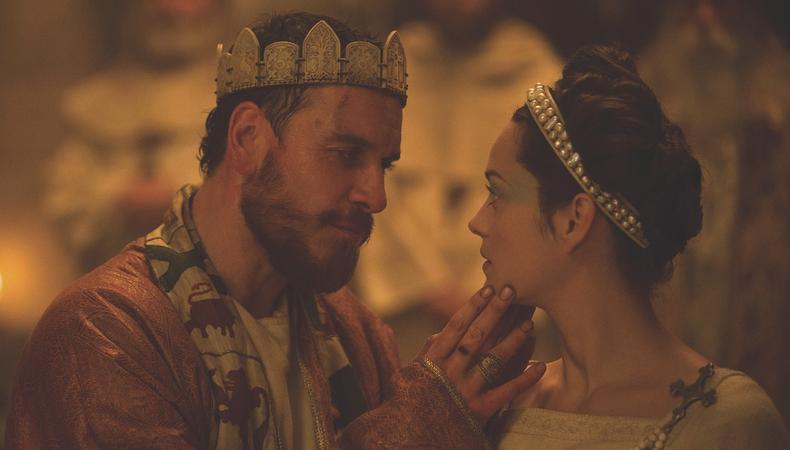
Macbeth
Act 3, Scene 1
In this monologue, Macbeth reveals his deep fear and paranoia about Banquo and his son ‘stealing’ the crown, ultimately driving him to arrange to have both of them murdered. The intensity and emotional depth of this speech allows an actor to showcase their emotional range: from fear to jealousy and paranoia to ambition, it’s ripe with internal conflict.
Macbeth: To be thus is nothing;
But to be safely thus.—Our fears in Banquo
Stick deep; and in his royalty of nature
Reigns that which would be fear'd: 'tis much he dares;
And, to that dauntless temper of his mind,
He hath a wisdom that doth guide his valour
To act in safety. There is none but he
Whose being I do fear: and, under him,
My Genius is rebuked; as, it is said,
Mark Antony's was by Caesar. He chid the sisters
When first they put the name of king upon me,
And bade them speak to him: then prophet-like
They hail'd him father to a line of kings:
Upon my head they placed a fruitless crown,
And put a barren sceptre in my gripe,
Thence to be wrench'd with an unlineal hand,
No son of mine succeeding. If 't be so,
For Banquo's issue have I filed my mind;
For them the gracious Duncan have I murder'd;
Put rancours in the vessel of my peace
Only for them; and mine eternal jewel
Given to the common enemy of man,
To make them kings, the seed of Banquo kings!
Rather than so, come fate into the list.
And champion me to the utterance!
Measure for Measure
Act 2, Scene 2
This monologue covers the complexity of Angelo’s situation as he struggles with his intense and lustful attraction to Isabella, an aspiring nun. It offers the chance to portray an engaging and nuanced character transformation as he moves from blaming and denial to self-recrimination and shame, and eventually to acceptance of the power of this ‘virtuous’ temptation.
Angelo: What's this, what's this? Is this her fault or mine?
The tempter or the tempted, who sins most?
Ha!
Not she: nor doth she tempt: but it is I
That, lying by the violet in the sun,
Do as the carrion does, not as the flower,
Corrupt with virtuous season. Can it be
That modesty may more betray our sense
Than woman's lightness? Having waste ground enough,
Shall we desire to raze the sanctuary
And pitch our evils there? O, fie, fie, fie!
What dost thou, or what art thou, Angelo?
Dost thou desire her foully for those things
That make her good? O, let her brother live!
Thieves for their robbery have authority
When judges steal themselves. What, do I love her,
That I desire to hear her speak again,
And feast upon her eyes? What is't I dream on?
O cunning enemy, that, to catch a saint,
With saints dost bait thy hook! Most dangerous
Is that temptation that doth goad us on
To sin in loving virtue: never could the strumpet,
With all her double vigour, art and nature,
Once stir my temper; but this virtuous maid
Subdues me quite. Even till now,
When men were fond, I smiled and wonder'd how.
Romeo and Juliet
Act 2, Scene 2
Whilst you might worry this infamous speech from the Bard’s best-known play is overdone, there are original and fun ways to deliver this monologue that could really impress. The speech is active, passionate, and full of impulsive infatuation. Play with delivering it with less romantic reverence and more horny teenage boy for a fresh and daring audition.
Romeo: But, soft! what light through yonder window breaks?
It is the east, and Juliet is the sun.
Arise, fair sun, and kill the envious moon,
Who is already sick and pale with grief,
That thou her maid art far more fair than she:
Be not her maid, since she is envious;
Her vestal livery is but sick and green
And none but fools do wear it; cast it off.
It is my lady, O, it is my love!
O, that she knew she were!
She speaks yet she says nothing: what of that?
Her eye discourses; I will answer it.
I am too bold, 'tis not to me she speaks:
Two of the fairest stars in all the heaven,
Having some business, do entreat her eyes
To twinkle in their spheres till they return.
What if her eyes were there, they in her head?
The brightness of her cheek would shame those stars,
As daylight doth a lamp; her eyes in heaven
Would through the airy region stream so bright
That birds would sing and think it were not night.
See, how she leans her cheek upon her hand!
O, that I were a glove upon that hand,
That I might touch that cheek!
Hamlet
Act 3, Scene 4
This monologue of Hamlet’s, expressing his scorn and disbelief that his mother, Gertrude, had married his uncle, Claudius, is full of rich imagery and complex language. Performing this speech in an audition is a chance to showcase your aptitude for embodying intense emotions like anger, indignance, betrayal, and disappointment.
Hamlet: Look here upon th's picture, and on this,
The counterfeit presentment of two brothers.
See what a grace was seated on this brow;
Hyperion's curls; the front of Jove himself;
An eye like Mars, to threaten and command;
A station like the herald Mercury
New lighted on a heaven-kissing hill:
A combination and a form indeed
Where every god did seem to set his seal
To give the world assurance of a man.
This was your husband. Look you now what follows.
Here is your husband, like a mildew'd ear
Blasting his wholesome brother. Have you eyes?
Could you on this fair mountain leave to feed,And batten on this moor? Ha! have you eyes
You cannot call it love; for at your age
The heyday in the blood is tame, it's humble,
And waits upon the judgment; and what judgment
Would step from this to this? Sense sure you have,
Else could you not have motion; but sure that sense
Is apoplex'd; for madness would not err,
Nor sense to ecstacy was ne'er so thrall'd
But it reserv'd some quantity of choice
To serve in such a difference. What devil was't
That thus hath cozen'd you at hoodman-blind?
Eyes without feeling, feeling without sight,
Ears without hands or eyes, smelling sans all,
Or but a sickly part of one true sense
Could not so mope.
O shame! where is thy blush?
King Lear
Act 1, Scene 2
Driven by resentment and ambition, Edmund asserts himself as an equal to his brother, Edgar, despite being illegitimate. He resolves to use his cunning to claim his brother's inheritance, calling on the gods to support his quest for power. This speech's emotional intensity, clear objective, and dynamic character arc make it an excellent choice for an audition.
Edmund: Thou, Nature, art my goddess; to thy law
My services are bound. Wherefore should I
Stand in the plague of custom, and permit
The curiosity of nations to deprive me,
For that I am some twelve or fourteen moonshines
Lag of a brother? Why bastard? wherefore base?
When my dimensions are as well compact,
My mind as generous, and my shape as true,
As honest madam's issue? Why brand they us
With base? with baseness? bastardy? base, base?
Who, in the lusty stealth of nature, take
More composition and fierce quality
Than doth, within a dull, stale, tired bed,
Go to th' creating a whole tribe of fops
Got 'tween asleep and wake? Well then,
Legitimate Edgar, I must have your land.
Our father's love is to the bastard Edmund
As to th' legitimate. Fine word- 'legitimate'!
Well, my legitimate, if this letter speed,
And my invention thrive, Edmund the base
Shall top th' legitimate. I grow; I prosper.
Now, gods, stand up for bastards!
King Lear
Act 2, Scene 4
In this monologue, King Lear expresses a powerful mix of anger, sorrow, and regret, and we get a glimpse into his impending madness. The intense emotions, the dynamic shifts he makes between them, and the image-rich text make it a great speech for an older actor to showcase their emotional range and complete command of Shakespearean language.
King Lear: O, reason not the need! Our basest beggars
Are in the poorest thing superfluous.
Allow not nature more than nature needs,
Man's life is cheap as beast's. Thou art a lady:
If only to go warm were gorgeous,
Why, nature needs not what thou gorgeous wear'st
Which scarcely keeps thee warm. But, for true need-
You heavens, give me that patience, patience I need!
You see me here, you gods, a poor old man,
As full of grief as age; wretched in both.
If it be you that stirs these daughters' hearts
Against their father, fool me not so much
To bear it tamely; touch me with noble anger,
And let not women's weapons, water drops,
Stain my man's cheeks! No, you unnatural hags!
I will have such revenges on you both
That all the world shall- I will do such things-
What they are yet, I know not; but they shall be
The terrors of the earth! You think I'll weep.
No, I'll not weep.
I have full cause of weeping, but this heart
Shall break into a hundred thousand flaws
Or ere I'll weep. O fool, I shall go mad!
Love’s Labour’s Lost
Act 3, Scene 1
In this humorous monologue, Berowne mocks the absurdity of love and its contradictions, expressing disbelief that he, who once ridiculed it so ferociously, is now one of its victims. It’s a pacey speech full of alliteration and assonance, one that allows you to showcase your diction and clarity, and it would make for a brilliant comedic monologue for capturing a character’s genuine despair at being in love.
Berowne: And I, forsooth, in love! I, that have been love's whip;
A very beadle to a humorous sigh;
A critic, nay, a night-watch constable;
A domineering pedant o'er the boy;
Than whom no mortal so magnificent!
This whimpled, whining, purblind, wayward boy;
This senior-junior, giant-dwarf, Dan Cupid;
Regent of love-rhymes, lord of folded arms,
The anointed sovereign of sighs and groans,
Liege of all loiterers and malcontents,
Dread prince of plackets, king of codpieces,
Sole imperator and great general
Of trotting 'paritors:—O my little heart:—
And I to be a corporal of his field,
And wear his colours like a tumbler's hoop!
What, I! I love! I sue! I seek a wife!
A woman, that is like a German clock,
Still a-repairing, ever out of frame,
And never going aright, being a watch,
But being watch'd that it may still go right!
Nay, to be perjured, which is worst of all;
And, among three, to love the worst of all;
A wightly wanton with a velvet brow,
With two pitch-balls stuck in her face for eyes;
Ay, and by heaven, one that will do the deed
Though Argus were her eunuch and her guard:
And I to sigh for her! to watch for her!
To pray for her! Go to; it is a plague
That Cupid will impose for my neglect
Of his almighty dreadful little might.
Well, I will love, write, sigh, pray, sue and groan:
Some men must love my lady and some Joan.
Much Ado About Nothing
Act 4, Scene 2
Whilst Dogberry’s monologue is in prose, he is arguably one of Shakespeare’s most beloved clowns. So if your priority is showcasing your ability to play the fool archetype, this comedic piece is an excellent choice. In this monologue, Dogberry has been called an 'ass' by one of the prisoners he is interrogating, but the stenographer has already left and is unable to record this insult. Realising this, Dogberry launches into the below spiel. Play the truth of Dogberry's genuine frustration in this speech to help it land with maximum impact.
Dogberry: Dost thou not suspect my place? Dost thou
not suspect my years? O, that he were here to write me
down an ass! But masters, remember that I am an ass;
though it be not written down, yet forget not that I am
an ass. No, thou villain, thou art full of piety, as shall be
proved upon thee by good witness. I am a wise fellow,
and which is more, an officer, and which is more, a
householder, and which is more, as pretty a piece of
flesh as any is in Messina, and one that knows the law
– go to! – and a rich fellow enough – go to! – and a
fellow that hath had losses, and one that hath two
gowns, and everything handsome about him. – Bring
him away. – O, that I had been writ down an ass!
Credit: Kozlik/Shutterstock
King Lear
Act 1, Scene 3
Though she appears cold and ruthless, Lear’s daughter Goneril is grappling with the burden of her father’s deteriorating mental health and his increasingly difficult behaviour. These layers of complexity make this a wonderful audition piece for an actor to deliver a nuanced performance that invites the audience to see Goneril not as a villain but as a complex individual driven by both personal and familial pressures.
Goneril: By day and night, he wrongs me! Every hour
He flashes into one gross crime or other
That sets us all at odds. I'll not endure it.
His knights grow riotous, and himself upbraids us
On every trifle. When he returns from hunting,
I will not speak with him. Say I am sick.
If you come slack of former services,
You shall do well; the fault of it I'll answer.
Put on what weary negligence you please,
You and your fellows. I'd have it come to question.
If he distaste it, let him to our sister,
Whose mind and mine I know in that are one,
Not to be overrul'd. Idle old man,
That still would manage those authorities
That he hath given away! Now, by my life,
Old fools are babes again, and must be us'd
With checks as flatteries, when they are seen abus'd.
Remember what I have said.
And let his knights have colder looks among you.
What grows of it, no matter. Advise your fellows so.
I would breed from hence occasions, and I shall,
That I may speak. I’ll write straight to my sister
To hold my very course. Prepare for dinner.
As You Like It
Act 3, Scene 5
Witty, intelligent, and assertive, Rosalind’s cutting monologue balances humour with a more serious message about pride. The confrontational nature of this monologue also makes it feel active and engaging, which is exactly what you want in an audition speech.
Rosalind: And why, I pray you? Who might be your mother,
That you insult, exult, and all at once,
Over the wretched? What though you have no beauty,—
As by my faith, I see no more in you
Than without candle may go dark to bed,—
Must you be therefore proud and pitiless?
Why, what means this? Why do you look on me?
I see no more in you than in the ordinary
Of nature's sale-work. Od's my little life!
I think she means to tangle my eyes too.
No, faith, proud mistress, hope not after it:
'Tis not your inky brows, your black silk hair,
Your bugle eyeballs, nor your cheek of cream,
That can entame my spirits to your worship.
You foolish shepherd, wherefore do you follow her,
Like foggy south puffing with wind and rain?
You are a thousand times a properer man
Than she a woman: 'tis such fools as you
That make the world full of ill-favour'd children:
'Tis not her glass, but you, that flatters her;
And out of you she sees herself more proper
Than any of her lineaments can show her.
But, mistress, know yourself: down on your knees,
And thank heaven, fasting, for a good man's love:
For I must tell you friendly in your ear,
Sell when you can; you are not for all markets.
Cry the man mercy; love him; take his offer:
Foul is most foul, being foul to be a scoffer.
So take her to thee, shepherd. Fare you well.
A Midsummer Night’s Dream
Act 1, Scene 1
With its clear dramatic arc from self-doubt to a pivotal decision, Helena’s monologue offers actors the chance to show an audition panel that they can really go on an emotional journey through a piece of classical text.
Helena: How happy some o'er other some can be!
Through Athens I am thought as fair as she.
But what of that? Demetrius thinks not so;
He will not know what all but he do know:
And as he errs, doting on Hermia's eyes,
So I, admiring of his qualities:
Things base and vile, folding no quantity,
Love can transpose to form and dignity:
Love looks not with the eyes, but with the mind;
And therefore is wing'd Cupid painted blind:
Nor hath Love's mind of any judgement taste;
Wings and no eyes figure unheedy haste:
And therefore is Love said to be a child,
Because in choice he is so oft beguiled.
As waggish boys in game themselves forswear,
So the boy Love is perjured every where:
For ere Demetrius look'd on Hermia's eyne,
He hail'd down oaths that he was only mine;
And when this hail some heat from Hermia felt,
So he dissolved, and showers of oaths did melt.
I will go tell him of fair Hermia's flight:
Then to the wood will he to-morrow night
Pursue her; and for this intelligence
If I have thanks, it is a dear expense:
But herein mean I to enrich my pain,
To have his sight thither and back again.
Henry VI, Part III
Act 1, Scene 1
Queen Margaret is a compelling and formidable character, and this speech would be an excellent choice for someone wishing to showcase their ability to embody a powerful and intimidating presence on stage.
Queen Margaret: Enforced thee? Art thou king and wilt be forced?
I shame to hear thee speak. Ah, timorous wretch,
Thou hast undone thyself, thy son, and me,
And giv’n unto the house of York such head
As thou shalt reign but by their sufferance!
To entail him and his heirs unto the crown,
What is it but to make thy sepulcher
And creep into it far before thy time?
Warwick is Chancellor and the lord of Callice;
Stern Falconbridge commands the Narrow Seas;
The Duke is made Protector of the realm;
And yet shalt thou be safe? Such safety finds
The trembling lamb environèd with wolves.
Had I been there, which am a silly woman,
The soldiers should have tossed me on their pikes
Before I would have granted to that act.
But thou preferr’st thy life before thine honor.
And seeing thou dost, I here divorce myself
Both from thy table, Henry, and thy bed,
Until that act of Parliament be repealed
Whereby my son is disinherited.
The northern lords that have forsworn thy colors
Will follow mine if once they see them spread;
And spread they shall be, to thy foul disgrace
And utter ruin of the house of York.
Thus do I leave thee.—Come, son, let’s away.
Our army is ready. Come, we’ll after them.
The Comedy of Errors
Act 2, Scene 2
The stakes are high in this speech, in which Adriana confronts her husband about his apparent infidelity and his estrangement from her. There’s a rich emotional tapestry for an actor to explore through the text, and her passionate appeals make this a powerful monologue.
Adriana: Ay, ay, Antipholus, look strange, and frown:
Some other mistress hath thy sweet aspects,
I am not Adriana, nor thy wife.
The time was once when thou unurg'd wouldst vow
That never words were music to thine ear,
That never object pleasing in thine eye,
That never touch well welcome to thy hand,
That never meat sweet-savour'd in thy taste,
Unless I spake, or look'd, or touch'd, or carv'd to thee.
How comes it now, my husband, O! how comes it,
That thou art thus estranged from thyself?
Thyself I call it, being strange to me,
That, undividable, incorporate,
Am better than thy dear self's better part.
Ah! do not tear away thyself from me,
For know, my love, as easy mayst thou fall
A drop of water in the breaking gulf,
And take unmingled thence that drop again,
Without addition or diminishing,
As take from me thyself and not me too.
How dearly would it touch thee to the quick,
Shouldst thou but hear I were licentious,
And that this body, consecrate to thee,
By ruffian lust should be contaminate!
Wouldst thou not spit at me and spurn at me,
And hurl the name of husband in my face,
And tear the stain'd skin off my harlot-brow,
And from my false hand cut the wedding-ring
And break it with a deep-divorcing vow?
I know thou canst; and therefore, see thou do it.
I am possess'd with an adulterate blot;
My blood is mingled with the crime of lust:
For if we two be one and thou play false,
I do digest the poison of thy flesh,
Being strumpeted by thy contagion.
Keep then fair league and truce with thy true bed;
I live unstain'd, thou undishonoured.
Twelfth Night
Act 2, Scene 8
In this monologue, Viola’s confusion flowers into an awareness of the complex love triangle she’s entangled in. This awareness leads Viola (disguised as Cesario) into a wilting resignation that it will be up to fate how this hopeless situation resolves itself. These shifts in the speech, and Viola’s increasingly troubled realisations about her predicament, make it a compelling and funny monologue to pick for an audition.
Viola: I left no ring with her: what means this lady?
Fortune forbid my outside have not charm'd her!
She made good view of me; indeed, so much,
That sure methought her eyes had lost her tongue,
For she did speak in starts distractedly.
She loves me, sure; the cunning of her passion
Invites me in this churlish messenger.
None of my lord's ring! why, he sent her none.
I am the man: if it be so, as 'tis,
Poor lady, she were better love a dream.
Disguise, I see, thou art a wickedness,
Wherein the pregnant enemy does much.
How easy is it for the proper-false
In women's waxen hearts to set their forms!
Alas, our frailty is the cause, not we!
For such as we are made of, such we be.
How will this fadge? my master loves her dearly;
And I, poor monster, fond as much on him;
And she, mistaken, seems to dote on me.
What will become of this? As I am man,
My state is desperate for my master's love;
As I am woman, now alas the day!.
What thriftless sighs shall poor Olivia breathe!
O time! thou must untangle this, not I;
It is too hard a knot for me to untie!
Romeo and Juliet
Act 3, Scene 2
This speech channels some of life’s biggest emotions, including grief, love, and despair. Juliet’s internal conflict over Tybalt’s death and Romeo’s banishment, and her eventual acceptance of both, give it a clear dramatic arc, making it an excellent choice for an audition.
Juliet: Shall I speak ill of him that is my husband?
Ah, poor my lord, what tongue shall smooth thy name,
When I, thy three-hours wife, have mangled it?
But, wherefore, villain, didst thou kill my cousin?
That villain cousin would have kill'd my husband:
Back, foolish tears, back to your native spring;
Your tributary drops belong to woe,
Which you, mistaking, offer up to joy.
My husband lives, that Tybalt would have slain;
And Tybalt's dead, that would have slain my husband:
All this is comfort; wherefore weep I then?
Some word there was, worser than Tybalt's death,
That murder'd me: I would forget it fain;
But, O, it presses to my memory,
Like damned guilty deeds to sinners' minds:
'Tybalt is dead, and Romeo is banished;'
That 'banished,' that one word 'banished,'
Hath slain ten thousand Tybalts. Tybalt's death
Was woe enough, if it had ended there:
Or, if sour woe delights in fellowship
And needly will be rank'd with other griefs,
Why follow'd not, when she said 'Tybalt's dead,'
Thy father, or thy mother, nay, or both,
Which modern lamentations might have moved?
But with a rear-ward following Tybalt's death,
'Romeo is banished,' to speak that word,
Is father, mother, Tybalt, Romeo, Juliet,
All slain, all dead. 'Romeo is banished!'
There is no end, no limit, measure, bound,
In that word's death; no words can that woe sound.
Troilus and Cressida
Act 3, Scene 2
If you’re looking for a lesser known monologue where you get to play the lover archetype, then this speech of Cressida’s is a great choice.
Cressida: Hard to seem won: but I was won, my lord,
With the first glance that ever—pardon me—
If I confess much, you will play the tyrant.
I love you now; but not, till now, so much
But I might master it: in faith, I lie;
My thoughts were like unbridled children, grown
Too headstrong for their mother. See, we fools!
Why have I blabb'd? who shall be true to us,
When we are so unsecret to ourselves?
But, though I loved you well, I woo'd you not;
And yet, good faith, I wish'd myself a man,
Or that we women had men's privilege
Of speaking first. Sweet, bid me hold my tongue,
For in this rapture I shall surely speak
The thing I shall repent. See, see, your silence,
Cunning in dumbness, from my weakness draws
My very soul of counsel! stop my mouth.