The drama genre is among the oldest forms of performance, with a history dating back to the theatre of Ancient Greece. Within it are films and TV shows that make us think, feel, and question the world around us, and they tend to offer fertile ground for serious actors.
With the drama genre so far-reaching, there’s no simple definition of what it entails. We can, however, explore a genre’s common aims, conventions, and stylistic choices to highlight typical themes, giving aspiring actors and filmmakers an idea of what to expect.
Let’s take a deep dive into drama.
JUMP TO
Dramas typically follow complex characters who develop in response to real-life situations. You’ll often find multidimensional protagonists confronting intensely emotional situations and undergoing serious transformations as they resolve inner conflicts and develop as people.
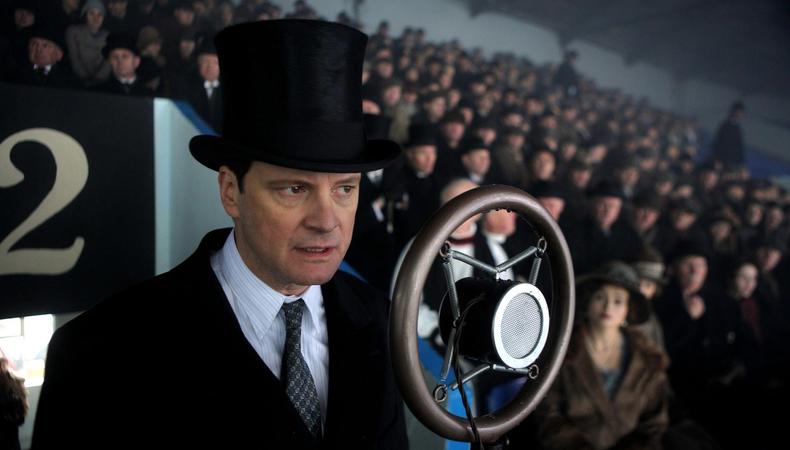
External events may be more tangibly important, but personal development remains central. In The King’s Speech, for example, the threat of a looming world war is explored through King George VI’s personal insecurities. The film’s resolution comes as he conquers his inner demons and overcomes his speech impediment.

The Summer I Turned Pretty Credit: Erika Doss/Prime
Is drama a genre? Yes, but few films and shows are described only as “drama.” There’s always a wider context that fits one of many dramatic subgenres. Let’s reconsider The King’s Speech — it’s certainly a drama, but it’s more specifically a historical drama.
Further drama genres and examples include:
- Crime: On the Waterfront
- Coming of age: The Summer I Turned Pretty
- Biopic: Ray
- Comedy (dramedy): Dead to Me
- War: Unbroken
- Courtroom: The Verdict
- Romantic: The Bridges of Madison County
- Sports: Friday Night Lights
- Historical/costume: Hidden Figures
Conflict
Conflict lies at the heart of drama in film and TV – it’s what advances the plot and challenges characters to grow.
It may manifest as:
- Internal conflict with personal demons such as doubt, guilt, moral dilemmas, or fear.
- External conflict with outside forces such as societal pressures, war, and interpersonal disputes.
Most dramas balance internal and external conflict. The former enhances emotional depth and provides the ultimate resolution, while the latter creates narrative tension and forces characters to advance, potentially reconsidering their world view.
Take the coming-of-age drama Moonlight, which explores the character Chiron at three stages of life as he confronts his sexuality and identity.
Homophobia is a constant external force as Chiron struggles to identify his sexuality in the first act, act on it in the second, and conceal it beneath a hyper-masculine identity in the third. Resolution comes as he allows himself emotional and physical vulnerability with the only man he was ever intimate with.
“I actually ended up feeling that these are still looming questions in my life, questions about my own identity and my own self-worth that I’m still trying to figure out,” screenwriter Tarell Alvin McCraney told The Guardian. “Then seeing the film again, I was like, shit, these are still here and they’re not going anywhere.”
Other examples of conflict in dramas include:
- Good Will Hunting: Will’s fear of isolation and abandonment conflicts with a desire to fulfil his potential and place his trust in a serious romantic partner.
- Mad Men: Don Draper struggles to unite the identity he’s constructed with his authentic self.
- The Americans: Elizabeth and Philip Jennings are torn between loyalty to their undercover mission and their emotional attachments.
Social issues
Just as Moonlight addresses homophobia, other drama films and shows weave wider social issues into their narratives.
- Rebel Without a Cause depicts contemporary concerns over a disaffected youth.
- Guess Who’s Coming to Dinner explores race relations through an interracial relationship.
- Adolescence addresses the impact of social media and toxic masculinity on young people.
- Born on the Fourth of July questions patriotism and portrays growing disillusionment with the Vietnam War.
- Greta Gerwig’s adaptation of Little Women altered the novel’s structure, incorporated modern perspectives, and changed the ending to create what Gerwig called “a reimagined post-modern, feminist epic, grounded in the 1860s but speaking to the moment.”
Emotional engagement
Comedy wants to make us laugh, horror evokes fear, action movies create excitement, and thrillers conjure suspense. What about drama?
Although the genre can strive to make us feel many things, it thrives on creating powerful emotional experiences that resonate with the audience and often produce some form of catharsis. The very word “catharsis” derives from Aristotle’s idea of drama invoking and then purging excessively strong emotions.
Kenneth Lonergan, the writer and director of Manchester by the Sea, has spoken of how audiences responded to the film’s themes of depression and guilt. “They’ll say, ‘This is very similar to what happened to my father,’ or, ‘We went through this’,” Lonergan told The Guardian. “I wanted to be respectful of the material. Even though it’s imaginary, it’s not imaginary to some people.… What I think works for people is it is at least an attempt at being truthful. It doesn’t pretend that you can get over something like this.”
Such strong emotional experiences are possible when audiences empathise with main characters, a process you’ll see mirrored in the performances of dramatic actors.
“It’s imperative not to judge the character,” Cillian Murphy told GQ of the titular role in Oppenheimer. “Because then you’ve lost as a performer. You have to try and understand [them]. You have to be like a kind of emotional detective.”
As summed up by Meryl Streep: “Empathy is at the heart of the actor’s art.”
Focus on performance
To serve justice to complex characters who’ve been tasked with navigating life’s hurdles, you need powerful performances. An actor’s ability to explore knotty psychologies and inner conflict tends to be where dramas live or die.
Because those aspects of the story are so central in the drama genre, a film or TV show just isn’t going to work if an actor cannot authentically bring them to life and portray them for the audience.
Securing a certain actor is often so vital for dramas that directors move forward only when they’re confirmed, as was the case when Sofia Coppola cast Bill Murray in Lost in Translation. “I had to do it with him,” she said on a 2003 episode of Charlie Rose. “There’s just no one like him…and I wanted to do a film centered around him.”
Other dramatic roles are developed in tandem with lead actors. Frank Costello didn’t even exist in The Departed until Jack Nicholson signed on and “built this character layer by layer.”
The importance of performance may explain why dramatic roles consistently garner acclaim. The five most recent Academy Awards for best actor (Anthony Hopkins in The Father, Will Smith in King Richard, Brendan Fraser in The Whale, Cillian Murphy in Oppenheimer, and Adrien Brody in The Brutalist) have been for roles in dramas, as have four of the past five best actress winners (Frances McDormand in Nomadland, Jessica Chastain in The Eyes of Tammy Faye, Michelle Yeoh in Everything Everywhere All at Once, and Mikey Madison in Anora).
Successfully bring the drama and you, too, may well land an award.