
Are you looking to make it as a filmmaker but still figuring out what the best pathway is in a highly competitive sector undergoing rapid change? Read on for a rundown of what exactly defines a filmmaker role and how to set yourself up for the best chance of success.
JUMP TO
A filmmaker is anyone who plays a major role in making a movie; they take an idea and turn it into a story.
The term “filmmaker” can mean different things. Historically, it has referred mainly to a director or producer, but it now includes anyone producing original content, whether it’s shot on film or digitally. A filmmaker can be someone who not only writes and directs, but also produces, shoots, and edits their films.
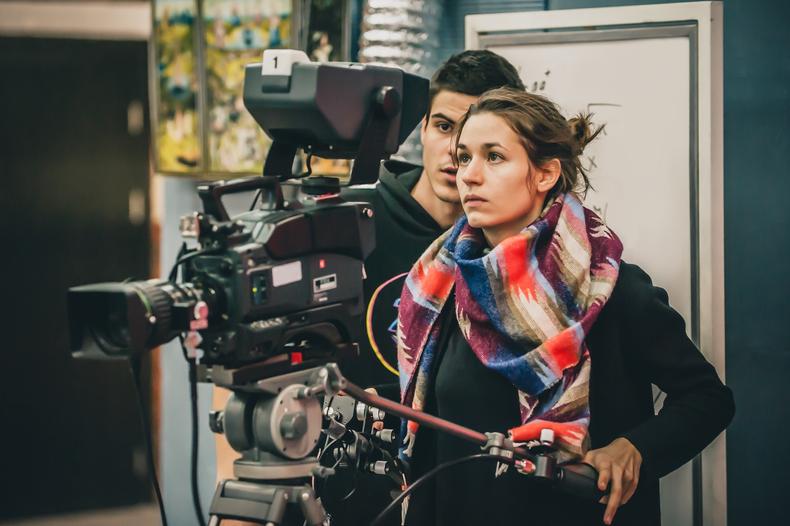
In that wider sense, a filmmaker oversees both creative and logistical aspects of a film production and can end up taking on multiple roles, whether it’s a director, producer, videographer, DOP, or any other crew member.
Because the term “filmmaker” refers to so many different roles and mediums, it can be used interchangeably, most commonly, with either a director or producer.
Whichever role you end up pursuing (and you may end up taking on both alongside others in your career), it’s worth understanding exactly what skills each requires.
Thinking as a producer, writer, and director is invaluable, especially on low- or zero-budget productions. Limited resources force you to be creative, which is a key skill of a great filmmaker.
Don’t forget: There are so many job opportunities beyond the obvious roles that come to mind when you think of a filmmaker. Think of all the key crew roles that play a part: camera, costume, accounting, art, script, special effects, chaperoning, casting, and talent, as well as emerging options such as working in sustainability, access, or intimacy coordination.
guruXOX/Shutterstock
1. Develop creative and technical skills.
Learn the fundamental aspects of filmmaking, such as:
- Story: script interpretation and developing compelling characters and narratives
- Cinematography: how composition, camera movement, audio, lighting, and colour theory can create emotional impact and push a story forward
- Casting: how recruiting talent works and how to work with actors
- Crew: how departments such as grip, sound, lighting, and camera crew play a key role
- Software: ShotDeck or Celtx for planning and storyboarding
- Post-production tools: programmes such as Adobe Premiere Pro, Final Cut Pro, and DaVinci Resolve, and how editing is used to control pacing, continuity, and the overall flow of a film
2. Stay curious and up to date.
Many filmmakers are self-taught and learn on the job, so an academic degree isn’t required. Film schools such as National Film and Television School, London Film School, University of the Arts London, and BFI Film Academy, however, can offer a foundation in learning all aspects of filmmaking and access to industry connections.
Another option is short courses, including online classes, through organisations such as Raindance, FutureLearn, MasterClass, and Skillshare.
Whether or not you undertake a formal course, the film industry is constantly evolving, so keep learning to stay updated on any developments taking place, particularly when it comes to technology or issues such as sustainability, inclusion, accessibility, and health and safety.
That can be done through training workshops, networking, researching (which, yes, includes reading and watching films or documentaries on filmmaking), and, most importantly, making films.
3. Gain practical experience.
Nothing beats the hands-on experience of being part of a film crew to build skills, including effective teamwork and collaboration.
Many filmmakers start as interns or trainees. Be open-minded and experiment in different areas, such as being a clapper loader, runner, or assistant in any department.
Filmmaking requires a wide range of expertise, both on set and behind the scenes, which means there are valuable career opportunities in diverse areas such as costume, set design, acting, marketing, and development.
Working on projects – whether it’s a friend’s passion project, a student film, an indie, or a big-budget feature – is a great way to build your network and open doors to other opportunities. Stay on the lookout for listings and throw your hat in the ring.
4. Build a portfolio.
No matter your academic background and movie knowledge, what really counts is your actual work.
Smartphones and digital technology have made filmmaking easier than ever. Anyone with a mobile phone can make a movie and find an immediate audience through platforms such as YouTube or Vimeo, including as a vlogger.
Many successful creatives start out making shorts. Working on passion projects allows you to experiment, develop your craft, and demonstrate an ability to be an effective visual storyteller.
Use your work to create a portfolio featuring a showreel, shorts, and commercials to showcase your directing skills and style.
5. Understand the business of filmmaking.
Understand the importance of a good production process. That includes what type of stories can be viable in the market for investment, project management, financing, budgeting, contracts, distribution, and marketing.
6. Enter film festivals.
Submit your work to film festivals and online platforms to gain exposure. Festivals can be competitive, but it’s a good way to get exposure and potentially land representation or sell a project.
7. Network online and IRL.
Attending film festivals, workshops, film clubs, and other industry events can open doors to collaborations, first job opportunities, and mentorship.
Be proactive and reach out to industry peers (regardless of their role or level of experience) and filmmakers behind projects you admire to have a chat, share insights, and suss out whether future collaboration may be possible.
LinkedIn is often used as a forum for people in the film and TV world to connect, promote themselves, source jobs, and share thought leadership. Also check out community groups on platforms such as Facebook and forums like Film London Stride and Creative Access.
8. Don’t forget your soft skills.
Filmmaking is very much a collaborative process. That means, beyond being good at the craft, you need to be someone others want to work with. The industry may be changing rapidly, but qualities that will remain invaluable are being trustworthy, resourceful, and resilient, as well as having empathy, being a good communicator, and presenting yourself effectively.
There is no set path to success. Whether you undergo formal training or start by making your own work, strive to carve your own path. Don’t limit yourself as a filmmaker to being a producer or director, either, because learning the basics of aspects such as cinematography, colour, sound, and music can provide a fulfilling career – or at least valuable skills to become a great director or producer.
Many successful directors had struggles along the way, so keep persisting and practising. Whether writing, shooting, or any other filmmaking skill, continue building your portfolio and honing your craft. Remember: Every filmmaker starts somewhere.