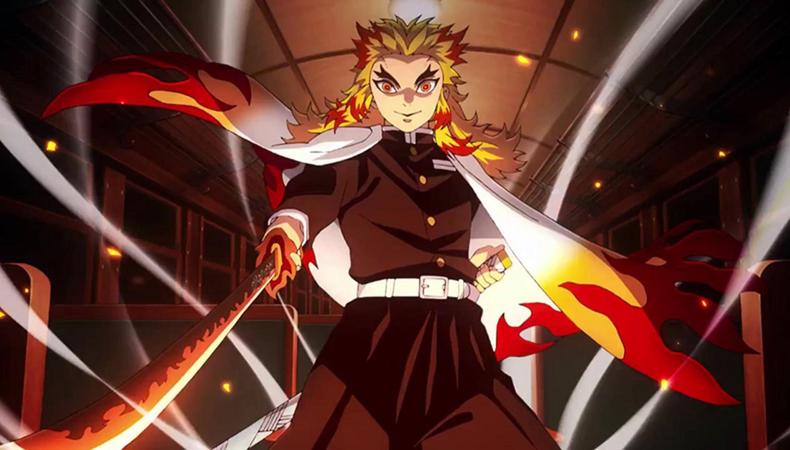
Anime voice acting brings emotion and personality to Japanese animation. Something of a dream job for legions of anime fans, voice acting for anime is also increasingly viable for anyone who wants to become a voice actor in the UK.
“Remote voiceover work has really taken off, and is actually becoming more of the norm and less an exception to the rule,” Ciarán Strange (Requiem of the Rose King) told Anime UK News. “It’s never been easier to connect with studios both indie and mainstream – but, at the same time, there’s never been more competition out there for roles.”
How do you stand out from the crowd and start landing gigs? Let’s take a look.
JUMP TO
1. Research anime and Japan.
Know your seinen from your shonen? Got a favourite isekai? If not, expand your anime know-how by viewing a wide range of titles.
“It’s not a genre; it’s a medium,” Landon McDonald (One Piece) told Red Carpet News. “Every genre under the sun is contained within anime.” Anime voice actors should know about them all.
Fluency in Japanese isn’t necessary, but familiarity with its culture, social norms, and traditional storytelling can enhance your performance. “For example, honorifics, a significant aspect of the Japanese language, can indicate a character’s respect or lack thereof for others, informing how their lines should be delivered,” says voice coach and actor Anthony Pica.
2. Focus on acting.
“Acting is the most important thing,” British anime voice actor Elise Lovelock (Digimon Adventure) told Red Carpet News. “It doesn’t matter how many voices you can do or anything like that, as long as you can act and give life to your character.” As Kellen Goff (My Hero Academia, Attack on Titan) puts it: “There’s no one way to get into it, [but] theatre is a common thing among us.… We all cut our teeth there.”
Consider taking acting classes, reading about acting techniques, or doing some am-dram, and then transfer those skills to voice work. Remember: Character is paramount even while voicing someone exaggerated or inhuman.
“It’s very hard to sympathise with the idea of wanting to devour 200 people onboard a train,” McDonald jokes about Demon Slayer’s sadistic Enmu. “But there’s other parts of him that you can sympathise with.… You have to find that slither of commonality.”
3. Develop your voice.
“Anime voice acting overlaps with cartoon voice acting, but often demands more stamina and emotional depth due to the intensity of anime storytelling,” writes Voice123.
You may switch among several characters in one session under tight time constraints, especially for a “simuldub,” when English-dubbed versions are released in sync with Japanese broadcasts.
Prepare your voice by practicing different pitches, cadences, accents, tones, and timbres at different emotional extremes; delivering lines from existing anime scripts with precise timing to seamlessly sync with animated mouth movements; and using vocal warm-ups, tongue twisters, and other exercises to improve diction, breath control, and articulation.
4. Record samples.
“Your next goal will be to ‘build’ your booth space, and I use the term ‘build’ very lightly,” Strange advises. Empty wardrobes (and other similar spaces) can make a makeshift recording booth if you don’t have a spare room to use. “Layers and layers of blankets on the walls, floor, and ceiling act as a fantastic stand-in for ‘soundproofing’ your space.”
Once that’s done, record some high-quality voice-acting samples to showcase your range and proficiency using excerpts from existing anime scripts. Your audio portfolio should be no more than two or three minutes long, demonstrate clear transitions among a range of voices and roles, and express emotion and show an ability to bring anime characters to life.
Create a website to host your portfolio, build a profile on a casting platform of your choice, and add links to it on your social media accounts.
5. Network.
“Voice acting tends to be an industry where we like to help out each other a lot,” Goff says. Lovelock calls it “an industry primarily based around networking.”
Start plugging into that network by attending seminars and conventions to meet industry professionals and glean anime voice-acting insights; joining workshops to practice your craft and perhaps meet casting agents; engaging with other voice actors through Discord servers, forums, and other online communities.
“While I hate to use the term ‘networking’,” Strange says, “being a stellar and supportive member of our little online community (especially on Discord and Twitter) can definitely put you on the map as someone to keep an eye on!”
6. Find your first roles.
Early work tends to offer exposure rather than a hefty paycheque, but those first roles are what eventually snowball into a career.
To land them, try signing up for platforms such as Mandy, Voice123, Casting Call Club, and Crunchyroll; checking jobs boards for anime dubbing and cartoon voice roles; offering your skills to student projects (contact the relevant department at universities with animation degrees); and checking sites such as X, Reddit, and YouTube for indie anime creators who may require volunteers.
Success as an anime voice actor tends to follow a lot of auditions. That’s why someone like Kieran Flitton (The Prince of Tennis, One Piece) can look back on the “thousand auditions I submitted that landed me 10 roles that provided me two connections that helped me make one major breakthrough.”
Although generally unavoidable, all those auditions can rattle your nerves and corrode your confidence. Here are some tips for each anime audition:
- Watch the anime, read the script and manga (graphic novel), find out everything you can, and then fold that knowledge into your performance.
- Perform vocal warm-ups before going in, and remember to stay hydrated.
- Listen to the original Japanese voice actor, analyse their performance, and ensure that you can replicate it in case the director is seeking a good match.
- Demonstrate your range by preparing several distinct performances for each character.
Above all, remember that rejection is inevitable.
“The booking rate for most professionals [following a single audition] hovers around 5% to 10%,” voice actor Ben Balmaceda (Taisho Otome Fairy Tale) told Bold Journey. “Acknowledging that you’re not gonna have a steady stream of work coming in and that you will have to roll with the punches is one of the strongest skills to cultivate.”
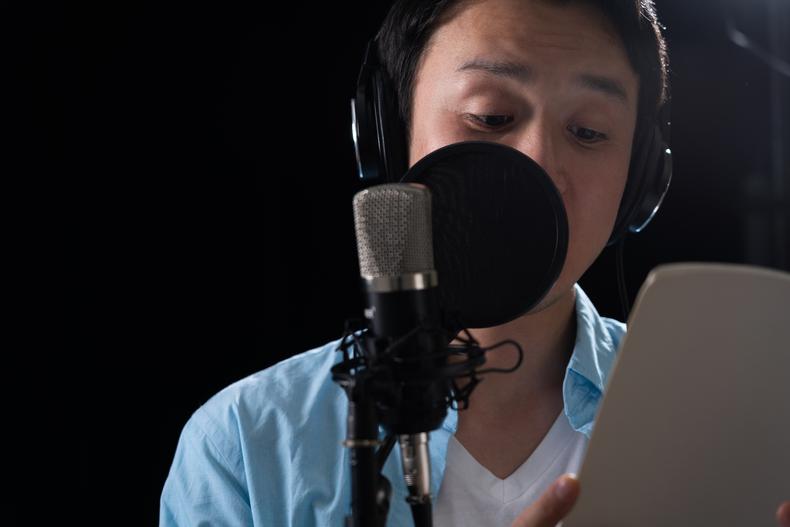
Credit: aijiro/Shutterstock
“It’s not going to be something where income comes in immediately,” Goff warns. “It took me, like, six or seven years before I made a dollar off of it.”
Even while earning, experience makes a huge impact. Voice123 estimates annual salaries between $20,000 (about £15,000) and $100,000 (about £76,000) from the following per-episode averages:
- Beginner: $50 (£38) to $70 (£53)
- Midlevel: $200 (£152) to $500 (£380)
- High level: $500 (£380) to $1,000 (£760)
For more general voice-acting salaries, Glass Door estimates annual salaries between £18,000 and £34,000, while Indeed gives an average of about £19 per hour.
- Christopher Sabat: Vegeta (Dragon Ball) and All Might (My Hero Academia)
- Colleen Clinkenbeard: Luffy (One Piece) and Riza (Fullmetal Alchemist)
- Nobuhiko Okamoto: Katsuki Bakugo (My Hero Academia) and Yū Nishinoya (Haikyu!!)
- Kenjiro Tsuda: Seto Kaiba (Yu-Gi-Oh!) and Overhaul (My Hero Academia)
- Johnny Yong Bosch: JoJo (JoJo’s Bizarre Adventure) and Yukio (Blue Exorcist)
- Elsie Lovelock: Mimi Tachikawa (Digimon Adventure) and Mary Morstan (Moriarty the Patriot)
- Yui Ishikawa: Mikasa (Attack on Titan) and Violet Evergarden (Violet Evergarden)
- Ciarán Strange: McMillan (Black Butler) and Richard III (Requiem of the Rose King)
Bad news: Search “anime companies UK” and you’ll find none that specifically produce Japanese-style anime. Good news: The UK is home to several renowned animation studios where voice actors can get their start.
- Astley Baker Davies is a leading studio where Neville Astley, Mark Baker, and Phil Davies create shows like Peppa Pig and Ben & Holly’s Little Kingdom.
- Magic Light Pictures brings The Gruffalo and its sequels to the screen while creating animated films such as Chico and Rita.
- The Line’s focus on 2D animation has landed it projects ranging from the Hades 2 trailer to a micro-series for Acura.
- A Productions boasts over 40 years producing award-winning animation for children, including recent pieces for Sesame Workshop and the BBC.
- Boulder Media creates TV shows and movies in 2D and 3D, including Danger Mouse, Grimsburg, and The Amazing World of Gumball.
- Hocus Pocus Studio is known for the distinctive, colourful style showcased in animations such as Ready Eddie Go! and Frankie Volts.
- Studio AKA is known for everything from an animated Joe Wicks workout series to the multi-BAFTA winning Hey Duggee preschool series.
- Aardman Animations is a pioneer of claymation-style animation properties such as Wallace & Gromit, Shaun the Sheep, and Chicken Run – all creations of the filmmaker Nick Park.