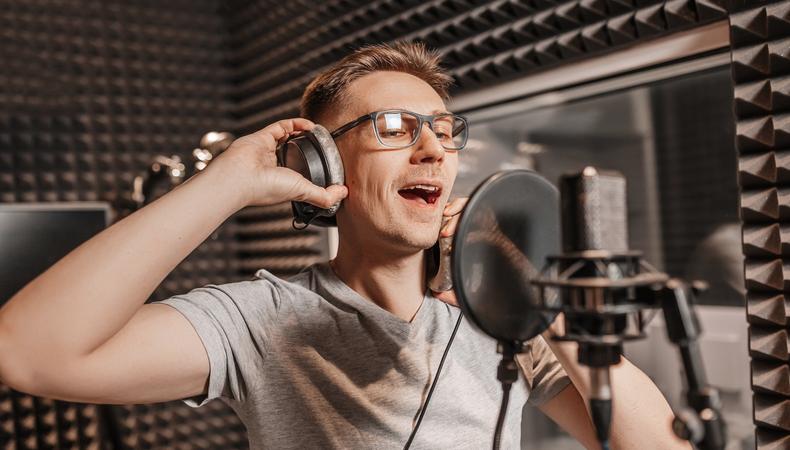
Whether you want to focus solely on working with your voice or you’re looking to expand your acting repertoire – and income – by doing vocal roles in addition to other work, voice acting can be lucrative as well as a way to get your name out there and make more contacts in the industry. But how much do voice actors get paid? Let’s take a look.
JUMP TO
- Rate: The amount you get for work can be paid as an hourly rate or a daily rate. With a daily rate, you’ll get the pre-agreed amount even if the work takes less time or more time than was expected.
- Buyout: Voice-acting fees are often broken down into payment for your time on the day and a usage (covered below). Occasionally, the client may choose to pay you off and own the recording completely. That is called a buyout. It’s a fee that’s usually substantially higher than a day rate that can cover a limited amount of time – a year or two, for example – or can be forever. Bear in mind that if you accept a buyout fee, you probably won’t be entitled to any further fees for the work, no matter how often your voice is used.
- Usage: This refers to payments for the right to use your work for a specific period or medium. There will usually be a number of times the work will be used stated in the contract.
- Agent: An agent is a professional who represents you as a voice actor. They’ll help find you roles and will understand and negotiate contracts on your behalf (although it’s always a good idea to read and understand anything you sign). It’s not compulsory to have an agent, but they have contacts in the industry and a good understanding of how things work, so getting an agent who specialises in voice acting usually makes landing voice-acting roles easier than going it alone.
- Medium: The medium you’re working in is the form of the product you’re voice acting for. Video games, audiobooks, television, and radio are all examples of mediums.

DC Studio/Shutterstock
Before we get onto the figures, here are some things to consider.
- Fame: Seasoned audiobook narrators like Stephen Fry, who voiced the entire Harry Potter series, as well as the Sherlock Holmes stories, will likely be offered quite a bit more for narrating an audiobook than an unknown actor taking their first role.
- Union-approved roles: Equity, the actors’ union, sets minimum rates for jobs, including in voice work. It also advocates for the rights and welfare of its actors. Not all jobs offer Equity-approved minimum rates, but becoming a member of the union should protect you when they do. The final decision on taking a job will be yours, but Equity reminds its members that no one should work for below the minimum wage.
- Training: If you’re highly qualified as an actor, you may be able to leverage that to increase your pay. Brian Cox advises taking voice and acting lessons, including specialised vocal training (breathing, articulation, tone), as well as looking after your voice through warm-ups and daily exercises.
- Equipment: Voice-acting roles increasingly require artists to record themselves at home and send in the finished product. Having – and being confident using – high-quality recording equipment and advanced editing software to polish the sound quality can lead to higher fees. The gear can be expensive to acquire, though, so balance the cost against the potential income increase. Casting director Julia Bianco Schoeffling told Wired that she recommends focusing on acting skills first, rather than costly equipment. You can always debut with a simple setup, and then upgrade as you grow.
- Identity and versatility: Demand can fluctuate for different accents and types of voice. Having a niche voice like Marcus Bentley, who did voiceover for the Big Brother series in his regional Geordie accent, can help establish identity. Be mindful, however, that becoming well known for one particular voice can lead to you being typecast and potentially limit the number of roles you’re offered. Mastering several accents and showcasing them in your voice reel will enable you to apply for more roles than someone who’s built an identity from one accent. The key is to balance identity with versatility.
How much you’ll get paid depends on the line of voice acting you get hired in. Some strands of the business are more financially rewarding than others, but they may also involve a lot more work. Here’s a breakdown of the key areas.
Video games
The gaming industry has continued its growth year over year, leading to a lot of opportunities for everyone involved – voice actors included. The Equity-recommended minimum rates are:
- £300 per hour for voiceover for a big-budget game
- £800 per day for a half-day; £1,000 for a full day for ensemble recording
- £200 per hour for atmospheric/walla (these are terms used to describe the background noise in a scene, played under the main soundtrack, which will likely be the principal actors talking; in a restaurant scene, for example, atmospheric/walla would mean the chatter of people in the background)
Audiobooks
Narrating audiobooks is another popular form of voiceover work. Pay varies hugely from project to project, and it can range from almost nothing to thousands of pounds. Bear in mind that these figures are often for finished, polished performances, so you may need some equipment and software to land the roles. The Equity agreement with the BBC sets royalties for single-voice performances of an audiobook as beginning at 4% of royalties. Most audiobook producers aren’t the BBC, though, so you should check – or have your agent check – that terms in a contract are acceptable.
Animation voiceover
Gravy for the Brain, a website that sells training to voice actors, lists the typical market rate for this work at between £300 and £600 per episode.
Television and radio
Equity has an agreement with the BBC, last updated in 2024, that sets out minimum fees for television actors. For television voiceover, there’s a minimum engagement fee of £217 for four hours of work in a five-hour period. Overtime for up to two hours of work should be paid at £35 per hour. Beyond that, a new session should be booked.
For BBC radio drama, there is another complex agreement that covers all sorts of eventualities with different figures.
Local radio stations and television production agencies often don’t have the budget of the BBC, so they may offer lower rates.
Adverts
There’s a complicated formula to establish the expected fee for voicing a television commercial. This calculator can help you work it out. As a general guide, Gravy for the Brain says there’s a typical lower fee of £200 per session for recording voice for commercials, and the average comes in around £250.
E-learning
Online courses typically used by large companies to train their staff (e-learning materials) often require narration from voice actors. This type of work is usually paid per word, ranging from around 15p to 60p.
According to SalaryExpert.com, the average salary for a voice actor in the UK is just under £44,000, while an entry-level voice actor earns an average of about £31,000. There are many factors that influence how much you’ll make as a voice actor, however, so those figures should be taken with the proverbial pinch of salt.

aijiro/Shutterstock
If a career as a voice actor appeals to you and the earning potential fits your needs, it’s time to market your skills. Compile a demo reel that showcases your voice acting talents; establish a presence online through social media profiles and, potentially, your own website; keep an eye out for training; and don’t be shy about joining some online (or in-person) communities of voice actors, which can be a great source of information, opportunities, and encouragement.