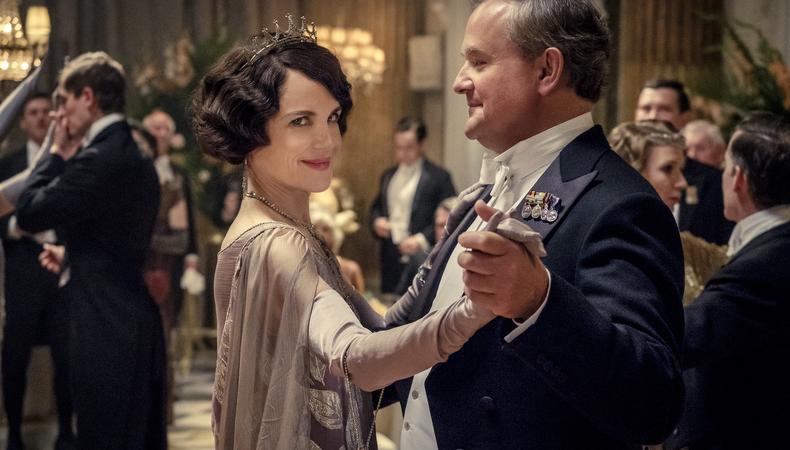
Perhaps the accent most people associate with England, received pronunciation (or RP, as it’s commonly shortened to) has also been known as “BBC English,” “the King’s English,” and “the Queen’s English” over the years. It is an accent largely connected with high social status, and, in 1922, the BBC adopted it as its broadcasting standard.
“It is traditionally perceived as the way upper-class people speak or spoke in the UK,” says accent coach Rachel Coffey. RP was consciously practised at prestigious boarding schools in England, including Eton, Harrow, and Winchester, “to standardise the accents of the boys in the school so that they didn’t sound different from each other and you couldn’t tell what part of the country they were from,” Coffey says. Because the majority of pupils who attended those schools were from royalty, landed gentry, and old money, it became associated with the upper classes.
If you’re playing a role that requires speaking in RP, here’s what to know.
JUMP TO
1. The words are very well formed.
“If we’re talking classic Downton Abbey RP, you’ll find that all the letters are very well formed,” Coffey says. Ts at the ends of words – such as in “right” – are pronounced particularly clearly, while ‘T’ sounds in the middle of words are also carefully articulated. “It is a very tall sort of accent,” she adds. To practise, try saying: “Peter put the letter on the table.”
2. It uses long vowels.
Vowel sounds do much of the heavy lifting in an RP accent. In words such as “bath,” “glass,” “class,” and “after,” the vowel is pronounced with a long “ah” sound.
“The ‘A’ sounds in ‘trap’ and ‘bath’ sound different,” Coffey says. “They very much follow the southern vowel pattern…whereas you’ll find in some regional accents – and certainly northern ones – ‘trap’ and ‘bath’ would sound the same.”
3. Diphthongs are straightened out.
“The sound is much straighter,” Coffey says of words such as “here,” “peer,” “hair,” and “wear.” “When we’re talking a bit more casually, you might hear ‘ere’,” she says. But in RP, there “isn’t much movement in the back of the mouth.” The key is to avoid exaggerating the glide between vowel sounds and keep the sound more contained.
4. Think about mouth placement.
Coffey also advises actors to pay close attention to where sounds form in the mouth. Classic RP can feel physically different from more relaxed regional accents. The articulation is often more precise, with less movement and a more controlled placement of the jaw, tongue, and lips. “The vowel sounds are made at the back of the mouth in the soft palate,” Coffey says. “The back of the tongue is relaxed, and in the front of the mouth, words are finished off very delicately.”
5. Consider classic RP phrasing.
“Anything that has the feeling of a bygone age is classic RP,” Coffey says. She uses examples such as, “I am retiring to the drawing room” and “the servants are dreadfully loud this evening.”
One common problem is sounding too deliberate or unnatural. “Sometimes people sound very contorted,” Coffee says, “so the sound is really separate.” Even when speaking in an RP accent, Coffey stresses that “we still speak in connected speech.”
Actors can also fall into what Coffey describes as an “old actor” sound. “That doesn’t really work; it sounds over the top,” she says. Because classic RP is less commonly heard in everyday life, performers can be tempted to exaggerate it. “Not a lot of people speak classic RP these days, so it does sound very posh.” Her advice? “You have to be brave and just go for it.”
RP has changed a lot over time
Something to consider when learning RP is how the accent has changed and developed over the years. A character from the early 19th century, for example, won’t necessarily sound like one from the 20th century. “These days, it is a lot less fit or proper,” Coffey says. “Modern RP is more relaxed.… There’s more of a flow to it. There are words like ‘gonna,’ ‘kinda,’ and ‘you know’.”
Coffey advises actors auditioning for a role that requires an RP accent to “100% figure out when [the production] is set, what kind of character you have, and find somebody in real life who you want to base that sound off.” Specificity is key. “There’s really no point turning up with classic RP for a role in something like Fleabag,” she says. “You’d essentially sound too posh.”
Actors can also get confused about what a neutral-sounding English accent actually means. “If you look for modern RP, you want it to be relaxed rather than something structured,” Coffey says. Her advice is to use familiar references to help you identify the style you’re aiming for. “Think of Downton Abbey if you’re going for classic. Think of Paddington Bear if you want a more modern, neutral sound.” The key is to match the accent to the character and the world they inhabit.