
Becoming an actor can be a rewarding way to earn a living. The profession gives you opportunities to work on all kinds of projects, stretch your imagination, and maybe even gain a bit of fame.
There aren’t hard and fast steps to beginning an acting career in the UK – and you may only get a break after years of slogging away at your craft. British actor Carey Mulligan was rejected from every drama school she applied to, but she went on to win a BAFTA for her leading role in An Education. Adam Driver was almost 30 when he got his big break in HBO’s Girls, after a short career in the armed forces.
Still, there are lots of ways to break into acting, and they don’t all involve starting young, having connections, or being lucky enough to be spotted by an agent.
Here are some things to consider before you kick off what could become a long, fulfilling acting career – no matter where you’re starting from.
JUMP TO
Drama clubs, community theatre, and amateur dramatics societies are great places to learn foundational skills and find out if an acting career suits you. While performances are usually unpaid, amateur productions require the same skills as professional shows – from mastering stage combat to shedding a tear – and give you the opportunity to practice in front of an audience.
They also connect you to a supportive network of other aspiring actors, with whom you can collaborate and share opportunities. Agents and casting directors sometimes attend community shows, so your am-dram performance could even turn into your big break.

Christian Bertrand/Shutterstock
Training isn’t essential for an acting career. Florence Pugh never had any formal training, but that hasn’t stopped her from becoming one of the most notable British actors of the moment. Directors like Andrea Arnold (Bird, American Honey) and Shane Meadows (This Is England, Dead Man’s Shoes) sometimes prefer to work with untrained actors, believing they often give more authentic screen performances.
However, if focused training sounds like it’s for you, you’re in the right place. There are 22 accredited drama schools in the UK, including famous conservatoires like LAMDA, RADA, Guildhall School of Music and Drama, Bristol Old Vic Theatre School, and the Royal Welsh College of Music and Drama. They offer specialist, vocational actor training, and most of the courses culminate in a qualification like a B.A. or an M.A. With classes taught by acting professionals, and plays and showcases attended by agents and casting directors, drama schools can be a gateway into the industry.
Graduating alongside a cohort of other freshly trained actors gives you a ready-made network of collaborators and supporters, too.
To apply to a drama school in the UK, submit an application. You can apply through UCAS for most schools. If you’re invited to audition, you’ll pay a fee (typically £40–£80 per audition), so it’s worth doing some research and prioritising your top choices.
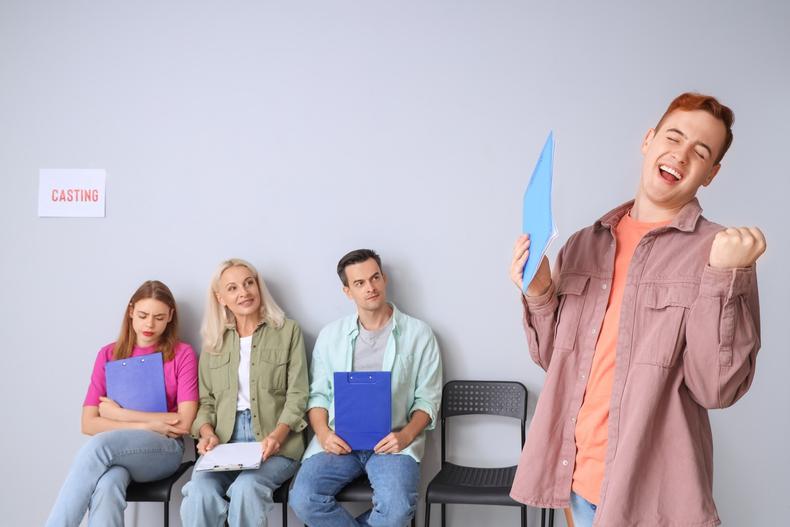
Whether you’ve already graduated from drama school, have lots of experience with a drama society, or simply want to start putting yourself out there, open casting calls let you apply for roles without qualifications or an acting agent. Set up a profile on a reputable casting database and start applying to casting calls. If you don’t have any experience, start small. As you gain credits, aim for bigger parts – you might even be contacted by casting directors outright if your profile fits their search.

LightField Studios/Shutterstock
Once you start applying for auditions and joining databases, you could be called up for an audition at any moment. Lots of castings will ask for a self-tape before they invite you to meet in person. You’ll usually be asked to film yourself reading a scene from the project you’re auditioning for, with someone else reading another part off-camera. Self-taping is a skill, so practise before you hit record. Your filming setup doesn’t need to be professional, but spend some time finding a quiet spot with a plain background and bright natural lighting. You might want to consider investing in equipment like a phone tripod or a ring light to ensure you’re well-lit and properly framed.
While every in-person audition will be different, you can set yourself up for success by practising reading scenes with other actors. Prepare one classical and one contemporary monologue to use as audition pieces, as you’ll often be asked to deliver these at auditions, and keep an eye out for new pieces that show off your range.
In a world of social media and content creation, there are ample opportunities to get your talents seen. Creating your own content lets you play to your strengths and try parts you might not usually get to audition for. If you know you’re great at comedy, why not collaborate with another actor on short sketches and post them as Instagram reels?
If you’re a great character actor, create different personas and share clips on platforms like TikTok. You could even share videos of monologues and duologues, poetry readings, and songs. Social media is a crowded place, but taking things into your own hands is an empowering way to keep your acting skills sharp. If you’re really lucky, you’ll get seen by the right people.
Pixel-Shot/Shutterstock
You don’t need to get an agent to start an acting career, but having one is a big help once you start booking jobs. Agents take care of the administrative side of things – getting you auditions, negotiating pay, signing contracts, and promoting your talents. Once you’ve landed a job, they’ll usually take 10% to 15% of your fee as commission.
Most agents will want to see you perform before they sign you, so invite them to live performances; send them your showreel, headshots, and acting CV; and share links to anything you’ve created yourself. Bear in mind that they’re contacted by lots of hopeful actors. If you don’t hear back, assume it’s a no (for now). Agencies will often specify on their website what sorts of actors they’re looking for, so check if you meet their requirements before reaching out.
Once you have representation, you’ll be able to join Spotlight, Europe’s biggest professional casting database. To be eligible, you need to have an acting agent, two professional performances under your belt, or one full-time or two part-time years of training. You’ll also pay an annual fee to appear in the directory.
Once you land some gigs, there are lots of ways to keep things moving in the right direction. The more professional credits you gain, the more material you’ll have for your showreel. Update your headshots every few years, or more frequently if your look changes, so that they’re a likeness to your current self. Take acting classes in specific techniques to add to your skills, and stay in the know about theatre, TV, film, and industry news and events.
Keep abreast of the people to know, like artistic directors, commissioners, casting directors, and writers. All of this – along with a good dose of talent, perseverance, and careful planning – will give you the best chance of starting and maintaining an acting career in the UK.