When you look at acting courses, you may notice that often there are classes that distinguish between screen acting and stage acting. Acting onstage and on camera share many attributes – from individual prep work to preliminary analysis of the script – but the skills necessary to succeed in the two differ. Performing in front of a vast live audience sitting many meters away involves a very different delivery than acting in front of a camera inches from your face that can read every micro-expression.
It all comes down to the size of your performance and the singular demands of the medium. Here’s a further breakdown of stage and screen differentiators.
JUMP TO
Screen
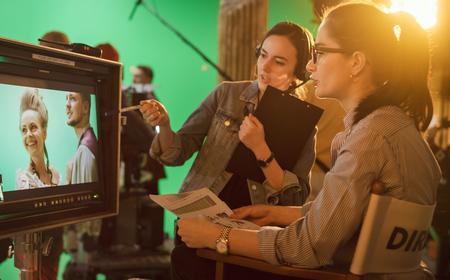
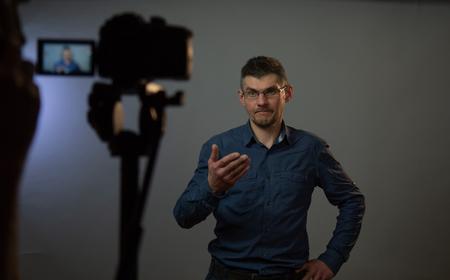
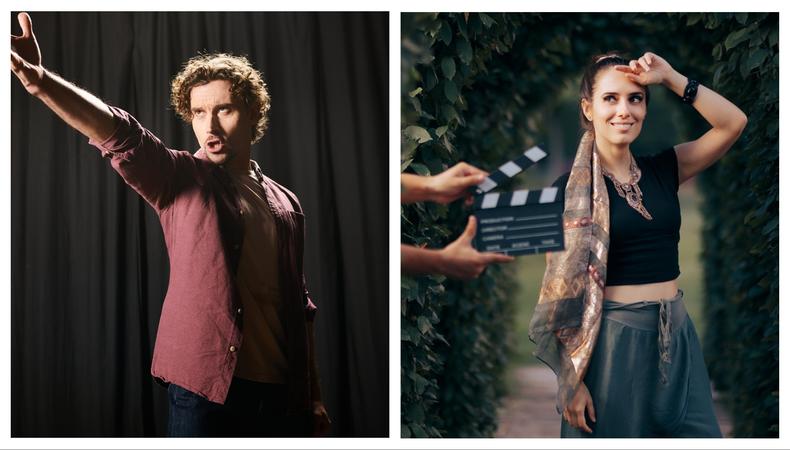
Remember: Film magnifies every emotion for the benefit of the viewer. A single teardrop can be slowed down to emphasise an unspoken exchange, and a glance can become the momentary protagonist of an entire scene. The camera moves and isolates the details, so the audience follows a route set by the director. Moments can be reshot, and your expressions can be perfected between takes.
Stage
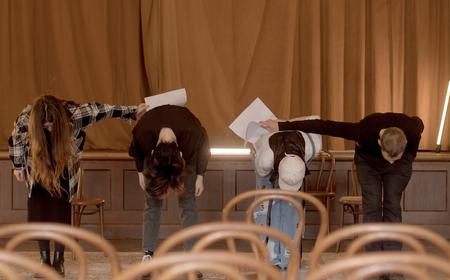
Stage actors must scale up their performance without overacting. That often involves projecting your voice, emphasising your movements, and enlarging your facial expressions. It’s important to remember that, typically, the audience is static, so they won’t see you if you turn away from them. Keep in mind that your performance will work better from specific angles, too, which is particularly important if you’re acting in-the-round.

Nicoleta Ionescu/Shutterstock
Stage
Another major difference between acting onstage and onscreen is the day-to-day routine of the job. The foundations of theatrical performance are based on repetition. Not only is a theatre run performed across multiple nights, weeks, months, and even years, but also, in order to have consistency in the quality, there’s an expectation that the actors will repeat each movement and each line precisely in every show – ensuring that each audience has as similar an experience as possible. After previews, the production is “frozen” by the director, which means that the script and the blocking will remain the same throughout the rest of the run.
Screen
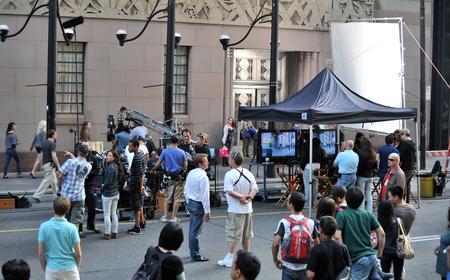
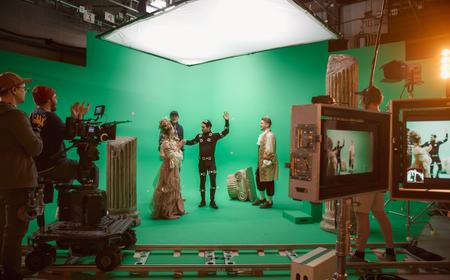
Shooting a film is an entirely different experience. The script is often viewed as a work in progress throughout the shoot. Often actors will receive their sides (pocket-size excerpts from the script that contain only the scenes that will be shot on that day) with brand-new dialogue on the same day, so a good level of adaptability is recommended to keep up with the busy pace of filming. As a screen actor, however, you will also have the advantage of relying on multiple takes. Your performance, therefore, can be more flexible than it would be onstage. The filming process is normally prefaced by an extensive period of preproduction, which can last up to a year for big-budget films. During that time, the director will solidify their vision as much as they can so the actors can refine their part accordingly and the shoot can run smoothly.
Stage
The theatre is fundamentally a more artificial setting. That is due not only to the positioning of the actor in relation to the audience, but also to the very nature of theatre. Stage acting often leans into the pretence of the artform. The limitations of the stage require the audience to bridge the gap between performance and reality, setting aside logic in order to believe that what they’re seeing is real. The magic of the stage allows it to distance itself from naturalism, welcoming heightened physicality and bigger deliveries in order to fill an entire auditorium. Your performance will not look as natural as it would onscreen, and that’s perfectly fine.
Screen
The camera, on the other hand, is a magnifying lens: It will pick up every subtlety of your delivery, so it demands a more natural approach. Your performance, therefore, will need to be dialled down to portray a lifelike representation of human emotion.

LightField Studios/Shutterstock
Stage
Another core distinction is to shift the way you think about your output in the adjustment from stage to screen. Stage acting requires that you present a story to the public; in order to convey your emotional state so everybody can see and hear you, you are performing rather than existing. The stage is unforgiving, there’s nowhere to hide, and you will be in charge of making sure the plot points come across appropriately.
Screen
Onscreen, you need to allow yourself to let the viewer observe you. There’s no space for artificiality when a camera moves on you, so you can’t merely “play” a feeling.
Stage
Both media generally rely on a fixed script, but the live nature of theatre means things can go wrong at any moment. A missed cue, a malfunctioning set piece, or a forgotten prop may require you to think quickly and improvise without hesitation so the scene can continue.
Screen
Film and television work also gives you the chance to improvise your scene, but in a different way. The director may allow you to try something new in each take, but they will already have a structured storyboard to follow, as well as specific cues for the camera people. And, unlike onstage, when things go wrong you can cut and take it from the top.
For some, the transition between the two media comes easily; others need to hone their skills in order to adapt. Your career may lean more heavily – or even entirely – toward one than the other, but while you’re training it’s worth getting as much experience as possible in both. Every amateur theatre show and every student film will act as a building block for your future, helping you grow and expand your expertise. Ultimately, authenticity, preparation, and discipline are the only secrets to having a successful, lasting career in acting.