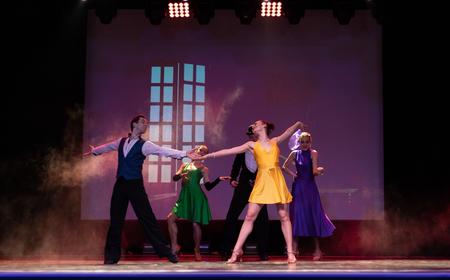
Imagining the design for a Regency-era ballroom? Futuristic flying cars? Enchanted woodlands? Production designers use sets, props, and costumes to create a film, TV show, or theatre production’s look. It’s the design that grounds a production in its location and makes its world come to life. This visual language is as important as dialogue and characterisation.
It’s a role both technical and creative, requiring numerous skills and years of experience, and there’s no singular path to entry. “I don’t think there is a normal route to do what we do,” reflects Suzie Davies, production designer for Saltburn and Peterloo. “I’ve worked with people who have graduated in production design and other people who have never been to film school – there’s room for every aspect.”
Still, understanding the job will give you a leg up, so read on to learn what you should know.
In film and TV, a production designer’s job begins before the project starts shooting. They’ll review the script, then collaborate with the director and other heads of department to visually conceptualise the screenplay, identify an overall design style, draw up a financial plan that aligns with the budget provided by a producer or director, and (as head of the art department) build a team to make it all happen.
During production, you’ll work with other departments, such as lighting, camera, and costume, to create the project’s visual world. You may conceptualise the aesthetic of fictional species or research art history to ensure historical accuracy – it all depends on the project – but you’ll generally take responsibility for:
- Set design
- Location scouting and dressing
- Prop design
- Costume design
Creativity is key, but so is organisation and financial management.
“I get to use both sides of my brain in this job,” says Carly Reddin, production designer for shows such as Hanna and Top Boy. “I have to balance budgets, track spreadsheets, build schedules, etc., and then on the other hand I get to consider colours, textures, mood. It’s a really great mix.”
1. Study for a degree or take a course
Though not required, degrees can provide strong groundings in the fundamentals of production design. Careers advice site Prospects recommends a range of degrees related to art and design, including:
- Architecture
- Drama or theatre studies
- Fine art or visual art
- Graphic design or illustration
- Theatre or performance design
- 3D design
Tailor those courses around your intended career. “I did BA Graphic Design Communication at Chelsea,” says experienced production designer Anna Rhodes. “The course was great as it was so broad, and essentially I tailored it to my skills and learnt how to art direct.”
If you’re already committed to production design, consider one of these dedicated courses:
- Production Design for Screen & Film BA at MetFilm School
- Production Design for Stage & Screen BA from The Northern School of Art
- Production Arts and Design BA at the Royal Conservatoire of Scotland
- Design for Film and Television BA at Nottingham Trent University
You don’t need to study full-time; prestigious short courses include:
- Production Design for Film and Drama at Central Saint Martins College
- Six Production Design Essentials: Intensive 2-Week Programme at London Film School
- Online Introduction to Production Design for Film and Screen from Future Learn
2. Find entry-level work
Even with a qualification, it’s highly unlikely you’ll walk straight into a job as a production designer. You’ll be expected to start as an assistant, learn on the job, and eventually progress to production designer – typically after several years.
“I would say don’t be afraid to start small,” says Barbie production designer Sarah Greenwood. “Say yes to all sorts of opportunities”.
It’s not just paying your dues — this path gives you a fuller understanding of the role. As Reddin reflects: “I am also grateful that I have worked all the roles in the Art Department, working my way up to be a designer … that holds me in good stead now with my team, because I understand their roles.”
You might start assisting an established freelancer or work towards joining the art department from another entry-level role. Observe and experience as much as you can, including less glamorous areas such as budgeting and logistics, and adopt a positive, hands-on attitude.
“I’m after hard-working people with a passion for what they do and a commitment to the job, people that will work well together as a team, and people that are proactive … being personable and friendly is vital,” notes production designer Jonathan Paul Green (Fleabag, QI, Atlanta).
Perseverance is crucial for securing that break, so keep checking for openings and remember that rejection is common.
3. Be flexible
Production designers often work long, unsocial hours; spend extended periods away from home; and usually live in or near a major city. As summed up by production designer Emma Fairley: “It’s really hard work. You can’t stick with this job unless you really, really love it.”
Accept that relocating may be necessary at the start of your career and that you’ll plan your personal life around an often-challenging work schedule. If you don’t already have a driving licence, consider learning: Production design work often involves travel to remote locations and studios, and employees are often expected to get themselves to and from set.
4. Specialise slowly
Work may grow increasingly specialised as you rise from entry-level to more senior art department work. Newcomers often cover multiple genres and work outside TV and film – think corporate events and exhibitions – to develop skills and maximise the number of opportunities they can take.
During each role, consider where your skills and passions lie. No production designer is fantastic at everything – you may be drawn more to the broader conceptual aspects of a project, attracted to historical research, or develop an interest in 3D modelling. While a broad range of skills are necessary, focusing on one or two can progress your career in the long run.
You can even make your individual style your unique selling point. “All filmmakers say that they want to make their film look different from others,” says production designer Rika Nakanishi (Black Is King). “So try to add your essence in your design and explain to [the director] what makes their material visually unique.”
5. Network
Personal connections matter, since jobs often come through referrals. Aspiring TV and movie designers should build and nurture strong networks throughout their careers – that means everything from staying in touch with film school classmates to adding other industry professionals on social media.
Industry events and film festivals keep you plugged in to the wider entertainment world and help build those connections. Production Designers Collective is always updating their list of film festivals for production designers, so that’s a good place to start. Industry groups on sites like Facebook and LinkedIn can keep you in the loop.
6. Create a portfolio
Portfolios showcase your skills, personality, and creative potential. Physical copies may be used for job applications and interviews, but maintaining a strong digital portfolio is equally important.
While you should show the creative side of your work, The British Film Designers Guild notes “for new crew at the junior levels of the department, [art directors] are primarily going to be looking for examples of work that show the basic skills required at that level, e.g. drawing (pencil or CAD), model making, Photoshop, etc.”
Beyond including a mix of technical and creative work, you should:
- Use high-resolution images
- Update regularly to showcase your abilities and creativity
- Use a platform like Squarespace, Wix, or WordPress, or a dedicated portfolio site like Dribbble or Portfoliobox
- Include descriptions and context on your involvement in each project
- Be selective so that your portfolio isn’t too long or dense
Remember, portfolios aren’t only for job applications. Posting images and links online (Instagram is good for visual work) can create connections and lead to job opportunities.