Compelling female characters have always been in the fabric of great drama, from the classical tragedies of ancient Greece to modern Hollywood blockbusters. Whether it’s the passionate outcry of a scorned lover, the resolute declaration of a woman finding her own path, or the quiet contemplation of life’s myriad challenges, these characters give voice to the depth, strength, and complexity of women.
We’ve gathered together nine strong audition monologues for women from theatre, film, and television that together represent a host of different character types and a broad emotional range. Looking to show off your authority? Take your cue from lawyer Annalese from How to Get Away with Murder. Tasked with portraying a cold-blooded killer? Get your acting chops around a chilling speech from Killing Eve’s Villanelle. Or if it’s a caring but exasperated teacher you’re hoping to portray, try Katherine Watson’s monologue from the film Mona Lisa Smile. For more suggestions, read on.
Cassandra from Agamemnon by Aeschylus (458 BC)
Lines 1072-1163
Situation: This tragic play of revenge revolves around Clytemnestra, who has been unfaithful to her husband and king, Agamemnon. The captive princess and prophet Cassandra foretells her own death and Agamemnon’s at the hands of the vengeful Clytemnestra.
Why choose it? The monologue is filled with Cassandra’s raw despair and anguish as she foresees the brutal deaths. The stakes are high and the emotional intensity allows you to showcase your ability to portray deep sorrow and impending doom.
Oh, misery, misery! Again comes on me
The terrible labour of true prophecy, dizzying prelude.
Do you see these who sit before the house,
Children, like the shapes of dreams?
Children who seem to have been killed by their kinsfolk,
Filling their hands with meat, flesh of themselves,
Guts and entrails, handfuls of lament -
Clear what they hold - the same their father tasted.
For this I declare someone is plotting vengeance -
A lion? Lion but coward, that lurks in bed,
Good watchdog truly against the lord's return-
My lord, for I must bear the yoke of serfdom.
A daring criminal! Female murders male.
It is Agamemnon's death that you shall witness!
Ah, what a fire it is! It comes upon me.
It is the two-foot lioness who beds
Beside a wolf, the noble lion away,
It is she will kill me! Brewing a poisoned cup
She will mix my punishment while sharpening
The dagger for her husband; to pay back murder
For my being brought here. Destruction!
They call me crazy, like a fortune-teller,
A poor starved beggar-woman - and I bore it!
And now the prophet undoing his prophetess
Has brought me to this final darkness.
Instead of my father's altar the executioner's block
Waits me the victim, red with my hot blood.
I will go in and have the courage to die.
Look, these gates are the gates of Death.
I greet them, and pray that I may meet a
Deft and mortal stroke so that I may close my
Eyes as my blood ebbs in an easy death.
Nina from The Seagull by Anton Chekhov (1895)
Act 4
Situation: Nina, an actress, returns after several years to the home of Konstantin (aka Kostya) Treplev, who has long been in love with her. But Nina instead falls for novelist Boris Trigorin and soon starts a romantic entanglement with him. After that relationship fails to launch, she makes this speech, reflecting on her life and struggles as an actress and a person. She discusses her journey, her disillusionment, and her eventual self-realisation.
Why choose it? The monologue reveals Nina’s transformation from a naive dreamer to a more grounded and resilient individual. This character arc provides you with the opportunity to demonstrate growth and change over the course of the speech. Also, the monologue has a natural ebb and flow, with moments of intense emotion followed by quieter, more reflective pauses. This dynamic pacing helps keep the audience engaged and allows you to play with tempo and rhythm.
Why do you say you kiss the ground I walk on? I ought to be killed. I'm so tired, Kostya! If I could only rest... rest. I am the seagull... No, that's not it. I'm an actress! It doesn't matter. So he's here, too! It doesn't matter! He didn't believe in the theatre, he laughed at my dreams, and little by little, I stopped believing myself. I lost heart. And always the strains of love, jealousy, constant fear for the child...I became trivial, and commonplace, I acted without thinking or feeling... I didn't know what to do with my hands, I couldn't move properly, or control my voice. You can't imagine what it's like to know you're acting badly! I am a seagull. Do you remember the seagull you shot? You left it at my feet, he came to me and said, "I had an idea. A subject for a short story. A girl, like yourself, lives all her life on the shores of a lake. She loves the lake, like a seagull... But a man comes along, by chance, and, because he has nothing better to do, destroys her..."
What was I talking about, before? I - Yes, about acting. I'm not like that anymore. I'm a real actress now! I act with delight, with rapture. I feel drunk when I'm onstage and think that I am wonderful. Ever since I got here, I've been walking around, walking around and thinking, thinking and even believing that my soul grows stronger every day. Now I see at last, Kostya, that in our kind of work, whether we're writers or actors, the important thing is not fame, or glory, not what I used to dream about, but learning how to endure. I must bear my cross, and have faith. If I have faith, it doesn't hurt so much, and when I think of my calling I'm not afraid of life.
When you see him, don't tell him anything... I do love him, yes, I love him more than ever... "By chance. A subject for a short story."
How sweet it used to be, Kostya! Remember? How bright, and warm, how joyous and pure our lives were! And the feelings we had for each other were like fine, delicate flowers! Do you remember?
Kyra from Skylight by David Hare (1995)
Act 2, Scene 1
Situation: The monologue is part of a heated exchange between dedicated teacher Kyra and Tom, her former lover. Kyra defends her life choices and her commitment to her work, contrasting her lifestyle with Tom's wealthy, business-centric world. The monologue captures her passion, dedication, and the ideological divide between her and Tom.
Why choose it? This monologue allows an actor to convey a range of emotions including frustration, passion, and a deep sense of purpose. It highlights Kyra's strength and dedication, providing a powerful narrative arc and a moment of intense introspection. It is also easy to cut down if you’ve been asked to stick to a one-minute monologue.
You see, I’m afraid I think this is typical. It’s something that’s happened … it’s only happened of late. That people should need to ask why I’m helping these children. I’m helping them because they need to be helped.
Tom turns away unconvinced by the simplicity of the answer, but she is already moving back to the table with the books, her anger beginning to rise.
Everyone makes merry, discussing motive. Of course she does this. She works in the East End. She only does it because she’s unhappy. She does it because of a lack in herself. She doesn’t have a man. If she had a man, she wouldn’t need to do it. Do you think she’s a dyke? She must be fucked up, she must be an Amazon, she must be a weirdo to choose to work where she does … Well, I say, what the hell does it matter why I’m doing it? Why anyone goes out and helps? The reason is hardly of primary importance. If I didn’t do it, it wouldn’t get done.
She is now suddenly so passionate, so forceful, that Tom is silenced.
I’m tired of these sophistries. I’m tired of these right-wing fuckers. They wouldn’t lift a finger themselves. They work contentedly in offices and banks. Yet now they sit pontificating in parliament, in papers, impugning our motives, questioning our judgements. And why? Because they themselves need to feel better by putting down everyone whose work is so much harder than theirs. (She stands, nodding.) You only have to say the words ‘social worker’ … ‘probation officer’ … ‘counsellor’ … for everyone in this country to sneer. Do you know what social workers do? Every day? They try and clear out society’s drains. They clear out the rubbish. They do what no one else is doing, what no one else is willing to do. And for that, oh Christ, do we thank them? No, we take our own rotten consciences, wipe them all over the social worker’s face, and say, ‘If –’ FUCK! – ‘if I did the job, then of course if I did it … oh no, excuse me, I wouldn’t do it like that…’
She turns, suddenly aggressive.
Well, I say: ‘OK, then, fucking do it, journalist. Politician, talk to the addicts. Hold families together. Stop the kids from stealing in the streets. Deal with couples who beat each other up. You fucking try it, why not? Since you’re so full of advice. Sure, come and join us. This work is one big casino. By all means. Anyone can play. But there’s only one rule. You can’t play for nothing. You have to buy some chips to sit at the table. And if you won’t pay with your own time … with your own effort … then I’m sorry. Fuck off!’
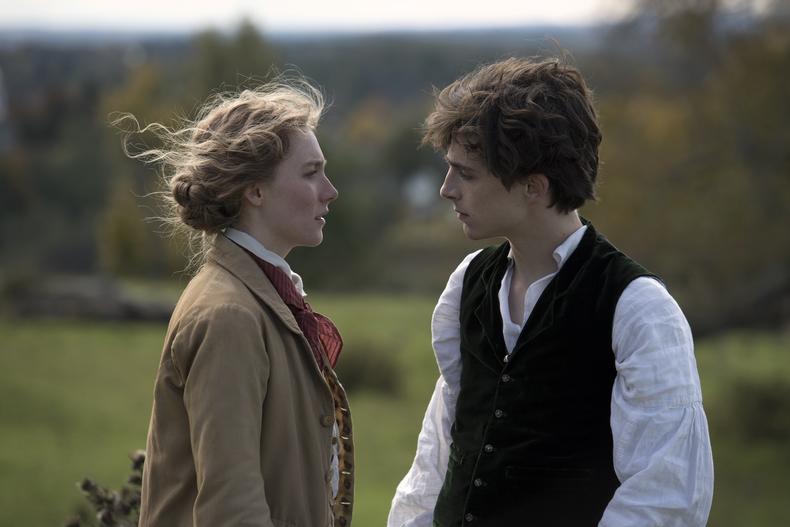
Saoirse Ronan and Timothée Chalamet in “Little Women” Credit: Wilson Webb
Sarah in The French Lieutenant's Woman (1981)
Situation: Sarah Woodruff is a governess who has become an outcast in her small community due to her association with a French lieutenant. This relationship has branded her with the stigma of being a fallen woman.
Why choose it? This speech is a defining moment for Sarah, encapsulating her defiance against societal judgement and her acceptance of her chosen path. It’s a pivotal scene that can showcase an actor’s ability to handle significant and transformative moments.
You cannot understand because you are not a woman. You are not a woman born to be a farmer's wife but educated to be something better. You were not born a woman with a love of beauty, intelligence, learning, but who's position in the world forbids her to share that love with another......You are not the daughter of a bankrupt. You have not spent your life in penury. You are not condemned. You are not an outcast. I gave myself to the French Lieutenant so that I should never be the same again, so that I should be seen for the outcast I am. I knew it was ordained that I could never marry an equal. So I married shame. It is my shame that has kept me alive, my knowing that I am truly not like other women. I shall never like them have children, a husband, the pleasures of a home. Sometimes I pity them. I have a freedom they cannot know. No insult, no blame can touch me. I have myself gone beyond the pale. I am nothing. I am hardly human any more. (pause) I am the French Lieutenant' s Whore.
Katherine Watson in Mona Lisa Smile (2004)
Situation: Katherine Watson is teaching her art history class and uses a series of advertisements and images to prompt her students to think about how they’re being shaped by society’s expectations. In the film, the role is played by Julia Roberts – watch her performance here.
Why choose it? This monologue is emotionally charged and full of frustration – it is up to you to work out the subtext of where that frustration comes from. Watch Julia Roberts’s performance, but remember to develop your own interpretation of the scene.
Look at this. This is a 1950s magazine advertisement. And this is a contemporary photograph. What will future scholars see when they study us? A portrait of women today. There you are, ladies. The perfect likeness of a Wellesley graduate: magna cum laude, doing exactly what she was trained to do. Slide. A Rhodes Scholar. I wonder if she recites Chaucer while she presses her husband’s shirts. Slide. Now you physics majors can calculate the mass and volume of every meatloaf you make. Slide. A girdle to set you free! What does that mean?
What does that mean? What does it mean? You tell me. Because I don't know. I am not a poet. I am an art history teacher. I am a teacher, and I am teaching you because I want you to know the answer. What will future scholars see when they study us? What will they see? What will they say about you? More importantly, what will you say about yourself? You can conform to what other people expect, or you can... I know what I’m going to do. I know what I’m going to do.
Jo in Little Women (2019, based on the 1868 novel)
Situation: Jo March is talking to her mother, Marmee, about her frustrations with life and her deep desire for love and independence.
Why choose it? This is a passionate, emotionally charged speech in which Jo expresses her longing for love and her struggle with societal expectations. It captures Jo's internal conflict and emotional vulnerability and is a great audition speech if you want to showcase your range and depth. Watch actor Reegan Fabian perform the monologue.
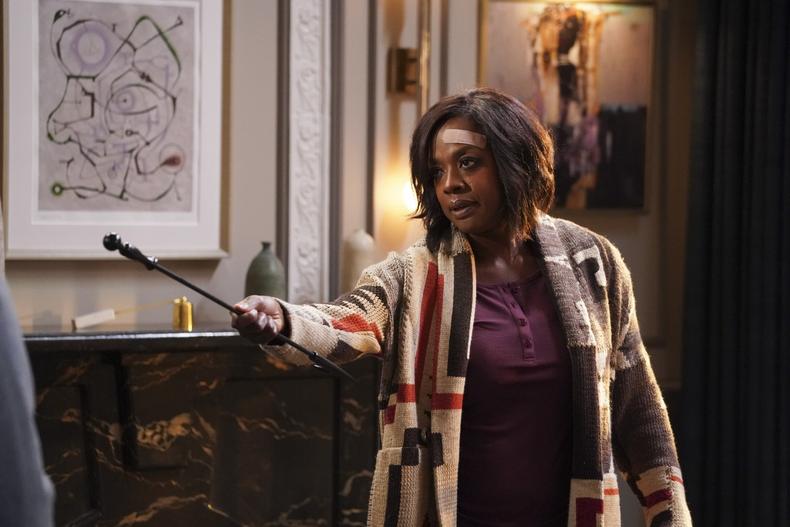
Viola Davis on “How to Get Away with Murder” Courtesy ABC
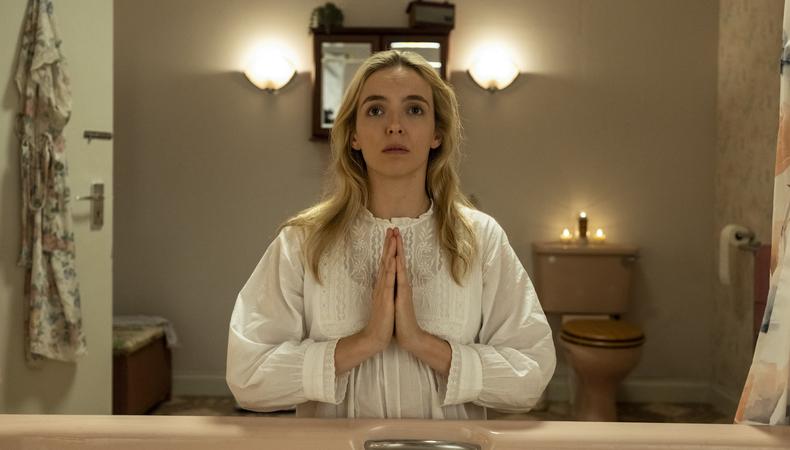
Villanelle in Killing Eve (2019)
Series 2, episode 6
Situation: Villanelle is a complex assassin who often grapples with her own emotions and motivations. In this scene, she is at a self-help group and opens up about her inability to feel emotion.
Why choose it? There is a lot of room to play around with how you perform this speech, which is delivered by a seemingly heartless assassin. Jodie Comer chose to act against the text in that when she says she feels nothing, her face shows real emotion. How will you choose to play it? Watch Comer play the scene here.
Fleabag in Fleabag (2019)
Series 2, episode 5
Situation: Fleabag is in a confession box in a Catholic church, talking to the priest about her feelings.
Why choose it? This monologue captures Fleabag’s vulnerability and existential crisis, providing a platform for you to explore deep emotional turmoil and deliver a performance that’s both poignant and relatable. Watch Phoebe Waller-Bridge perform the scene.
I want someone to tell me what to wear every morning. I want someone to tell me what to eat, what to like, what to hate, what to rage about, what to listen to, what band to like, what to buy tickets for, what to joke about, what not to joke about. I want someone to tell me what to believe in, who to vote for, who to love, and how to tell them. I think I just want someone to tell me how to live my life, Father, because so far, I think I've been getting it wrong. And I know that’s why people want people like you in their lives, because you just tell them how to do it. You just tell them what to do and what they’ll get out at the end of it and even though I don’t believe your bullshit and I know that scientifically nothing that I do makes any difference in the end anyway, I’m still scared. Why am I still scared? So just tell me what to do. Just fucking tell me what to do, Father.
Annalise in How to Get Away with Murder (2019)
Season 6, Episode 15
Situation: Annalise delivers her closing argument in court, defending herself against the accusations that could put her away for life. This is her last chance to convince the jury of her innocence and to summarise the case from her perspective.
Why choose it? The stakes are high in this speech, with Annalise’s career, freedom, and life on the line. It’s not just a legal argument; it is also a deeply personal revelation. She confronts her own flaws, acknowledges her mistakes, and reflects on her tumultuous journey, which makes it a good choice for anyone looking for a powerful female monologue. Watch Viola Davis perform the scene here.