
London is undoubtedly one of the best cities in the world for musical theatre. Just think of the West End, where there are usually at least 15 high-budget musicals running at any one time. They include long-standing fixtures such as Les Misérables, Wicked, The Lion King and Hamilton, as well as more fleeting offerings that run for a matter of weeks.
It’s not all about the West End though. What makes the musical theatre scene in London unique is the volume of opportunities for performers at all levels, the exceptional quality of training available, and the number of venues of all scales showcasing the art form.
And London isn’t the be all and end all in terms of getting into musical theatre in the UK. There is a thriving scene in other UK cities, such as Birmingham, and some of the country’s best venues for musical theatre – such as Leicester’s Curve and Manchester’s Hope Mill – are also located outside of the capital. A great way to get musical theatre work in London is to transfer to the city with a production from one of those cities.
In this guide, however, we focus specifically on musical theatre in London, with some tips for getting into the local scene.
If you didn’t grow up in London, it may feel daunting to start a career in the capital. But thousands of performers have done just that. Scottish actor Leesa Tulley, who is currently playing Katherine Howard in Six in the West End, is one of them.
Tulley completed a one-year musical theatre course at New College Lanarkshire in Scotland, before moving to Hitchin to study at Emil Dale Academy for three years. She made her professional debut in Why Am I So Single? at the West End’s Garrick Theatre, winning The Stage Debut Award for best musical theatre performer in 2025.
“London just really feels like the hub of theatre; it always has to me,” Tulley says. “I’ve always felt that moving to London would be inevitable if I wanted to pursue my dream career. I love the variety of theatre and shows in London, and the overall celebration of the performing arts! There really is nowhere like it for musical theatre.”
The first thing to think about if you want to enter London’s musical theatre scene is getting your skills up to scratch. You may have already thought about how to make it as an actor in London and how to get into musical theatre more generally, but what about training and classes that are unique to musical theatre in London?
Some of the UK’s best musical theatre drama school courses are located in the capital, including Mountview in Peckham and ArtsEd in Chiswick, both of which offer BA degree courses, as well as various other course formats.
If you’ve already trained or drama school isn’t an option for you, performers should always be topping up and refreshing their skills. There’s a host of drop-in and more flexible acting classes in London that you can try.
As a musical theatre performer, it’s important to aspire to be a triple threat by working on your acting, singing, and dancing skills.
When it comes to dance, Tulley says, “there is so much to do in London – I’d really recommend checking out places like Pineapple Dance Studios – but there are also so many more amazing venues with amazing training opportunities.” Jazz and tap are popular styles to build musical theatre dance skills, while ballet lays a strong foundation. Don’t be intimidated if you haven’t had prior training, because there are plenty of beginners’ ballet classes for adults.
Some other popular organisations that offer musical theatre dance classes include:
When it comes to honing your singing skills, consider joining a musical theatre choir. Not only will you improve techniques such as harmonising and singing as part of an ensemble, but you will also make lots of connections with other people who are part of the musical theatre scene in London.
Here are a few choirs aimed specifically at theatre performers. It’s worth checking their websites for membership requirements and fees.
- The Royal Theatrical Fund and Actors’ Benevolent Fund Choir
- London Show Choir
- Covent Garden Musical Theatre Choir
- West End Musical Choir
- Actors Rechoired
There are also a plentitude of organisations (such as London Singing Institute) and drama schools (such as the Royal Central School of Speech and Drama) that regularly offer musical theatre singing short-courses. You can also find an individual tutor who offers singing lessons.
Credit: Thomas Salas/Shutterstock
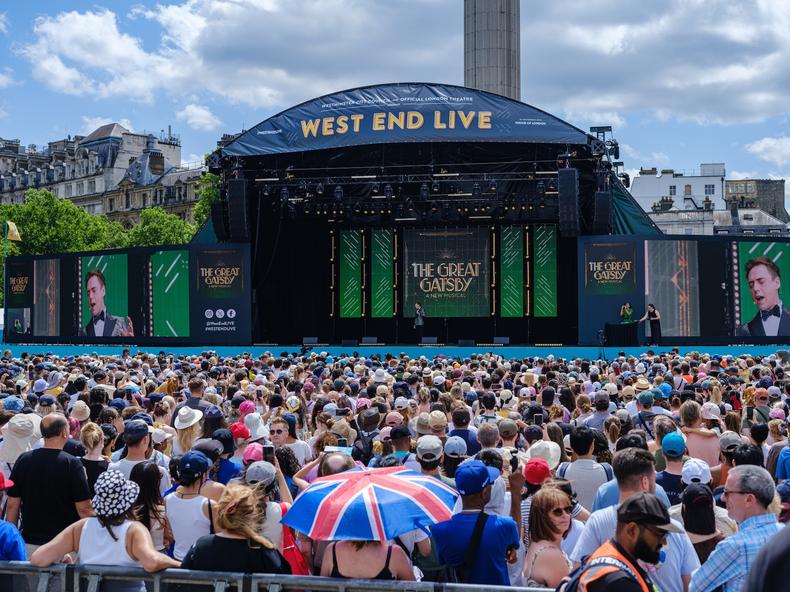
As someone who wants to get into musical theatre, it’s important to watch as many musicals as you can. Not only will it help you grow your performance skills through observation of the craft, but you ,ay also meet fellow creatives and performers in the field.
“There are lots of fun, free musical theatre events that go on throughout the year, like West End Live,” an annual free weekend event that showcases performances from West End musicals in Trafalgar Square, Tulley says. “The buzz is amazing!”
There is always lots going on in the West End, but some other exciting, smaller-scale venues known for putting on new musicals around London include:
- Southwark Playhouse in Borough and Elephant and Castle
- The Other Palace in Victoria
- The Menier Chocolate Factory in London Bridge
- Charing Cross Theatre in Charing Cross
If you’re still looking for further intel on how to get into musical theatre acting in London, here are a few final tips.
1. Seek an agent.
“I’d really recommend writing to agencies and seeking representation,” Tulley says. “Having an agent makes getting in the room for auditions a lot easier.”
Have a look at agencies that are London-based and focused on musical theatre specifically. You could even research which agencies represent your favourite musical theatre performers.
2. Apply to musical theatre jobs in London.
Put yourself out there, and start applying to musical theatre jobs in London. You could even check out this list of musical theatre audition songs to get prepared.
3. Boost your credits.
If you’re struggling to land musical theatre jobs, consider taking part in some community musical theatre productions to build your CV. Some London-based groups include:
4. Be kind to yourself.
“Do not be put off by the competitive nature of the industry,” Tulley says. “Rejection is a huge part of what we do, but it is transformative when you learn to use it as a tool of motivation to keep growing as a person and a performer.” Be kind to yourself no matter how your journey is going, and keep on shooting for the stars.