Whether it’s a low-budget indie or a leading blockbuster, films are the product of a whole crew of film professionals. Within that ecosystem are various positions, hierarchies, spheres of influence, and responsibilities, which combine to bring a project from script to screen.
The multiplicity of film production positions can feel overwhelming, so to bring you up to speed, we’ve compiled a list explaining the creative and technical positions in film industry production and how they fit into the moviemaking chain of command, beginning with the top dogs.
JUMP TO
Producers are key decision-makers who take broad responsibility for a film’s practical execution, guiding it from inception through shooting to post-production and marketing. Producers spot creative and commercial opportunities, secure funding, hire directors and other creatives, oversee production, and often have creative input throughout. They also bridge the divide between studio executives and the freelance creatives they hire, such as the director and cinematographer, who actually make the movie.
All movies have at least one producer, but some include other credits with producer in the title:
- Executive producer (EP): Guides other producers, maintains budgets, and ensures compliance with industry standards.
- Producer: Reports to the EP while taking an active hand in production, working closely with directors and managing day-to-day operations.
- Line producer (LP): Focuses on specific production aspects, such as location scouting and budgeting.
- Associate producer (AP): Typically offers vital support, but in a hands-off capacity. For example, A-list actors sometimes receive an AP credit for getting a project in front of the right studio head.
An excellent example of an executive producer is the president of Marvel Studios Kevin Feige. He envisioned and launched the Marvel Cinematic Universe (MCU), produced all 33 (and counting) MCU entries, and became the highest-grossing producer ever with a combined box office gross of almost US$30 billion.
While producers oversee the practicalities of filmmaking, directors manage artistic decisions. Topping the crew hierarchy, they supervise department heads to bring a film to life through their own creative vision. This often includes:
- Reading and refining scripts
- Casting actors
- Directing actors
- Selecting locations
- Selecting music
- Considering camera angles, lighting, and shot compositions
- Planning shooting schedules
- Assembling crews
They’re ultimately responsible for all artistic decisions, and the most famous directors develop recognisable styles. Think of Wes Anderson’s love of symmetry, Edgar Wright’s signature fast-cuts, or Martin Scorsese’s use of voiceovers as a narrative device.
Larger projects may also employ:
- First Assistant Director (AD): Liaises with department heads and manages shooting schedules.
- Second AD: Responsible for on-set practicalities, such as giving out call sheets.
Additional Unit Directors: Shoots separately from the main unit to capture pickup shots, B-roll, and anything not featuring the principal cast.
The cast isn’t technically crew, but they’re certainly movie set fixtures who are central to production. Within the cast, there’s the principal cast, typically comprising actors with major speaking roles. Their importance is often reflected by their position on the call sheet (the closer to the top, the more significant).
But anyone appearing on camera or providing their voice is considered part of the cast, including:
- Background actors or extras: Often playing crowds or passersby – making populated scenes appear realistic – extras rarely have lines and typically work with an assistant director.
- Stand-in actors: Never actually filmed, stand-ins substitute for principal cast members so the crew can ensure all technical aspects are properly handled before the actor is called to set and shooting begins.
- Body doubles: They resemble principal cast members closely enough to replace them in certain shots without the audience noticing, most notably in nude or sex scenes.
Grusho Anna/Shutterstock
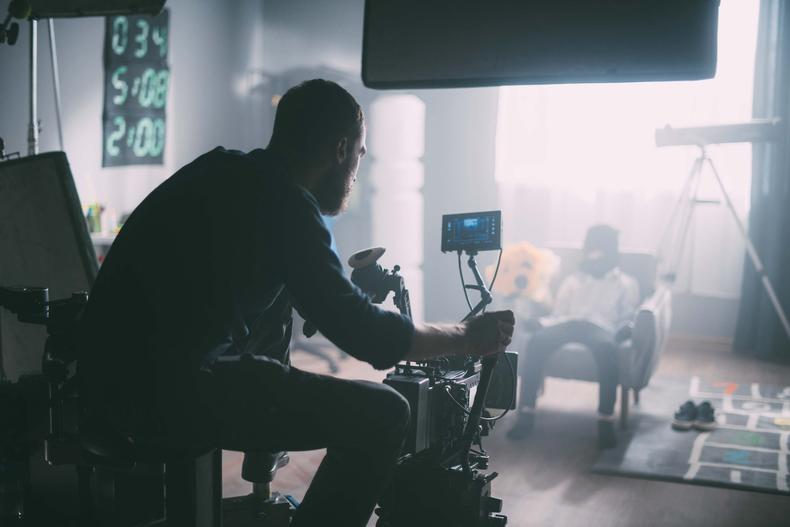
The camera department is in charge of a film’s visual elements, known as the cinematography. Everything from choosing camera filters to securing optimal lighting to positioning actors falls within their bailiwick.
The director of photography (DP) is in charge of the department. They collaborate with directors to shape a project’s visual style, and fruitful pairings often lead to ongoing partnerships. Examples include:
- Director Darren Aronofsky and DP Matthew Libatique
- The Coen Brothers and Roger Deakins
- Christopher Nolan and Wally Pfister
DPs generally stick close to the director while relaying instructions to their team, which includes:
- Cameraperson: Delivers smooth, precise movements, controlling the camera during takes and possessing an exhaustive understanding of filming equipment.
- 1st assistant cameraperson (AC): Supervises on-set maintenance, monitors camera settings, and keeps the picture in focus.
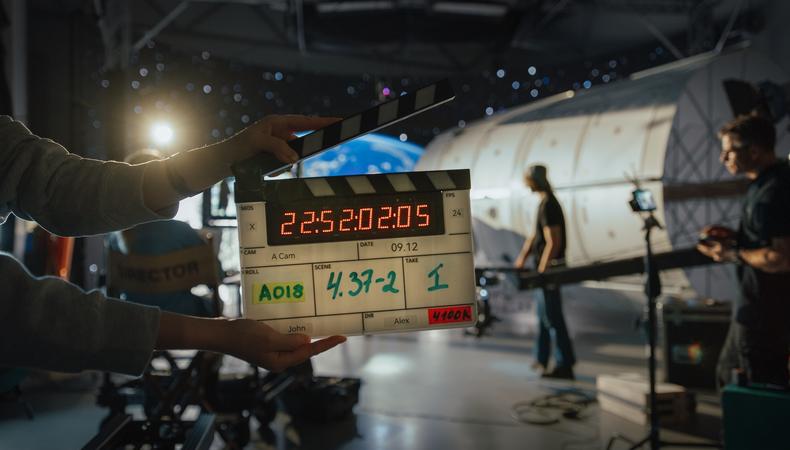
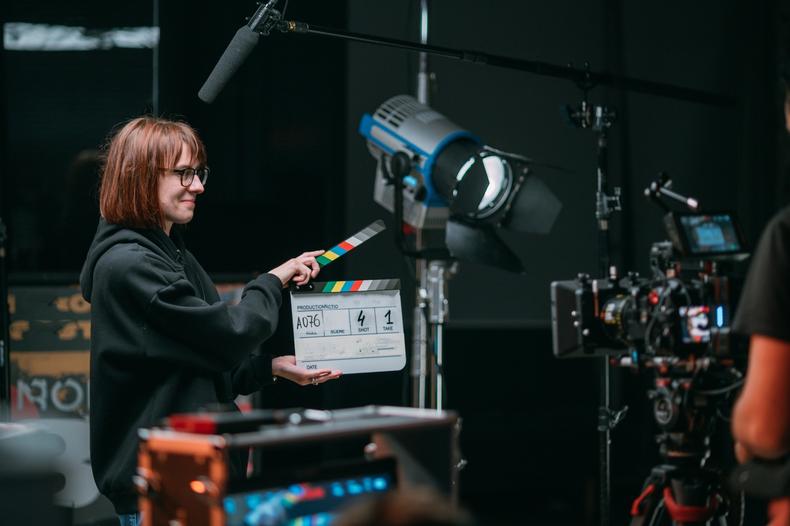
- 2nd AC: Loads and unloads film, changes batteries and lenses, and fills out and operates the clapboard used to signal the start of a take.
- Digital imaging technician (DIT): Ensures that footage captured on-set looks good and meets all technical requirements.
The gaffer (also known as the chief lighting technician) works with the DP to create a lighting plan in line with the director’s creative vision. Gaffers also oversee other members of the lighting and grip department. That team includes:
- Best boy/girl electric: Handles the technical side of lighting, delegates tasks to lighting technicians, and maintains equipment.
- Lighting technician: Commonly known as ‘sparks’, they rig, operate, and de-rig equipment under the guidance of the gaffer and best boy/girl electric.
- Generator operator: Maintains and operates generators to provide sufficient power, even in challenging locations like in fields or on boats.
Grips take charge of the mechanical aspects, such as building frames and scaffolding. Key grips oversee their efforts, often through a best boy/girl grip who functions as their second-in-command.
On-set members of the sound department take direction from the production sound mixer to record audio. This often means mixing in real-time and requesting retakes to correct any issues. They handle more than dialogue: Background noise is also required, as is room tone – a few seconds of silence at each location is necessary for editing.
The production sound mixer supervises:
- Boom operator: Handles the long boom microphone used to capture dialogue during a take.
- Cable people: Ensures a stable power supply from generator to microphones and manages any additional sound-related tasks.
Members of the sound department active during post-production but sometimes present on set include:
- Sound designer: Creates, acquires, and edits audio for anything from scene transitions to special effects. For example, Ben Burtt created the hum of a lightsaber and Darth Vader’s heavy breathing for the original Star Wars film.
Foley artist: Replicates everyday sound effects, such as footsteps or creaking doors, syncing them to what’s been filmed.
Art departments work under production designers to conceive and produce immersive sets both on location and in studios. That team may include:
- Art director: Manages the department on set to implement the production designer’s vision.
- Location manager: Prepares locations for production. Duties cover minimising noise and closing areas to the public.
- Location scout: Finds locations to suit each scene’s particular requirements.
- Construction coordinator: Oversees a small crew of their own to build anything necessary for sets, often with input from set designers and the props department.
- Set decorators: Sources fitting furniture and furnishings needed to populate sets.
- Set dressers: Takes what set decorators find and position it on the set so things feel lived-in and natural.
- Prop master: Creates, maintains, and organises props, which covers anything used or touched by an actor during a take.
Directors regularly rehire key art department members capable of complementing their style. Carl Sprague has worked with Wes Anderson on The Grand Budapest Hotel, Moonrise Kingdom, The Royal Tenenbaums, and Isle of Dogs.
MAYA LAB/Shutterstock
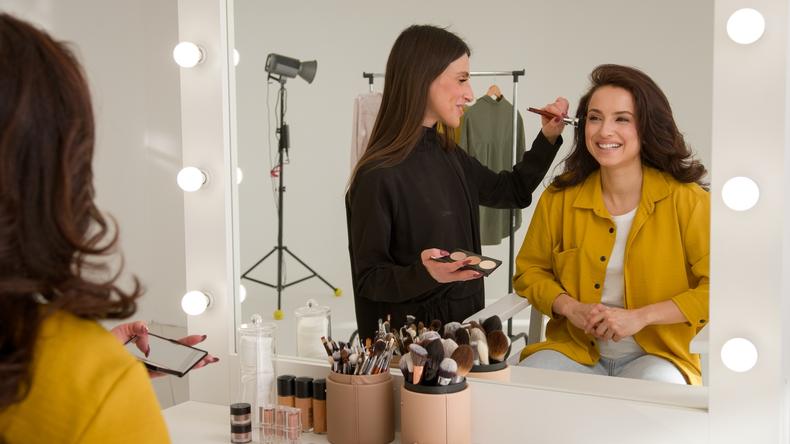
Makeup, hair, and wardrobe departments combine to convey character, flesh out settings, and tell visual stories, all through an actor’s appearance. The department can range from a single person on indie shoots to a whole team for big-budget pictures.
Makeup
Not just there to beautify cast members, the makeup department can also replicate wounds, age actors up and down, or turn them into zombies. The team may include:
- Key makeup artist: Plans and oversees makeup across the production, often taking direct responsibility for principal actors or challenging looks.
- Makeup artist: Applies makeup to all talent, including background actors, and touches it up between takes for continuity.
- Special effects makeup artist: Significantly changes an actor’s appearance using prosthetics and specialist makeup techniques. An expert like Rick Baker (who has earned 11 Oscar nominations for his work on movies including The Nutty Professor and Men in Black) turned Jim Carrey into the Grinch and Angelina Jolie into Maleficent.
Makeup assistant: Organises kits, photographs talent for continuity, and applies routine makeup.
Hair
Often working with wigs and weaves as well as an actor’s natural hair, stylists contribute to a character’s look and maintain continuity throughout production. Patricia McDermott, Carrie Fisher’s Star Wars hairstylist, dismissed over 30 hairstyles before landing on her famous ‘space buns’.
- Key hair stylist: Works with multiple hair types and aesthetics and takes overall responsibility for the hairstyles of key talent.
- Hairstylists: Creates a chosen hairstyle before shooting, then stays on a movie set during principal photography to touch up hairdos between takes.
Wardrobe
From Cher’s iconic yellow chequered suit in Clueless to Immortan Joe’s imposing post-apocalyptic armour in Mad Max: Fury Road, costume designers communicate character through clothing and contribute significantly to a film’s sense of place and time. Just try to imagine the Blues Brothers without their suits or Indiana Jones bereft of fedora and leather jacket, all chosen by costume designer Deborah Nadoolman Landis.
Roles include:
- Department head: Works with the director to establish each character’s style before mapping out and approving the wardrobe needed to achieve it.
- Wardrobe supervisor: Manages and organises the existing wardrobe and oversees the department.
- Set costumer: Stands ready on set to make any necessary adjustments or repairs.
- Costume coordinator: Maintains records and coordinates practical aspects of costuming.
- Tailor: Constructs and alters costumes.
- Shopper: Sources existing clothing from stores and rental houses.
Popularly associated with daredevil manoeuvres yet overwhelmingly concerned with safety, the stunt department plans, choreographs, and performs everything from 100-foot falls to swashbuckling swordplay and physics-defying car jumps.
- Stunt coordinator: Oversees the planning and creation of stunt sequences to create the illusion of reality while mitigating actual danger. They are usually experienced stunt performers themselves.
- Stunt performer: Carries out stunts. They often specialise in certain areas of stunt work. For example, legendary swordsman Bob Anderson trained Viggo Mortensen for Lord of the Rings and performed Darth Vader’s swordplay in The Empire Strikes Back and Return of the Jedi.
- Set medic: Technically separate from the stunt department, set medics are required when stunt performers are active to deliver immediate medical assistance in the event of an accident. Think of the on-the-spot medical care required by stuntman David Holmes, who broke his neck working on Harry Potter and the Deathly Hallows Part 1.
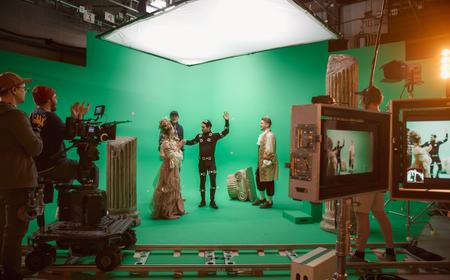
Though stunts occur on set, most visual effects are embellished during post-production. That said, VFX department members are often present while filming to provide guidance and suggest digital solutions. When you see behind-the-scenes shots of Game of Thrones showing green puppets where Daenerys Targaryen’s dragons would be, that’s also the on-set VFX department at work.
- VFX supervisor: Functions as the director’s chief visual effects adviser to ensure what's filmed on set allows for the easy addition of visual effects during post-production.
- VFX coordinator: Schedules and manages all actions related to the creation of visual effects.
- Data capture technicians: Helps VFX studios perform their magic by collecting information and footage covering everything from camera colour temperatures to the texture of physical surfaces.
Independent contractors sitting outside the production hierarchy, ‘crafties’ keep those working on a film set fed and watered. A crafty doesn’t only prepare food – they set up, ensure everything stays fresh, put together platters, make tea and coffee, and do the rubbish. Location shoots demand special attention – film outside at the height of summer and you’ll need a healthy supply of water, ice, and cold snacks.
Lead crafties will meet with a producer prior to filming to arrange a budget, then recruit their own team and bring everything together.
Often overlooked, transportation ensures both people and equipment arrive at the right place at the right time, even when working in remote locations.
- Transportation captain: Plans, schedules, budgets, and arranges transportation to get actors, crew, and equipment from A to B and back.
- Driver: Takes that talent, crew, and equipment to and from studios and locations.
Transportation departments often require specialised assistance to reach inaccessible areas, such as bringing cast and crew together in Canada’s Kananaskis Country for the filming of 2015 movie The Revenant.
Grusho Anna/Shutterstock
Production assistants (PAs) provide support for all departments by handling tasks that don’t require specialised knowledge or experience. Tackling any odd jobs that crop up during production, they keep things moving smoothly, be it changing walkie-talkie batteries or grabbing someone a snack.
Productions may employ an office PA to assist unit producers or location PAs to help location managers. Typically a first step into the industry, PAs often go on to fill more senior roles in the film business. Filmmaker Paul Thomas Anderson, actor-producer Brad Pitt, and Bill Hader – whose roles have spanned acting, producing, and directing – all began as PAs.
Several film crew roles allude categorisation but still perform vital functions. Common examples include:
- Unit publicist: Works throughout principal photography issuing press releases and other details to the trade press, as well as scheduling visits to set for selected journalists.
- Stills photographer: Captures images used for marketing. These often become intimately linked with a movie despite not originating while cameras were rolling. Check out work by Chiabella James on movies including Mission: Impossible – Dead Reckoning, King Richard, and Dune.
- On-set tutor: Provides children under 18 with schooling in compliance with child labour laws. This means working around often hectic filming schedules while still teaching for a minimum number of hours.