Love stories have always been everywhere. Both classic and modern tales of romance are a staple of film and TV, captivating audiences with the eternally appealing journey of two characters and the passion that unites them.
From the unconventional coupling of Harold and Maude or picture-perfect Audrey Hepburn and Gregory Peck in Roman Holiday, viewers can’t help but root for love to triumph.
Although romance is a film and TV genre with several well-worn themes, it also enjoys the scope for endless variety and experimentation. Let’s explore what makes romance so compelling, adaptable, and loved.
JUMP TO
“If you look for it,” Hugh Grant says in Love Actually, “I’ve got a sneaky feeling you’ll find that love actually is all around.”
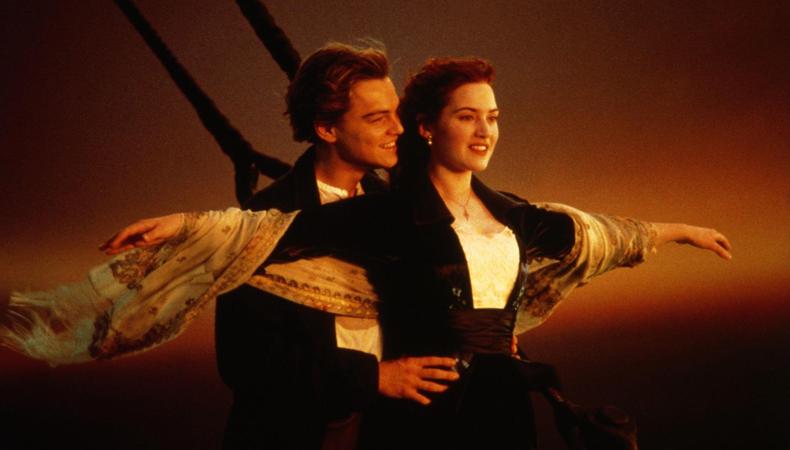
It sure is omnipresent in film and TV. Everything from action movies like Speed to fantasy epics like Lord of the Rings feature love subplots, but a true romance prioritises those relationships and makes their resolution the central goal. Speed resolves when the bus is stopped, not when Keanu Reeves and Sandra Bullock kiss. In a romance like Titanic, what happens to Jack and Rose feels more important than the terrible sinking of the ship itself.
A genre defined by passion, emotion, intimacy, character development, and an exploration of what unites and separates people, romance is also profoundly relatable. Yet it’s sometimes undermined or not fully appreciated.
“The romantic comedy is often relegated to something that is for chicks, so therefore not of substance,” writer-director Celine Song (Past Lives, Materialists) told Cosmopolitan. And yet, “romance is something that affects us all,” which is probably why it’s (actually) all around.
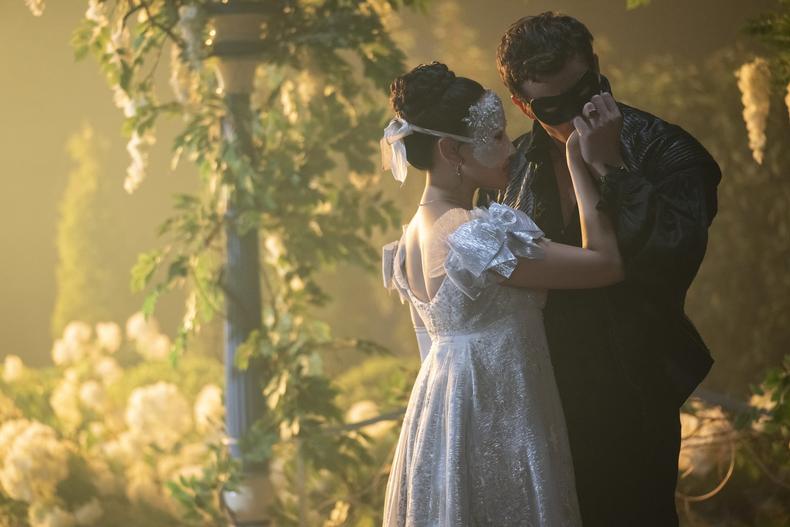
“Bridgerton” Credit: Liam Daniel/Netflix
Love at first sight
Ancient Greeks interpreted love at first sight as madness from the gods. They’d likely feel at home with modern romances, whose characters so routinely fall in love (or at least get serious vibes) upon first meeting that there’s a sense of cosmic intervention about their initial encounter.
“There are these magical elements that intervene … this idea of kismet as a larger force,” rom-com muse Meg Ryan told the Los Angeles Times. “They [don’t] know it, but they’re perfect for each other and their lives are headed toward each other.”
Think of:
- Noah immediately falling for Allie in The Notebook
- Tony and Maria quickly becoming smitten in West Side Story
- Scott’s instant infatuation with Ramona in Scott Pilgrim vs. the World
- Ennis Del Mar and Jack Twist falling for each other in Brokeback Mountain
Romances often combine love at first sight with the famous meet-cute, a chance first meeting such as Jonathan and Sara reaching for the same Christmas gift in Serendipity or Carrie tripping in front of Big’s car in Sex and the City.
Opposites and opposition
You can’t have love at first sight without something getting in the way. Not unless you want a very short movie or show. As such, initial infatuation is often tempered by contrasting personalities and backgrounds.
In a genre keen to prove that opposites attract, you’ll often see:
- Conflicting personalities: straight-laced Sandy and bad boy Danny in Grease.
- Adversarial circumstances: independent bookstore owner Kathleen and bookstore chain owner Joe in You’ve Got Mail.
- Economic or social opposites: call girl Vivian and wealthy corporate raider Edward in Pretty Woman.
Characters must pass through a period of personal growth to overcome those barriers and earn their happy ending. That process accounts for the lion’s share of a romance movie’s runtime, and it can take years on a long-running series as couples fall into the classic will-they-won’t-they trope, like Ross and Rachel on the sitcom Friends.
“[On network TV] you have to take that romance and stretch it out for as many seasons as you possibly can, and keep coming up with reasons why they’re having a new conflict,” Shonda Rhimes, the creator of Grey’s Anatomy and executive producer of Bridgerton, told Vanity Fair.
Interpersonal conflict is also fertile ground for romance’s trademark witty back-and-forth dialogue. Here again, Ryan is right on the money: “Banter is a romance language [and] opposites are part of it. And it’s an intelligent kind of banter, not just fighting. They hate that they’re getting a big kick out of each other.”
Forbidden love
When romance in movies and shows isn’t thwarted by interpersonal conflict, it may be stymied by serious cultural barriers. These external threats frequently crop up in romantic dramas, such as:
- Adultery in The English Patient
- Class in Dirty Dancing
- Race in Loving
- Sexuality in Brokeback Mountain
- Family affiliation in Romeo + Juliet
Dramatic romance shows and movies may explore wider cultural themes and the prejudices that make love forbidden or taboo, as Wong Kar-wai did while directing In the Mood for Love.
“I’m not trying to tell a story about affairs,” Wong said. “I’m trying to tell a certain attitude in certain periods of time in the history of Hong Kong.… I think the whole thing is about the time period and how people treat these affairs over the years.”
Breakup and resolution
Romance relies equally on heartbreak and happiness. Even the rom-com is “really about pain,” Grant told Rolling Stone. “[That’s what] makes them sustain and not float away like a piece of fluff.”
Even lovers who ultimately unite typically first enjoy a temporary union that quickly breaks down. They fall in love, get together, break apart, and then finally reunite (often dramatically) by overcoming whatever conflict divided them. Grant’s own character treads such a path in Notting Hill, and it’s this incorporation of the good, bad, and great parts of love that makes TV and film romance so universally relatable.
“We’ve all been in the trenches of love; we’ve all gone through the highs and lows,” 500 Days of Summer writer Michael H. Weber told the Guardian. “I felt that the only way to tell this story was to come at it from a completely real place.”
Self-awareness
“I had about a year of solidly watching rom-coms,” Elizabeth Sankey told VODzilla of researching for her documentary Romantic Comedy. “In general, rom-coms stick to such a specific arc that you know what to look out for – kissing, declarations of love, meet-cutes, weddings.”
Although romances – especially the rom-com variety – indulge common tropes, they often show awareness of doing so and sometimes subvert expectations.
For example:
- Isn’t It Romantic?, which revolves around a character, Natalie (Rebel Wilson), who realises she’s living in a rom-com
- Enchanted, which parodies just about every convention of fairytale romance
- Meet Cute in Manhattan, which references a famous rom-com trope right in its title
Even Richard Curtis, who Time dubbed the “Typhoid Mary of incurable romantics,” has spoken about trying “some anti-romantic comedy things” for his 2013 rom-com, About Time.
- Historical romances (Bridgerton, Gone With the Wind) set romance against often turbulent historical backdrops, sometimes exploring bygone attitudes toward love and marriage and how they contrast with our own.
- Romantic dramas (Normal People, Moonlight) focus on romantic trials and tribulations, complex emotions, and the serious obstacles and prejudices that may preclude a final union.
- Romantic thrillers (The Bodyguard, The Handmaiden) develop a major romantic storyline interspersed with action sequences and suspense.
- Paranormal romances (Twilight, The Shape of Water) probe speculative relationships between humans and (often misunderstood) supernatural creatures.
- Romantic comedies (My Best Friend’s Wedding, Nobody Wants This) are defined by lighthearted plots, situational or verbal humour, and relatable characters who frequently achieve happy endings.
- Romantic fantasy (Edward Scissorhands, Outlander) combines elements of fantasy with romance, often with a focus on how social and political issues shape relationships.
- Romantic musicals (An American in Paris, Crazy Ex-Girlfriend) add elaborate song and dance numbers to help tell the story and reflect the characters’ heightened emotions.