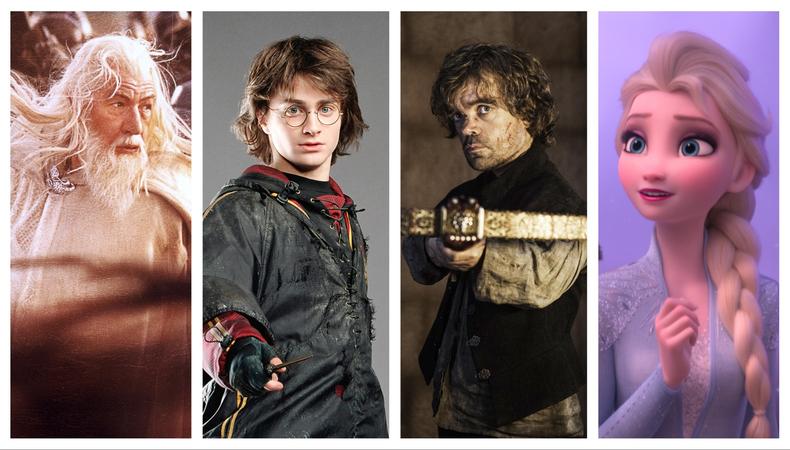
“The fantasy genre permits us to escape the daily reality,” said Lord of the Rings director Peter Jackson. It also allows filmmakers to break the rules of possibility and take audiences along for the ride.
From magic to mythical creatures and imaginary worlds to a total freedom from physical laws and scientific fact, nothing is off the table. In short, fantasy is about what you can imagine, not what’s possible.
Its potential is only extending too: Modern CGI and enduringly popular franchises such as Harry Potter and Game of Thrones mean fantasy is flourishing. “I don’t know if [Game of Thrones] has changed television, but it has changed science fiction and fantasy television,” author George R.R. Martin told Deadline of the hit HBO show based on his series of fantasy novels. “We’ve achieved a level of respectability…equal to any genre.”
Here’s a deeper look at the fantasy genre, including its facets and greatest exports.
JUMP TO
Fantasy features worlds, creatures, and supernatural elements that don’t exist in reality. It may explore realms wholly different from ours or introduce fictitious elements into the real world.
Fantasy genre movies and shows revel in imagination. Storytellers are free to imagine unique worlds unconstrained by normal rules, while audiences can – as Jackson pointed out – escape daily reality by imagining those worlds as real.
Fantasy vs. science fiction
Fantasy and science fiction both depart from reality, but there’s a key difference.
Science fiction features elements that may be possible as technology advances. There’s always a scientific or technological explanation. Inventions in fantasy, however, are boundless. “Fantasy is the impossible made probable,” said The Twilight Zone creator Rod Serling. “Science fiction is the improbable made possible.”
Good vs. evil
“Fantasy by definition concerns a battle between good and evil,” wrote legendary fantasy author Ursula K. Le Guin.
Stories typically see good triumph over evil, light over darkness, and order over chaos. You may see a stark contrast between heroes and villains (as in Harry Potter) or more morally grey characters (as in Game of Thrones), and although conflict typically has world-changing consequences, there should be a more personal battle that hinges on inner goodness rather than strength of arms.
“The battle between good and evil is a theme of much of fantasy,” Martin told Time magazine. “But I think the battle between good and evil is fought largely within the individual human heart, by the decisions that we make.”
The hero’s journey
Archetypical fantasy protagonists often follow a familiar path outlined by Joseph Campbell in The Hero With a Thousand Faces.
Here it is in brief:
- Call to adventure: An unlikely or reluctant hero (often a “chosen one”) is invited to leave their humdrum world.
- Supernatural aid: A magical mentor arrives to help them.
- Road of trials: The hero realises their true power and nature by passing through a series of challenges or quests.
- Reward and return: A final challenge is overcome using everything learnt along the way, and the hero returns transformed.
Think of Dorothy in The Wizard of Oz, Bilbo Baggins in The Hobbit, and especially Luke Skywalker in Star Wars. George Lucas was directly influenced by Joseph Campbell while writing the original trilogy, which he defines as “a fantasy film and a space opera.”
Historical inspiration
As unique as fantasy movies and shows may be, they routinely take considerable inspiration from history. You’ll notice a lot of taverns, castles, lords, kings, tournaments, swords and shields in the fantasy genre. The imaginary worlds of high fantasy may seem indistinguishable from Medieval Europe at a glance, while low fantasy films and series are often set in that era.
A few examples include:
- Game of Thrones
- The Chronicles of Narnia
- The Witcher
- Eragon
- Ladyhawke
- The Green Knight
- Shadow and Bone
- Warcraft
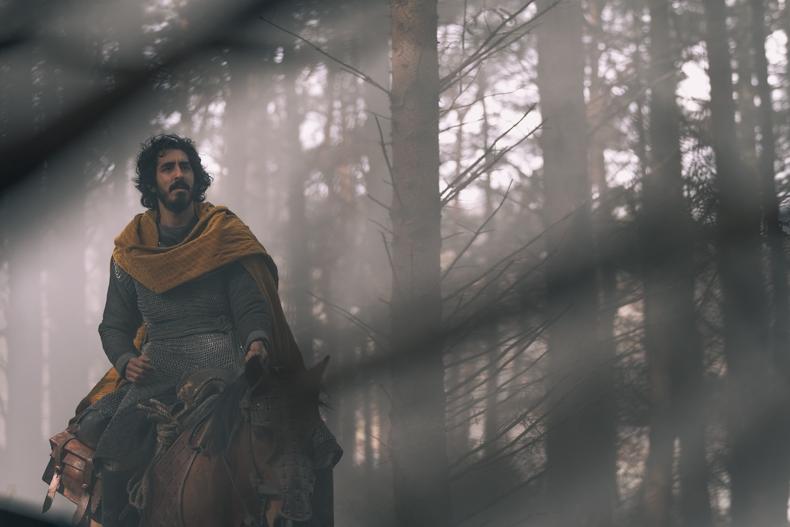
“The Green Knight” Credit: Eric Zachanowich
Modern fantasy movies increasingly reimagine stock medieval elements for a new generation of viewers, as Vicky Jenson did for Spellbound. “We started with familiar things like a kingdom, a king, a queen, a princess, and a spell,” Jenson told SciFiNow. “We use those well-loved elements to craft a new allegory and a new myth about family.”
Magical artefacts
Lord of the Rings has the One Ring. Harry Potter has the Elder Wand. Sword in the Stone has Excalibur. The Mask has…the mask.
Whether it’s an alethiometer able to give truthful answers to any questions as in His Dark Materials or a Valyrian steel blade capable of killing ice zombies as conjured up for Game of Thrones, mystical items imbued with incredible powers are a mainstay of fantasy in movies and TV. Such items are often associated with prophecy or a chosen one, and they must be acquired or mastered by the end of the story if our protagonist is to triumph.
Epic battles
Ultimate struggles between good and evil are often depicted onscreen through clashing armies and sprawling battles. If the results of that contest are to be world-changing, it only makes sense to amp up the drama and quicken our pulses with truly epic battle sequences. Can you imagine House of the Dragon without the War of the Stepstones, or Harry Potter without the Battle of Hogwarts?
Battle translates so well to screen that fantasy TV shows and movies adapting popular novels frequently increase their presence, as Andrew Adamson did for The Chronicles of Narnia: The Lion, the Witch, and the Wardrobe.
“The book was smaller than I remembered it.… The battle is very brief,” Adamson said at the time of the film’s release. “And yet somehow in my mind I had this impression of this great battle.… I remembered it as an epic story, and I wanted to tell the movie as an epic story.”
- High fantasy (Game of Thrones, Lord of the Rings): set in entirely fictional worlds and known for detailed, grand-scale world-building and complex plots
- Low fantasy (Harry Potter, Mary Poppins): brings fantastic elements to the real world, and often features surprisingly normal protagonists and unexpected magic
- Dark fantasy (The Dark Crystal, Lovecraft Country): combines fantasy with disturbing themes and horror genre elements to unnerve audiences
- Fairy tales (Frozen, Sleeping Beauty): typically drawn from folk tales and set in distant lands populated with stock characters and creatures, such as evil witches and dashing princes
- Magical realism (Midnight in Paris, Life of Pi): incorporates fantastic phenomena into the real world while treating them as perfectly normal or mundane
- Children’s (Pan's Labyrinth, The Princess Bride): simpler stories characterised by themes such as imagination, adventure, and morality
- Swords and sorcery (Conan the Barbarian, Solomon Kane): focuses heavily on action sequences and personal conflicts, often pitting powerful warriors against supernaturally endowed adversaries
- Contemporary fantasy (Sabrina the Teenage Witch, Supernatural): set in the present day, blending the genre’s archetypes with modern life and everyday drama