For a nation with little more than 3 million inhabitants, Welsh actors and the Welsh accent certainly punch above their weights.
Wales has produced a host of prominent actors, including Anthony Hopkins, Joanna Scanlan, Rakie Ayola, Taron Egerton, Catherine Zeta-Jones, and Joanna Page. From Rob Brydon singing Lionel Richie’s “Hello” in a hammed-up Welsh accent to Richard Burton narrating Under Milk Wood with a subtle accent retaining some Welsh nuances, the country’s talent has given a variety of winning performances.
Although the lilts of Welsh accents may sound easy to mimic, they can sound unconvincing, clichéd, and over the top when performed poorly. Tom Hardy Normally is highly praised for his acting, but his accent slips in Locke let him down. Likewise Robert Downey Jr. in Dolittle.
Here’s a guide to learning how to convincingly act with a Welsh accent.
JUMP TO
The Welsh language (Cymraeg) evolved from ancient Celtic languages that were once spoken across a wider area of the British Isles. The Welsh accent – carried over into the English spoken by Welsh people – maintains some intonations and pronunciation patterns of the Welsh language.
“A Welsh accent is strongly influenced by the rhythm, melody, and sounds of the Welsh language – even when someone is speaking English – and it is often described as lilting or musical,” says acting coach Sabrina Hunt of British Accent Coaching, who also co-presents an accent-focused YouTube channel, Love English With Leila and Sabrah.
“The pitch rises and falls more than in many English accents. It tends to be placed a little higher in the mouth and forward, with lots of resonance across the cheeks and lips.”
The short answer is yes. “South Wales and North Wales have quite big differences, and the Rhondda Valley’s accent is much more distinctive and recognisable,” Hunt says. “In northern Wales, you get some regions nearer to Liverpool where people don’t have a particularly Welsh accent, but it is more of a soft Liverpool accent. You can hear it in speakers from Anglesey particularly.”
A good Welsh English dialect performance will have just the right singsong or melodic tone. It will also feature a lengthening and stretching of vowels and rolling of the R sound that does not feel forced.
“I think a bad accent is when people overdo the singsongy intonation and put in excessive R tapping or rolling, which, in reality, is more subtle,” Hunt says.
“There are a lot of features that make the accent unique compared to Standard Southern British (SSB) English, such as the intonation and the slightly higher pitch of the accent,” Hunt says. “Some vowel sounds that are often said in SSB English as a diphthong – which means a combination of two vowel sounds, like the long ‘ohh’ sound in ‘goat’ and ‘tone’ – are not two sounds, but one long sound. There are also greater differences in pitch range between stressed and unstressed syllables than there are in many other accents. Words like ‘fabulous’ and ‘interesting’ will have a more distinctive rhythm.”
“Study how the accent changes from your starting accent and use the [International Phonetic Alphabet] to understand which sounds are changing and how they are changing,” Hunt says. “It won’t be authentic or nuanced if you focus on the rhythm only and don’t look at the changes in the vowel sounds and placement of the voice.”
Although there are numerous regionalisms, the typical Welsh accents used onstage and onscreen come from the south of the country. When learning how to “talk Welsh,” check your character’s origin. If they hail from a different region of Wales, focus on mastering the accent from that neck of the woods.
Comedian Rhod Gilbert has joked that non-Welsh people trying Welsh accents have a tendency to sound Indian, so keep an eye on that.
“Listen to your Welsh accent a lot and isolate the sounds you need to change and work on those first,” Hunt says. “Also give yourself time to get the subtleties right; otherwise it will end up sounding like a caricature.”
1. Study Welsh accents
It is a good idea to record yourself and play the recordings back repeatedly when learning how to do a Welsh accent. Using training resources, such as one-to-one tuition with an actors’ accent coach, can further enhance your performance.
Watching films, TV shows, YouTube videos, and podcasts with Welsh performers or performances also helps you get to grips with speaking with a Welsh accent, as does visiting the country and immersing yourself in local accents.
You could also check out Welsh accent examples on the International Dialects of English Archive.
2. Listen to actors getting it right
There have been many excellent performances with Welsh accents that can give you an idea how it’s done.
- David Tennant in United
- Andrew Scott in Pride
- Michael Sheen in Nye
- Ruth Jones reading the shipping forecast
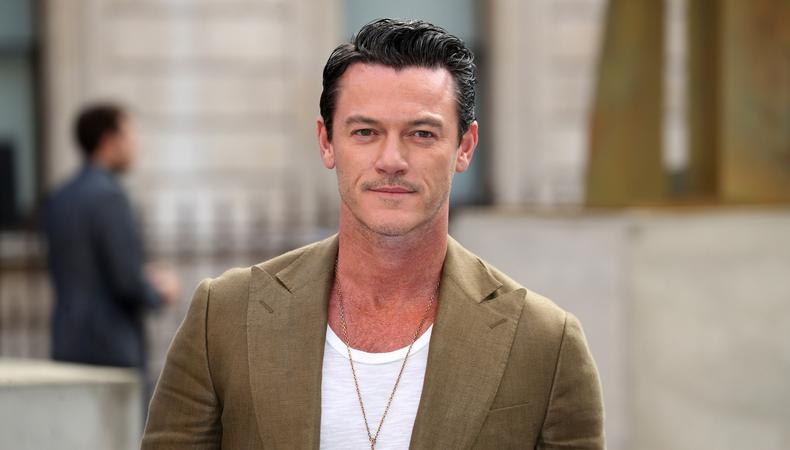
- Luke Evans in the Year of Legends ad campaign for Wales
3. Be specific
Narrow down your accent to a specific example, rather than it being a combination of differing ones, when learning how to do a Welsh accent.
4. Practise
Learning a new accent takes time, and the more you practise your accent the better the result. Listening, absorbing, and speaking Welsh over an extended period of time will all help with mastering it before the big day.